
RUSTIN Jean
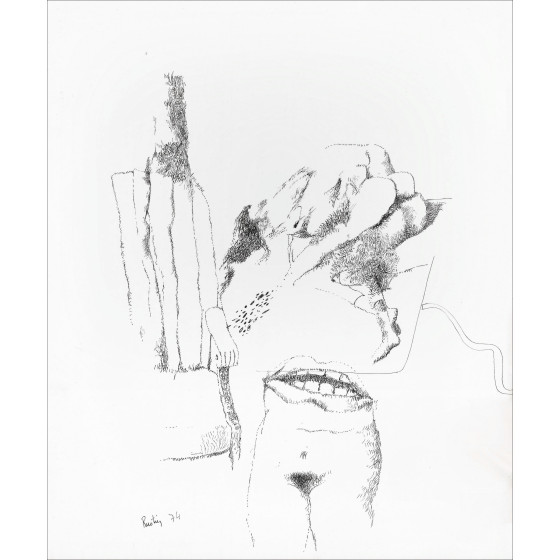
Jean Rustin (1928-2013), a painter born in Montigny-lès-Metz, in Lorraine, is one of the major voices of contemporary figurative art. After an abstract period, from the 1970s onward he devoted his entire body of work to the human body: original ink drawings from 1974 and signed lithographs of striking intensity.




Jean Rustin
The Lorraine Painter of the Body and the Human Condition
Jean Rustin (1928-2013) is one of the great figurative painters of the second half of the 20th century. Born near Metz, initially an abstract artist, he chose in the 1970s to paint only the human body, nude, frontal, without decor. This courageous break founds a body of work of rare coherence, of which the gallery now offers drawings and lithographs.
Biographical Landmarks
1928Born on 3 March in Montigny-lès-Metz, Lorraine
YouthChildhood in Lorraine, first paintings
TrainingMoves to Paris, admitted to the Beaux-Arts
1950s and 1960sAbstract period, exhibitions in France and abroad
Early 1970sBreak with abstraction and return to figuration
1974Series of original ink drawings devoted to bodies and couples
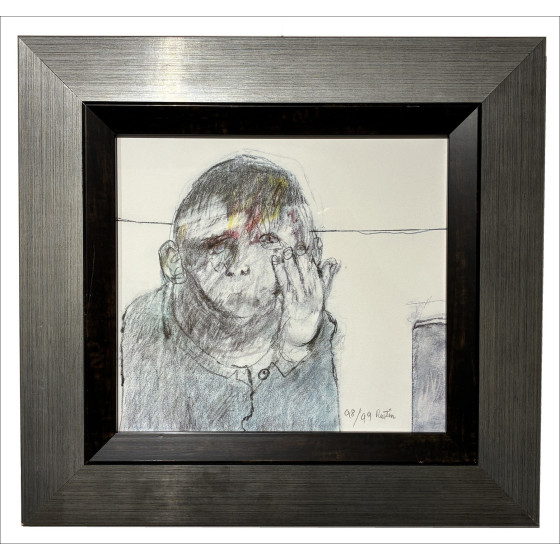
1998Signed lithographs, including Personnage and Le Couple
2013Death of the artist
The Career of Jean Rustin
A Lorraine Artist Who Came to Paris
Lorraine, marked by history and by multiple identities, is the first ground of sensibility for Jean Rustin. He painted his first pictures there before joining Paris, determined to devote himself to art. At the École nationale supérieure des beaux-arts, in a context where abstraction attracted many young artists, he explored forms, rhythms and colours and quickly drew the attention of critics. In the 1950s and 1960s, he exhibited in France and abroad.
The Break of the 1970s
Yet something resisted. At the dawn of the 1970s, Rustin felt the need to return to an essential truth: the human body. While most artists of his generation pursued the path of abstraction, he broke with this movement. This difficult decision would become the founding act of his work.
International Recognition
Although originally from Lorraine, he developed most of his career in Paris and the Paris region, where he set up his studio, exhibited regularly and took part in artistic life. His works gradually entered public collections (museums, institutions, foundations) and numerous private collections, and have been shown in exhibitions in France and internationally. The emotional force of his work, the coherence of his career and the rigour of each creation are widely acknowledged.
A Style That Places the Body Before the Gaze
From the 1970s onward, Jean Rustin devoted himself exclusively to the representation of the body and set aside the setting to refocus everything on the human being. His works are recognisable by:
- an assumed frontality, which places the figure face to face with the viewer.
- stripped-down spaces, almost cells or scenes of waiting.
- a raw light, which unambiguously illuminates what must be seen.
- a restrained palette of greys, whites, flesh tones and ochres.
Rustin does not seek to embellish, he seeks to reveal. His nude figures, men and women alike, sometimes seem ill at ease in their own bodies, silent yet strikingly truthful. They speak of solitude, fragility and anguish, and yet a profound dignity remains. To paint the human being is to affirm that they still deserve to be looked at. This universe is often compared to that of Francis Bacon, another great painter of the exposed body, although Rustin is distinguished from him by the stillness and silence of his figures. Admirers of expressive figuration will also appreciate Paul Rebeyrolle.
Jean Rustin Prices and Market Value: How Much Is a Work Worth?
The value of a work by Jean Rustin depends on the technique, the format, the subject, the period and the condition. Here are the usual price levels on the market:
- Signed and numbered lithographs: from around €250, up to around €450 for a framed lithograph.
- Original ink drawings: around €1,000 to €1,250.
- Oil paintings on canvas: several thousand euros, such as Portrait d'homme (1999), sold for €9,850.
An original lithograph is conceived and signed by the artist, then numbered in a limited edition. It differs from a simple printed reproduction, which bears neither this signature nor this numbering.
Buy a Work by Jean Rustin at Galerie 125
An art gallery based in Argancy, Moselle, near Metz and not far from Montigny-lès-Metz, where the artist was born, Galerie 125 pays particular attention to this painter from Lorraine, as well as to Camille Hilaire, born in Metz. The works presented above offer a glimpse of several facets of his work:
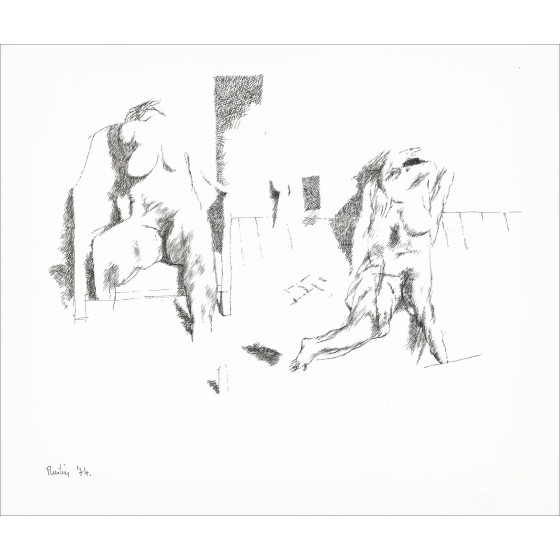
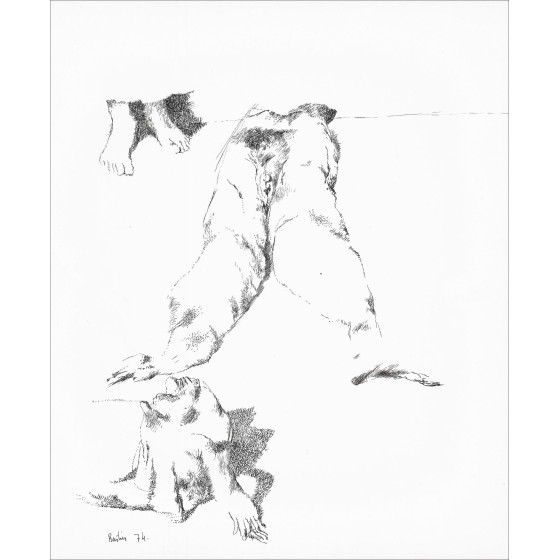
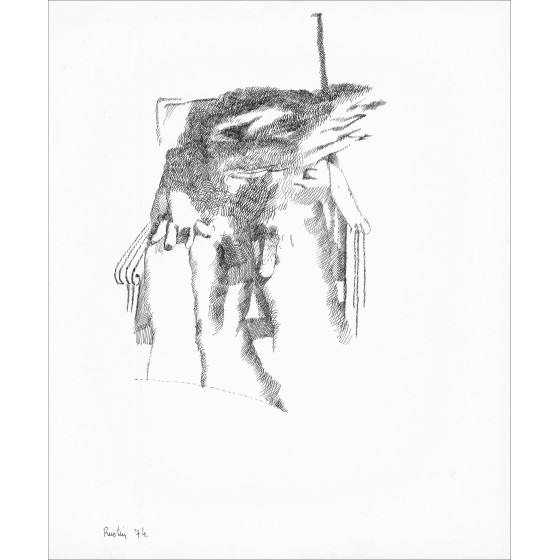
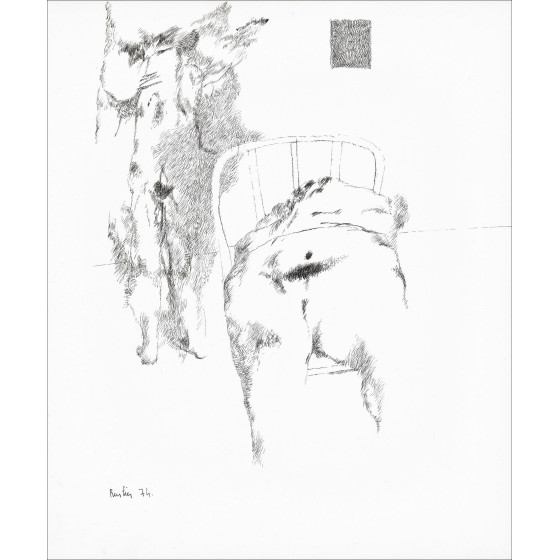
- Original ink drawings from 1974: Couple dans un intérieur, Personnages à la chaise, Personnage au fauteuil, Composition aux corps fragmentés and Corps et pieds.
- Lithographs: Personnage and Le Couple (1998), signed and numbered, as well as Portrait, a signed and framed original lithograph.
Other pieces have already joined collections over time: the painting Portrait d'homme (1999), the drawings Homme nu debout (1974), Le couple (1975) and La lecture, or the lithograph Portrait de jeune homme (1998). Check this page regularly to discover new acquisitions. Each work offered by the gallery is described in detail and sold with a certificate invoice. You can order it online, for careful, tracked and insured delivery, or come and see it at the gallery, by appointment, on the route between Metz, Thionville and Luxembourg: find practical information on the page art gallery near Metz.
How Much Does a Lithograph or Drawing by Jean Rustin Cost?
At the gallery, the works by Jean Rustin available online range from €250 to €995: signed and numbered lithographs from €250, and original ink drawings from 1974 priced between €250 and €995.
What Is the Difference Between His Lithographs and Original Drawings?
The ink drawing is a unique piece, made by hand by the artist. The lithograph is an original print pulled in a limited number, signed and numbered, which makes it more accessible while remaining an authentic work.
Do the 1974 Drawings Belong to the Same Series?
They all date from 1974, at the heart of the period when Rustin devoted himself entirely to the body. They share the same format (37 x 31 cm) and the same themes: couples, seated figures, fragmented bodies, silhouettes in an empty space.
Why Did Jean Rustin Abandon Abstraction?
After achieving success with his abstract compositions, in the early 1970s he felt the need to return to the human body. This choice, running against the current, became the guiding line of his entire career.
Where Can You See Works by Jean Rustin?
They are held in public collections (museums, institutions, foundations) and in many private collections, and have been shown in exhibitions in France and abroad.
Are the Works Sold with a Certificate?
Yes. Each work is sold with a certificate invoice from the gallery, and shipped with care, with tracking and insurance.
Do you own an oil on canvas or an original drawing by Jean Rustin and wish to sell it? Discover how to proceed on our page Sell a work.