
DI ROSA Hervé
Hervé Di Rosa (born 1959), painter and printmaker born in Sète, is one of the founders of the Figuration Libre movement. Woodcuts, original engravings and screen prints, nourished by comic strips, pop culture and travel: discover his works below.

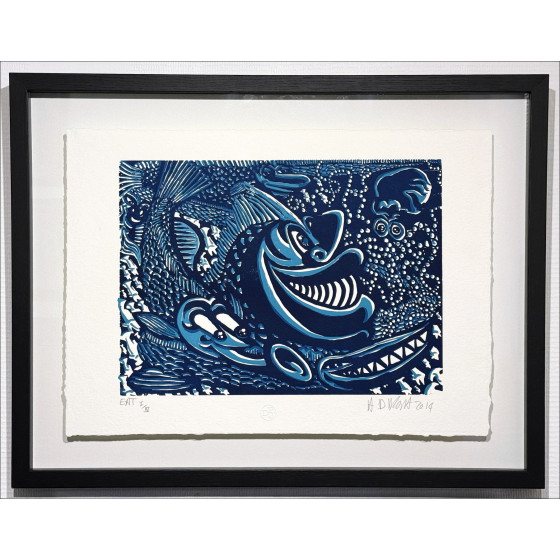


- Out of stock


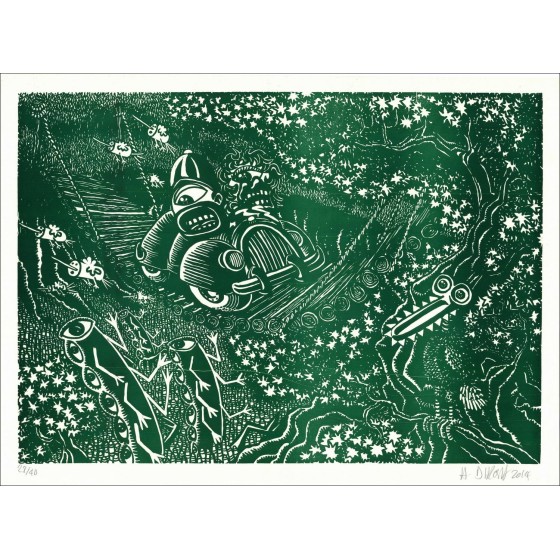


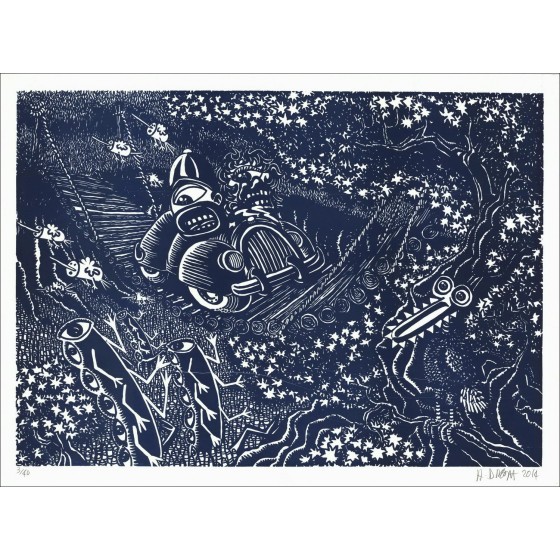

Hervé Di RosaFiguration Libre
From Sète to the whole world
Painter, printmaker and tireless traveller, Hervé Di Rosa was born in Sète in 1959. He is among the founders of Figuration Libre, a colourful, narrative and humorous movement that emerged in the early 1980s. His woodcuts, engravings and screen prints extend its energy onto paper.
Hervé Di Rosa and the birth of Figuration Libre
After entering the Arts Décoratifs in Paris to study animation film, Di Rosa soon turned to painting. Together with his brother, the sculptor Richard Di Rosa, Robert Combas, François Boisrond and Rémi Blanchard, he invented a free, direct style of painting, drawing on comic strips, rock and popular culture. His first Parisian exhibition, "Finir en beauté", in 1981, later travelled to Amsterdam and Düsseldorf. This joyful language established itself as a response to the minimal and conceptual art that dominated at the time.
A great traveller, he collaborated with craftspeople from around the world, from Mexico to Cuba, and from Tunisia to Haiti, adopting local know-how at every stage. In 2000, he founded the International Museum of Modest Arts (MIAM) in Sète, devoted to popular artistic forms.
A world of lines, flat colour and characters
In his prints, Di Rosa brings together boldly coloured flat areas, a synthetic line and a gallery of familiar characters: jousters, fish, bears, crowds and figures inspired by his travels. The woodcut gives him a crisp drawing and powerful contrast, while screen printing and aquatint extend his vivid palette. Humour, the memory of Sète and a taste for storytelling run through every sheet.
Hervé Di Rosa at Galerie 125
Galerie 125 presents above a selection of prints by Hervé Di Rosa. Among the works available:
- Woodcuts: Le Jouteur à Sète, Noir and Poissons Sétois, Camaïeu.
- Screen print: Le tombeau, large format from 1986.
Other pieces, such as Oursens, No hay billetes, Le cercle Mozart or the engravings of La leçon d'anatomie, have already found new owners: new acquisitions are regularly added to this page. Each work is delivered with the gallery's certificate and carefully packed for tracked and insured shipping. The gallery, in Argancy near Metz, also welcomes visitors by appointment. You may also like our selection of contemporary art.
What is Figuration Libre?
Born in France in the early 1980s, Figuration Libre champions a spontaneous, colourful and narrative style of painting, drawing on comic strips, rock and graffiti.
Why does Sète appear so often in Di Rosa's work?
The artist's hometown nourishes his subjects: jousters, fish and harbour scenes are everywhere. It is also where he founded the MIAM, a museum dedicated to modest arts.
How does Hervé Di Rosa work during his travels?
He partners with local craftspeople in Mexico, Cuba, Tunisia or Haiti, and adopts their techniques to create hybrid works.