
HILAIRE Camille
Camille Hilaire (1916-2004), painter, lithographer and tapestry cartoonist born in Metz, built a luminous body of work between Cubism and figuration: nudes, Normandy orchards, horses and racing, the Côte d'Azur, bouquets and the circus. The gallery offers numerous works: signed original lithographs, watercolours, gouaches, drawings and oil paintings on canvas.








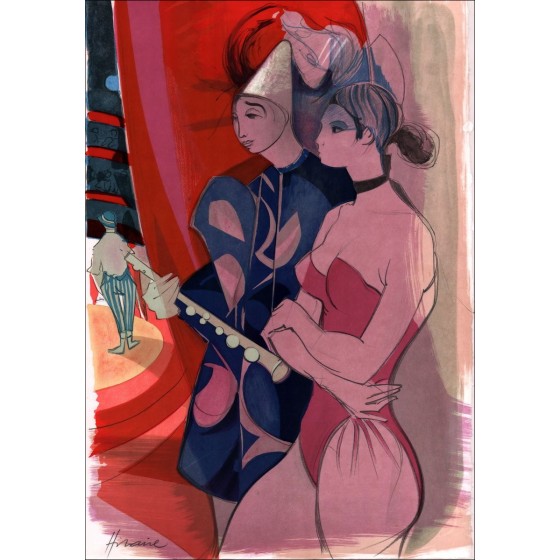


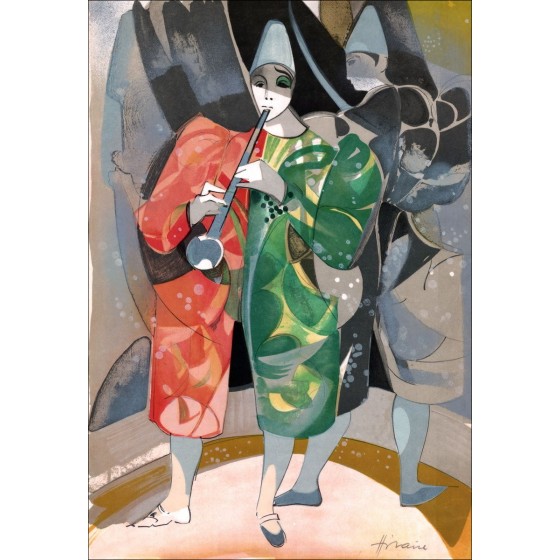
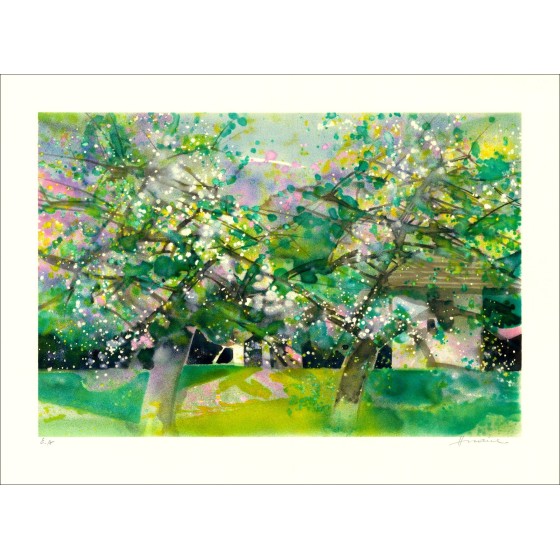
Camille Hilaire
The Metz painter of light and colour
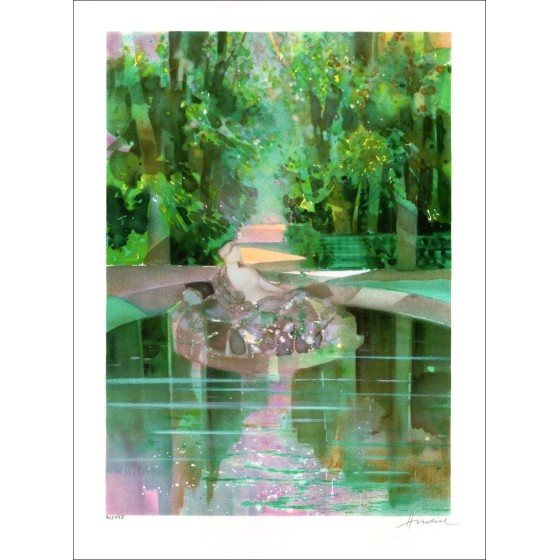
Born in Metz and trained in the circle of André Lhote, Camille Hilaire invented a painting style instantly recognisable among all others: forms cut into facets, crossed by light, where colour seems to burst through a stained-glass window. A painter, watercolourist, lithographer, and creator of frescoes, stained glass and tapestries, and a professor at the Beaux-Arts schools of Nancy and then Paris, he remains one of the most sought-after Lorraine artists among collectors.
Biographical landmarks
1916Born in Metz on 2 August
1933–1934A scholarship allows him to travel to Spain and Italy
1939–1941Taken prisoner, he escapes and makes his way to Paris
1942–1943Student, then assistant to André Lhote
1947Professor at the École d'art de Nancy
1948 and 1950Prix de Venise, then the Casa de Velázquez prize
1951First solo exhibition in Paris
1958–1968Professor at the École nationale supérieure des beaux-arts de Paris
1972–1994Lithographs and illustrated books
2004Died on 7 June in Fourges (Eure). He is buried in the Cimetière de l'Est in Metz
Camille Hilaire's career
From Metz to the Beaux-Arts in Paris
As a teenager, Camille Hilaire spent hours at the Metz municipal library copying the engravings of Dürer and Holbein. His drawings attracted the attention of the writer Jean Giono and of the Metz sculptor Nicolas Untersteller, future director of the École des beaux-arts in Paris, who took him into his studio. During the Occupation, he studied under André Lhote. This encounter was decisive: the lessons of Cubism would structure his entire body of work.
The teacher, the decorator, the recognised painter
In Nancy, Camille Hilaire counted Claude Weisbuch among his students. Alongside painting, he devoted himself to large-scale decoration: a fresco for the Collège Georges-de-La-Tour in Metz, stained-glass windows, and tapestry cartoons, including two large pieces, Sous-bois and Forêt de France, created for the first-class lounge of the liner France. Settled in Normandy, he left a son, Claude, who painted under the name Hastaire and also built a well-regarded career as an artist.
A painting between Cubism and light
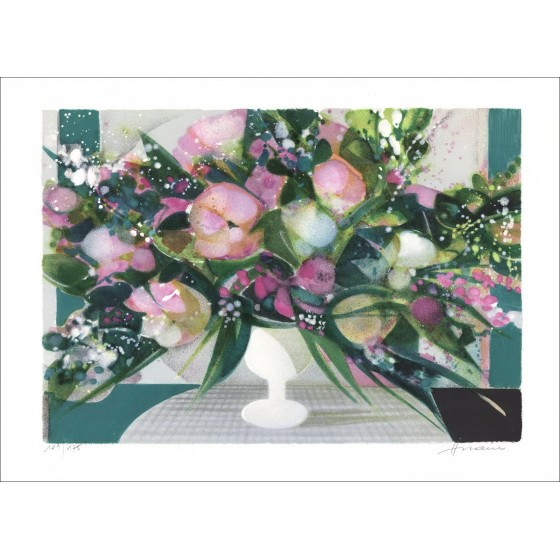
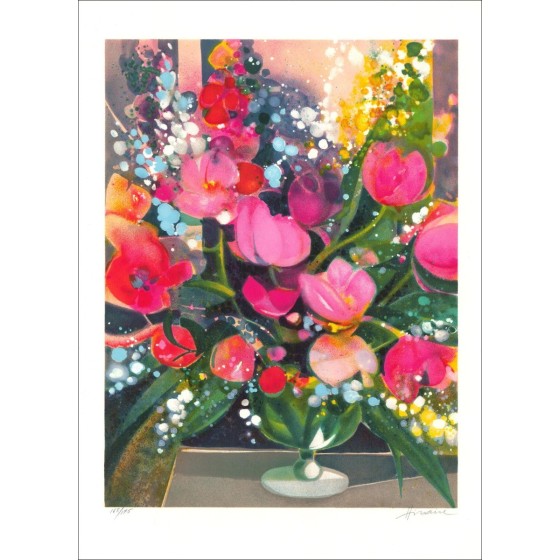
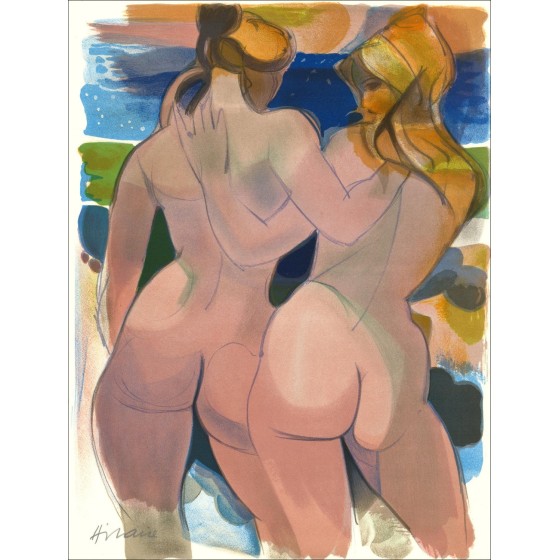
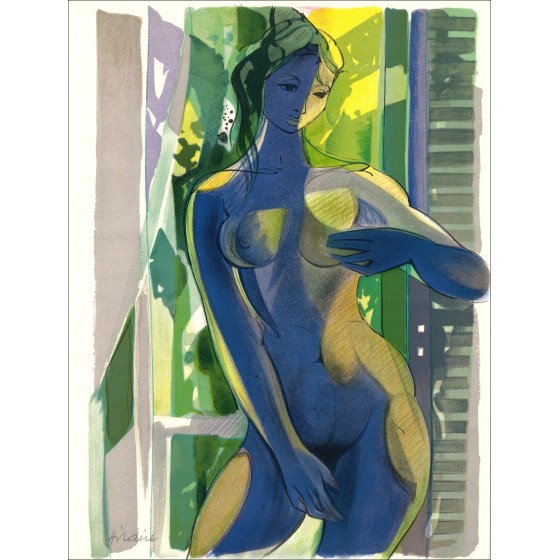
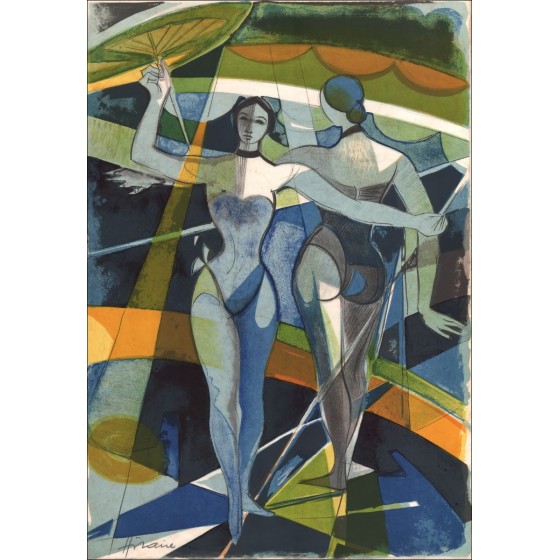
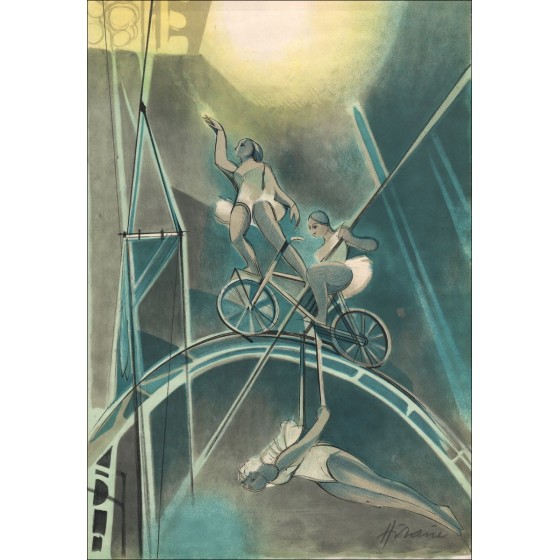
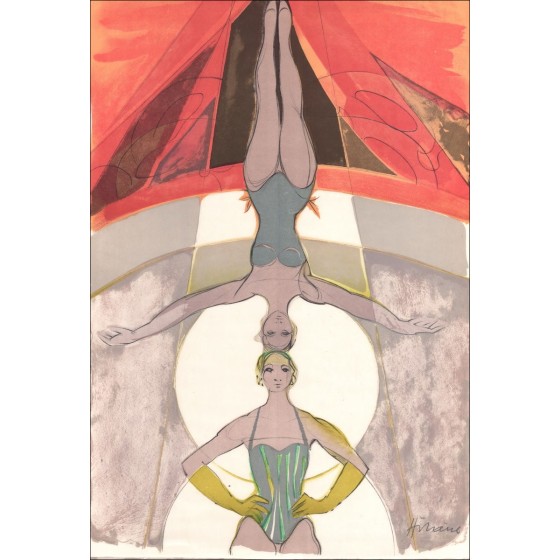
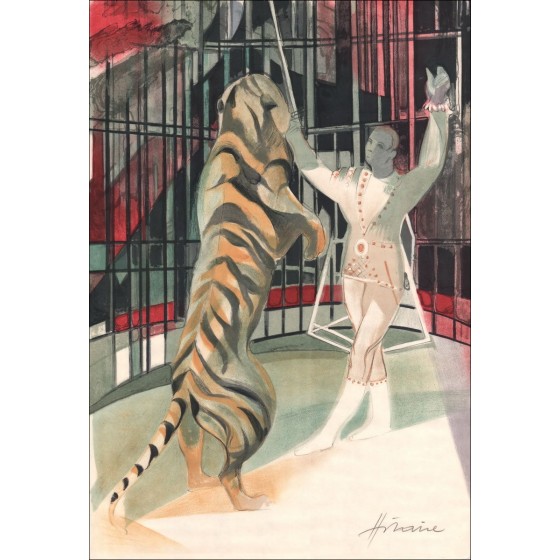
In Camille Hilaire's work, the subject is never abandoned, but it is recomposed. Volumes fragment into overlapping transparent planes, contours double back on themselves, and light moves freely across the canvas. The line, inherited from Dürer, remains remarkably assured, while the colour, bold and brilliant, recalls the Italian masters he admired in his youth.
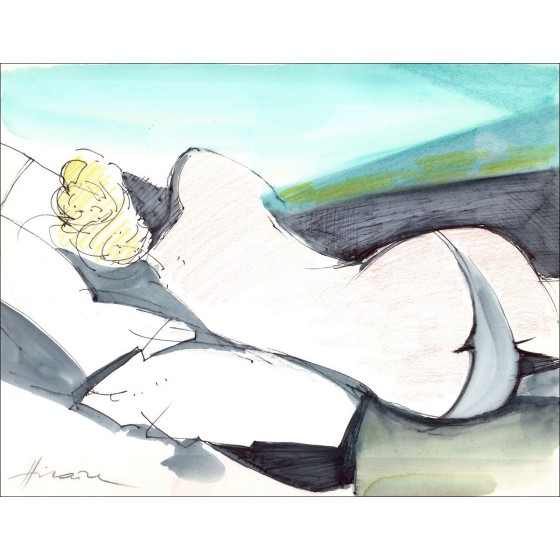
His favourite subjects are female nudes, landscapes of Normandy and the seaside, Venice, horses and racecourses, gardens, bouquets of flowers, and the circus. They appear in his oils as well as in his gouache-heightened watercolours, which rank among the finest achievements of his oeuvre.
Camille Hilaire's Lithographs
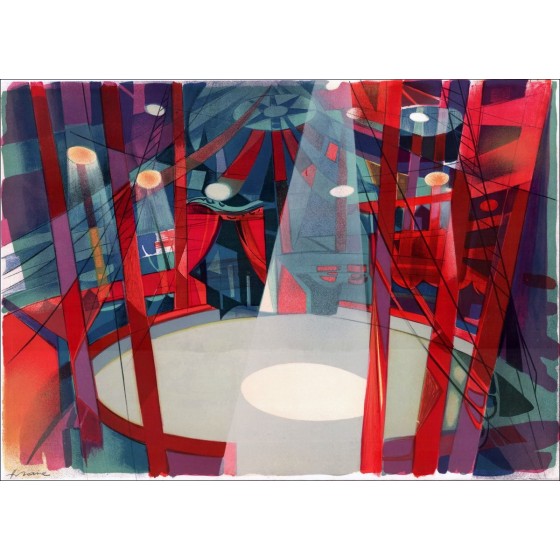
The lithograph plays an important role in his work. He produced numerous colour prints, pulled in limited numbers, signed in pencil and numbered, as well as illustrated books with original lithographs: Femmes (1972), Le Cirque (1974), La Normandie (1976), Jardins (1977) and Méditerranéennes (1994). Often generous in format and very colourful, these lithographs make it possible to acquire an original work by the artist at an accessible price.
Camille Hilaire Prices and Market Value: How Much Is a Work Worth?
The value of a work depends first on its technique, then on its format, subject and condition. As a guide, here are the ranges generally observed on the market, both in galleries and at auctions:
- Small signed lithographs, from 27 x 21 to 32 x 25 cm: €35 to €75.
- Original lithographs in medium format, from 40 x 29 to 53 x 37 cm: €100 to €200.
- Original lithographs in large format, from 53 x 74 to 56 x 76 cm: €200 to €450.
- Illustrated books with signed lithographs, such as Où passent nos rivières: around €950.
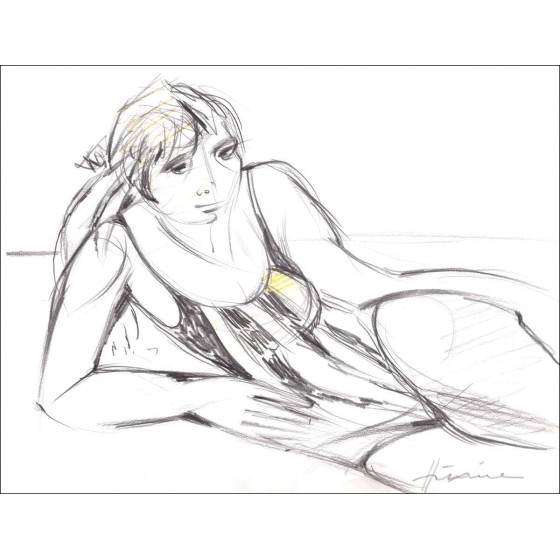
- Original drawings in pencil, charcoal or ink: €295 to €695.
- Original watercolours and gouaches: €550 to €1,950.
- Oils on canvas: from around €4,000, more for large compositions.
The subject (orchards, the banks of the Epte, nudes, Venice, horses), the quality of the composition and the state of conservation then influence the price. Only an appraisal can determine the precise value of a work.
Buying a Work by Camille Hilaire
Looking for a signed Camille Hilaire lithograph? The works presented above cover all of his themes. On the Normandy side, numerous lithographs from the La Normandie series, including La Normandie II, Honfleur or Deauville, as well as Régate en Normandie and several orchards. On the Mediterranean side, the Côte d'Azur series (Èze, Menton, Cannes) and Paysage de Saint-Jean-Cap-Ferrat. For figure lovers, the Femmes and Le Cirque series, bouquets and nude drawings. The original watercolours and gouaches, such as L'étang de Diane, as well as the oil on canvas Reflet d'automne, complete the selection. Some works have already sold: new acquisitions arrive regularly, so please check the page. You can buy online: every work from the gallery is sold with an invoice-certificate and shipped with care, by tracked and insured delivery. To discover the works in person, the gallery, in Argancy near Metz, welcomes you by appointment.
How Much Does a Lithograph or Painting by Camille Hilaire Cost?
Works available at the gallery range from €35 to €3,950. Original signed lithographs are most often priced between €100 and €450, drawings between €295 and €695, watercolours and gouaches up to €1,950, and oils on canvas from around €4,000.
How to Recognise an Original Lithograph by Camille Hilaire?
It normally bears the artist's signature in pencil and a numbering (for example 85/150), or the mention EA or HC. A reproduction or poster, without a handwritten signature, has only decorative value.
Are Camille Hilaire and Hastaire Related?
Yes. Claude Hilaire, known as Hastaire, is the son of Camille Hilaire. He developed his own body of work, very different from that of his father.
Which Illustrated Books Has Camille Hilaire Produced?
Among his illustrated books with original lithographs are Femmes (1972), Le Cirque (1974), La Normandie (1976), Jardins (1977) and Méditerranéennes (1994). A reference work, Camille Hilaire, aquarelles et dessins (Éditions Connivences, 1989, 150 pages), presents his work in watercolour and drawing.
For Which Major Decorative Projects Did Camille Hilaire Work?
Besides his tapestry cartoons for the liner France, he created a fresco for the Georges-de-La-Tour secondary school in Metz, as well as stained-glass windows. This experience of large-scale decoration is reflected in the clarity of his compositions.
What Awards Has Camille Hilaire Received?
He won the Venice Prize in 1948 and the Casa de Velázquez Prize in 1950, two distinctions that preceded his first solo exhibition in Paris, in 1951.
Do you own an oil on canvas, a watercolour, a gouache or an original drawing by Camille Hilaire and wish to sell it? Find out how to proceed on our Sell a work page.