
WEISBUCH Claude
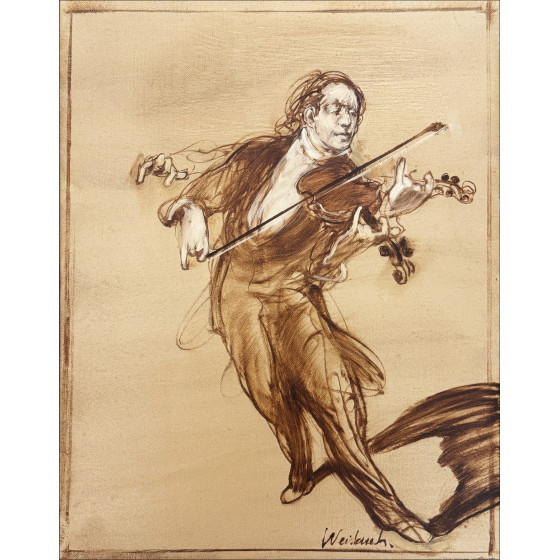
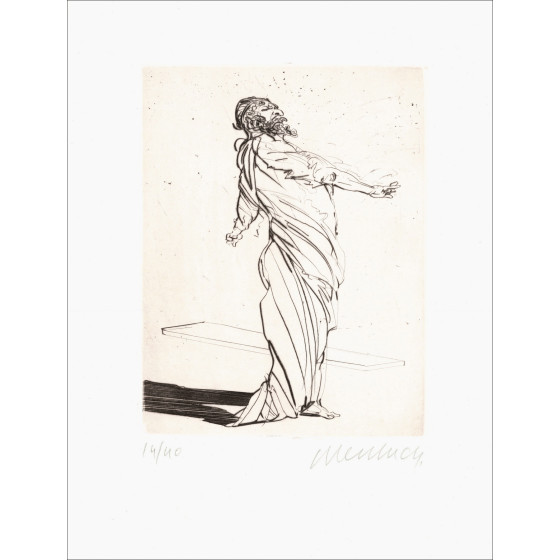
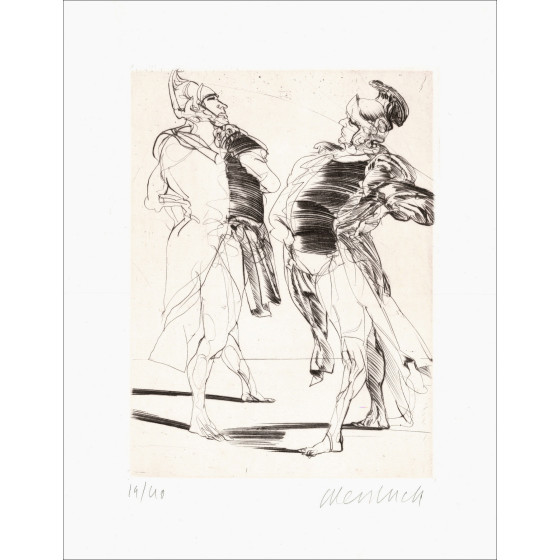
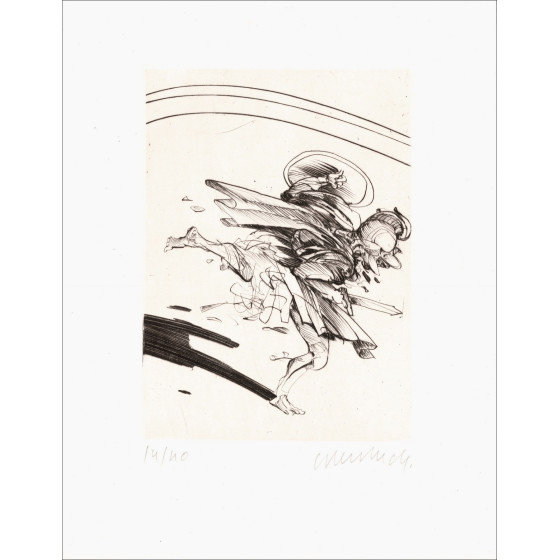
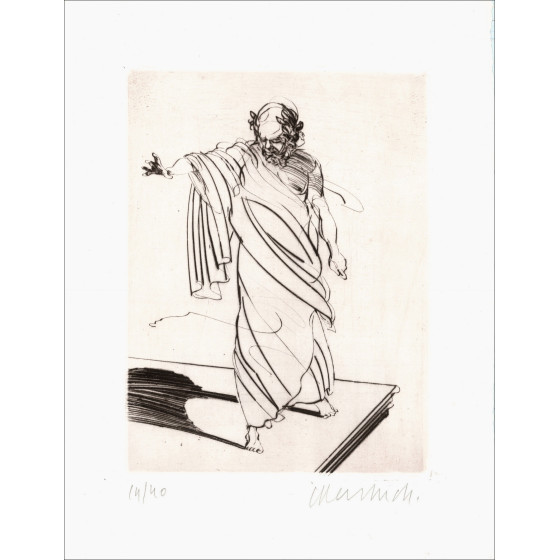
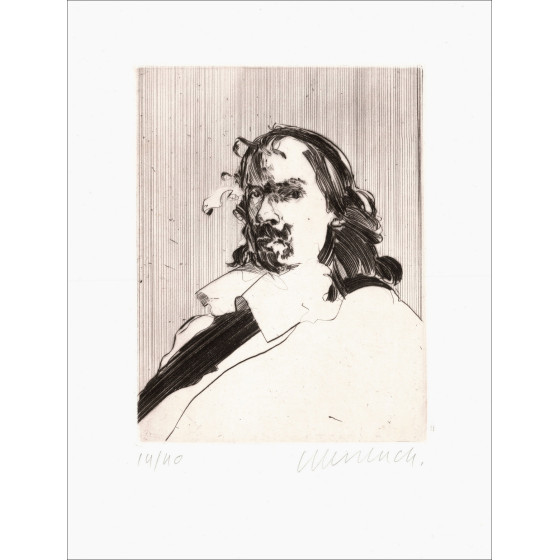
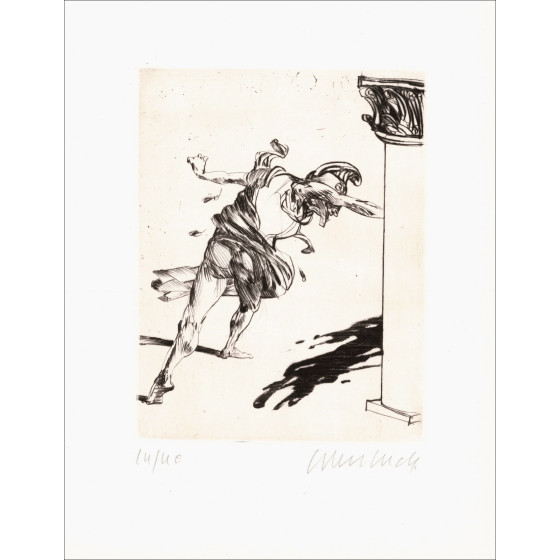
Claude Weisbuch (1927-2014), born in Thionville, painter, draughtsman and printmaker, is the master of movement: violinists, horsemen, actors and the heroes of Cervantes emerge from a nervous, multiplied line. A fine selection of his works is presented below: original drawings, oil paintings on canvas, signed original engravings and lithographs, all certified.

- -€500.00

- -€300.00

- -€300.00


- -€500.00
- -€500.00


- -€500.00





Claude Weisbuch
The Master of Line and Movement
A violinist carried away by his music, a rearing horse, Don Quixote charging at his windmills: in Claude Weisbuch's work, everything vibrates and everything moves. A painter, draughtsman and printmaker born in Lorraine, winner of the Prix de la Critique in 1961, exhibited from Paris to Tokyo and represented in the collections of the Musée d'Art Moderne de Paris and the Bibliothèque nationale de France, he created one of the most recognisable graphic styles of the second half of the 20th century. His works remain surprisingly accessible: an ideal choice for starting or enriching a collection.
Biographical Milestones
1927Born in Thionville, Moselle, on 8 February. His father, Sigmund Weisbuch, is a wholesale watch and jewellery dealer; his mother, Alice Weill, is from Lorraine
1940The exodus forces the family, then living in Nancy, to take refuge in Roanne
1951First exhibition of prints at the Club des Arts in Nancy, following his studies at the École des Beaux-Arts de Nancy under Camille Hilaire and André Vahl
1953Appointed professor of printmaking at the École des Beaux-Arts de Saint-Étienne. Takes part in the Salon de Mai in Paris
1956Grand prize for drawing from the magazine Le Peintre, shared with Jean-Jacques Morvan. First Salon de la Jeune Peinture
1957First solo exhibition in Paris, paintings and prints, at the Galerie Saint-Placide
1958Exhibition at the Galerie de Presbourg in Paris and invitation to the Salon des Peintres Témoins de leur Temps
1960First exhibition at the Galerie Hervé in Paris, which presents him again in 1963 and 1965
1961Prix de la Critique, which brings him to the attention of the general public
1962First exhibition in London, at the O'Hanna Gallery
1963First exhibition in Japan, at the Nichido Gallery in Tokyo
1965First exhibition in Canada, at the Dresdener Gallery in Toronto
1968Full member of the Société des Peintres-Graveurs Français
1970Exhibition at the ARC, Musée d'Art Moderne de la Ville de Paris, and at the Taménaga Gallery in Tokyo, which exhibits him regularly in Tokyo and later in Paris
1975Exhibitions in Vienna, Turin and Washington, at the Joly Gallery
1977First retrospective of his printed work, at the château de Sainte-Menehould
1984Retrospective of his prints in Moscow
1985Murals for the New Otani Hotel in Osaka
1988Retrospective of his paintings at the château de Chenonceau
1995The L'Estampe publishing house in Strasbourg becomes his publisher
1997Knight of the Légion d'honneur
1999"Weisbuch, 50 ans d'estampes": retrospective of 230 works in Strasbourg
2000Retrospective at the château de Vascœuil and exhibition at the Centre culturel Jacques-Brel in Thionville, his birthplace
2010First exhibition at Galerie 125, in Argancy, near Metz
2012Exhibition of 150 works at the château de Malbrouck, in Manderen, Moselle
2014Dies in Paris on 13 April, aged 87. Buried in the Montparnasse Cemetery
Claude Weisbuch's Career
From Thionville to Nancy: A Lorraine Education
Claude Weisbuch trained at the École des beaux-arts de Nancy, where he attended the drawing and decorative composition classes of Camille Hilaire and André Vahl with great dedication. His encounter with the painter from Metz was decisive: Hilaire taught him the fundamentals of drawing and encouraged him to find his own form of expression. A friendship lasting nearly half a century grew between master and pupil, and Weisbuch was one of the last to visit Camille Hilaire in Normandy, shortly before the latter's death in 2004.
Recognition and international career
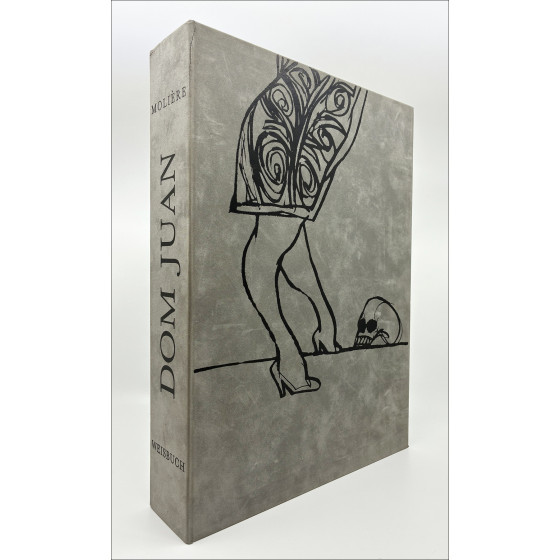
From 1953 onwards, he taught engraving in Saint-Étienne. From 1957, his prints were shown in Paris, then in Toronto, Tokyo, Turin and London. Highly appreciated in Japan, where he has exhibited since 1963, he built a loyal following of collectors there. The Prix de la Critique, awarded to him in 1961, brought him to the attention of the general public. A member of the Société des peintres-graveurs français from 1968, he took part in the major Parisian salons, from the Salon d'Automne to the Salon des Peintres témoins de leur temps, illustrated numerous bibliophile books, notably Dom Juan by Molière, Le Horla and Éloge de la folie, and continued to produce a prolific body of work until his death.
A style instantly recognisable: movement as signature
What first strikes you about Weisbuch is the speed of his line. The contours multiply, and the figures seem captured in full flight, like a sequence of superimposed photographs. His palette, deliberately restricted to ochres, browns, blacks and whites, leaves ample room for light and gesture. Some works have the energy of a sketch taken from life, others the density of a portrait patiently built up.
His subjects are those of performance and momentum: musicians and above all violinists, horses and equestrian scenes, theatre and opera, Harlequin and Punch, heroes of Cervantes and Molière, dancers, card players and portraits of artists of the past, such as Jacques Callot.
Why collectors love Weisbuch
- A lively, multiplied line that creates the illusion of movement, recognisable at first glance.
- A recognised artist: Prix de la Critique 1961, works held at the Musée d'art moderne de Paris and the BnF.
- Subjects that appeal to everyone: music, horses, theatre, Don Quixote, easy to hang in any interior.
- A true master of printmaking, each proof signed and numbered by hand.
Claude Weisbuch prices and market value: how much is a work worth?
The price of a work by Claude Weisbuch depends on its technique, format, subject, condition and edition size. Violinists, riders and Don Quixote are among the most sought-after subjects. As a guide, here are the ranges generally observed on the market, in galleries as well as at auctions:
- Exhibition posters and small lithographs: €40 to €175.
- Signed and numbered original engravings, drypoints and etchings: roughly €125 to €500 depending on format.
- Large-format original lithographs: €275 to €350.
- Illustrated books: up to €495 for Dom Juan by Molière with its fifteen drypoints.
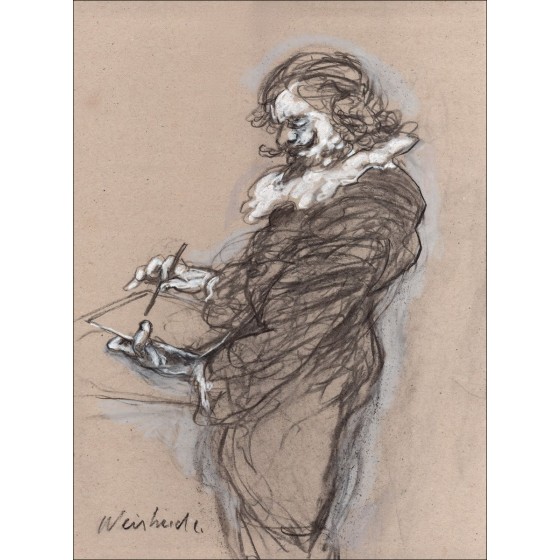
- Original drawings in pencil, charcoal or ink: roughly €975 to €1,500.
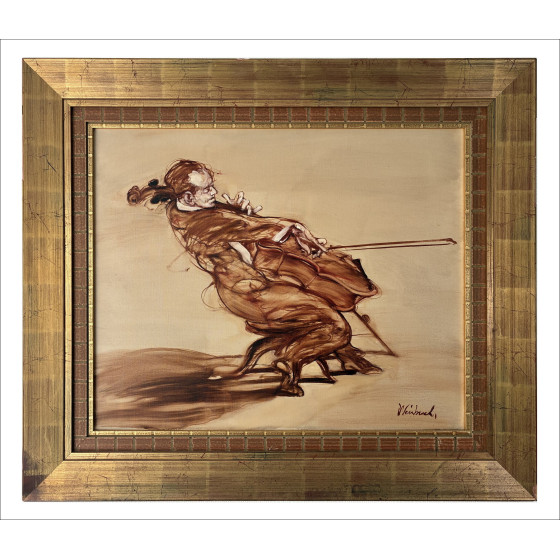
- Oil on canvas: from €2,450 for a 5F to €4,650 for a 12F.
Original engravings are the ideal entry point into his world. Drawings offer the very best of his line as unique pieces, and oil paintings, which are rarer, represent the pinnacle of a collection.
Buying a work by Claude Weisbuch
Looking for a signed Weisbuch lithograph or an original engraving? A fine selection is presented above, each work being checked, described in detail, photographed closely and accompanied by a certificate from the gallery.
- Musicians: Le Violoniste and Le Violoncelliste in oil on canvas, Le Pianiste as a framed lithograph.
- Don Quixote: Don Quichotte et Sancho Panza, dans la Sierra.
- Homage to Callot: the suite of four engravings, including Hommage à Jacques Callot I.
- Theatre and studios: Bonjour Polichinelle, Le Comédien.
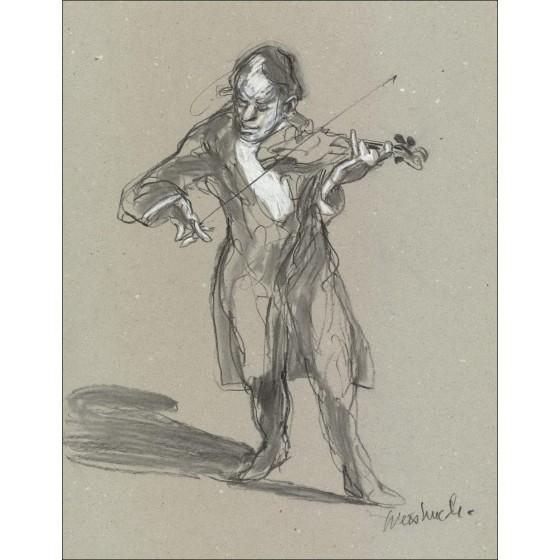
- Original drawing: Le Violoniste, 2013.
Works are shipped with care, by tracked and insured delivery. Every work offered by the gallery is described precisely and sold with an invoice-certificate. Located in Argancy, near Metz, the gallery also welcomes visitors by appointment. You may also like the universe of Louis Toffoli or Bernard Buffet, which will appeal to lovers of expressive line.
How much does an engraving or painting by Claude Weisbuch cost?
Works by Claude Weisbuch currently available at the gallery range from €40 to €4,650: signed and numbered engravings from €125 to €500, original lithographs from €275 to €350, drawings from €975 to €1,500 and oil on canvas from €2,450 to €4,650.
What does the mention E.A. on a Weisbuch print mean?
E.A. stands for épreuve d'artiste, an artist's proof pulled outside the numbered edition. It is also signed by the artist and is distinguished from the numbered impressions by its smaller print run.
What is the difference between an original lithograph and an exhibition poster?
An original lithograph is pulled from a stone worked by the artist, then signed and numbered. The exhibition poster, printed to announce an event in Paris or Los Angeles, is more affordable, starting from €39.50.
Which books has Claude Weisbuch illustrated?
He illustrated many bibliophile books: Dom Juan by Molière (fifteen drypoints, 1990), Le Horla (fourteen drypoints, 1979), Éloge de la folie (nineteen lithographs, 1967) and Éloge de la raison (seven signed drypoints, 2009).
Why is Claude Weisbuch so highly regarded in Japan?
Exhibited in Tokyo as early as 1963, he found a loyal following of collectors there, drawn to the vitality of his line and to his theatrical subjects. The Kabuki dancer, to which he devoted both an oil painting and an engraving, bears witness to this connection.
How can you recognise an authentic Weisbuch engraving?
An authentic impression is signed in pencil and numbered by hand, often in the form 1/10 or 25/75. At Galerie 125, each piece is described with its dimensions, date and edition, then sold with an invoice-certificate.
Do you own an oil on canvas or an original drawing by Claude Weisbuch and wish to sell it? Find out how to proceed on our Sell a work page.