BUFFET Bernard

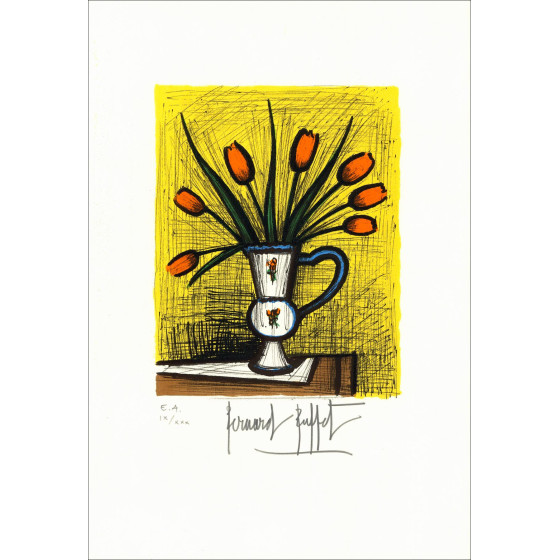
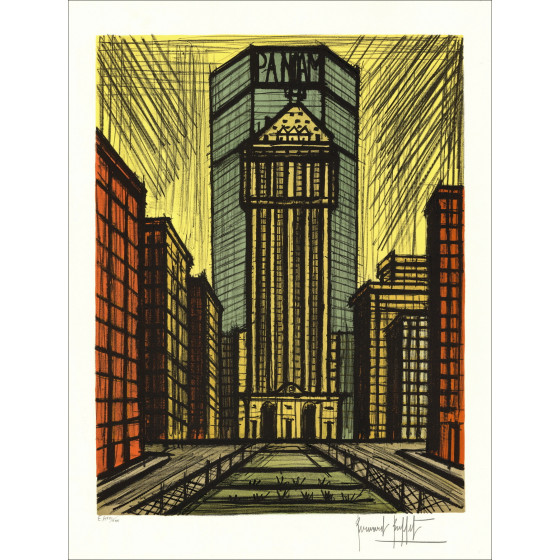
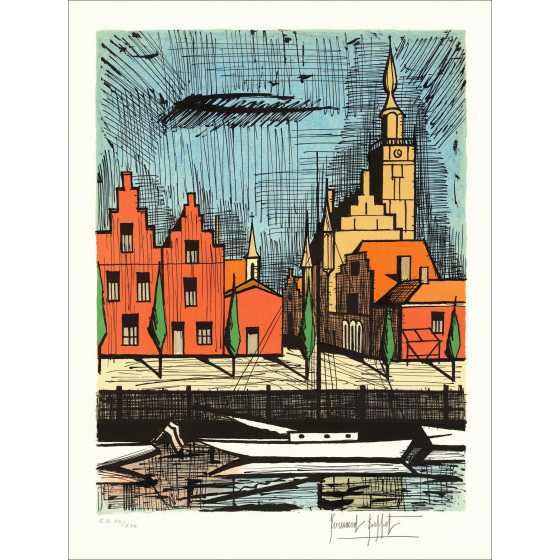
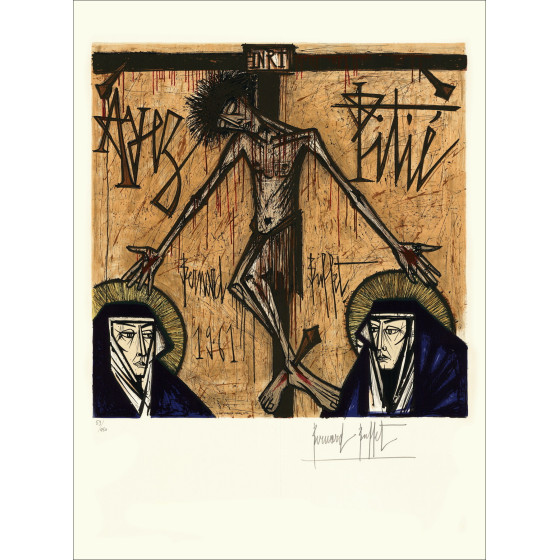
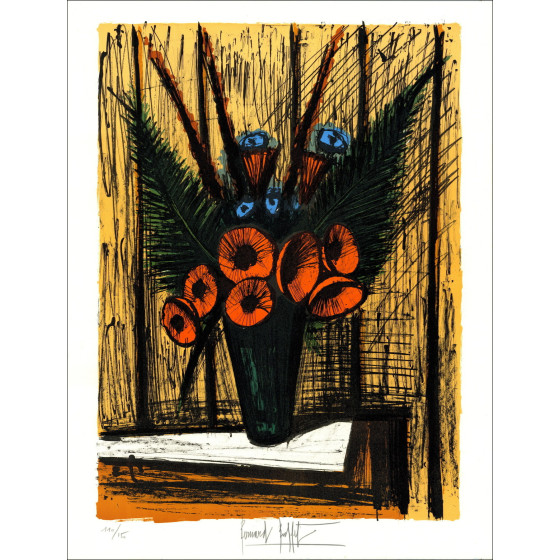
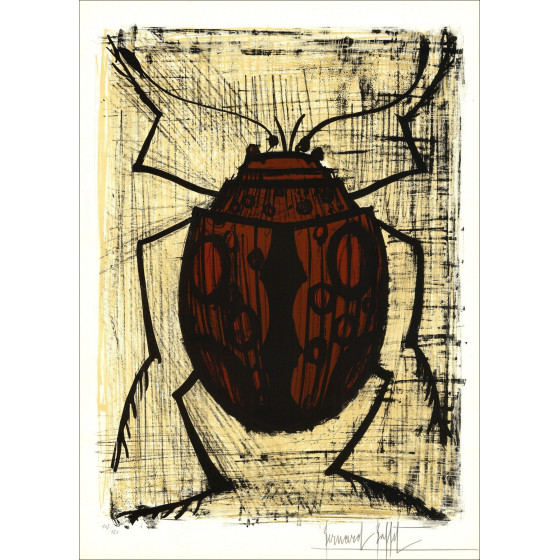
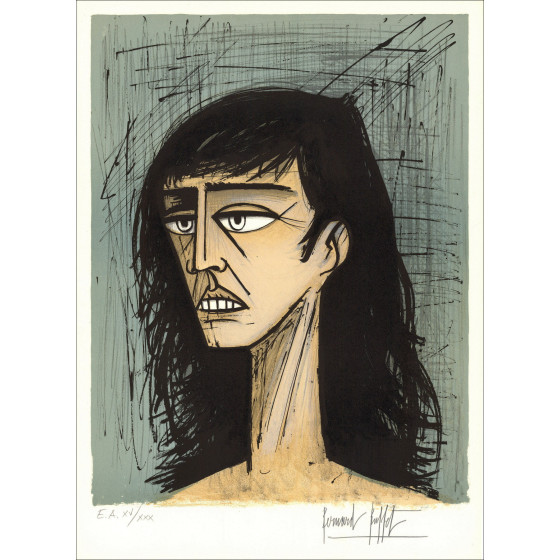
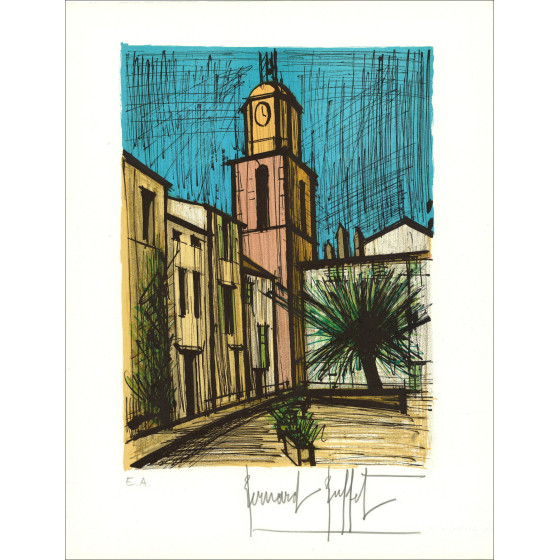
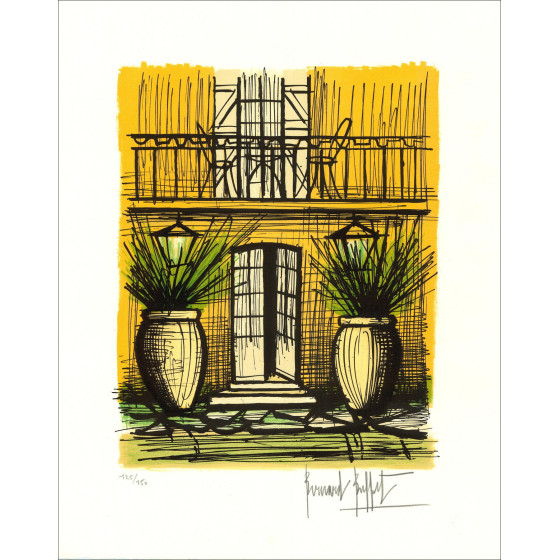
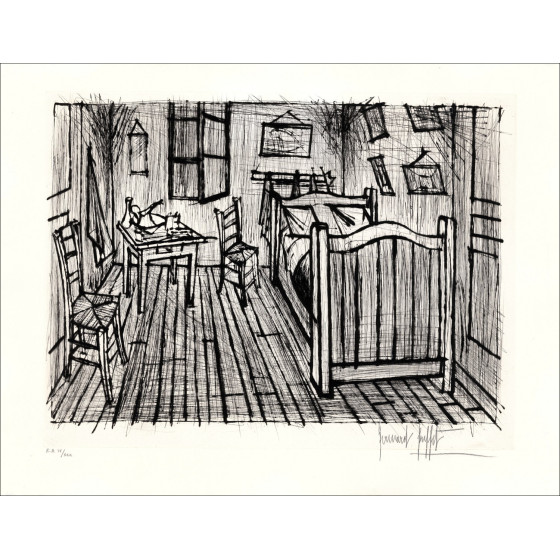
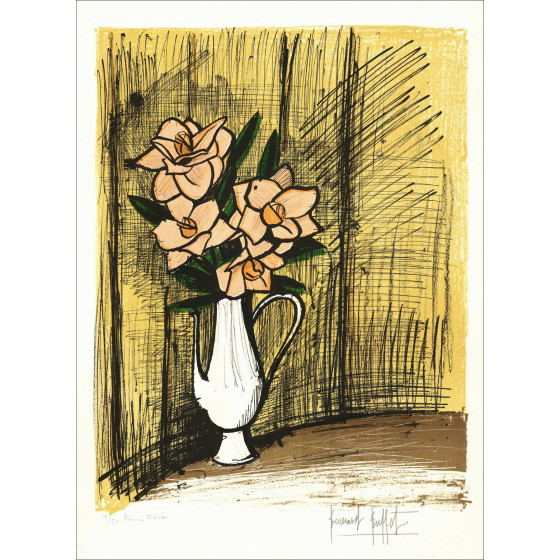
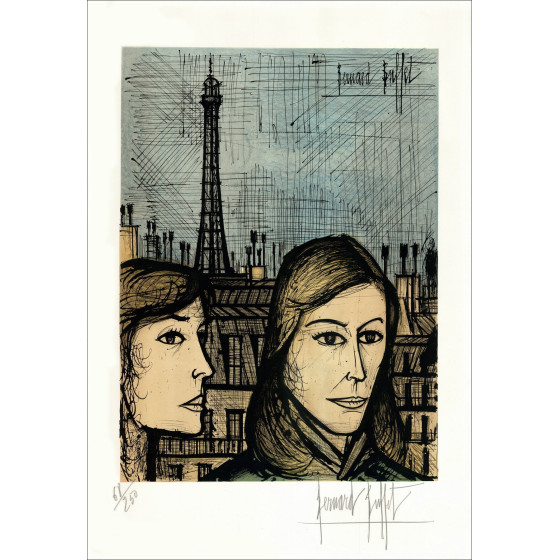
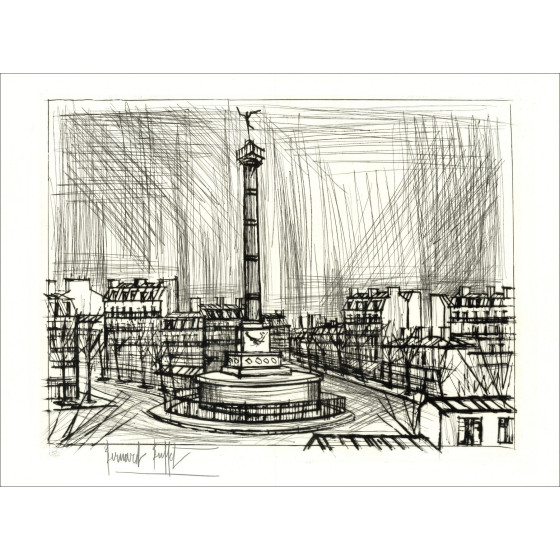
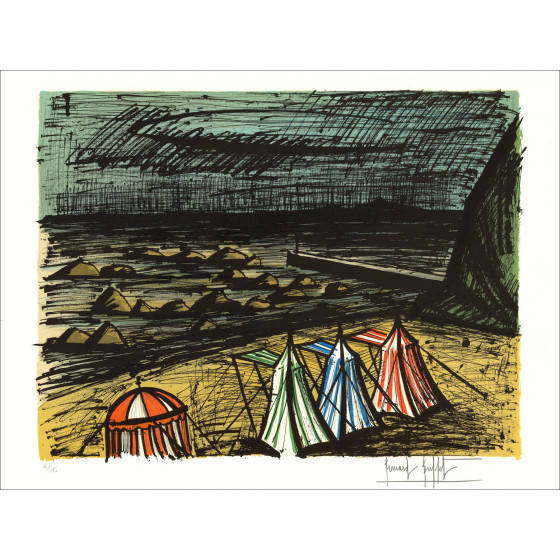
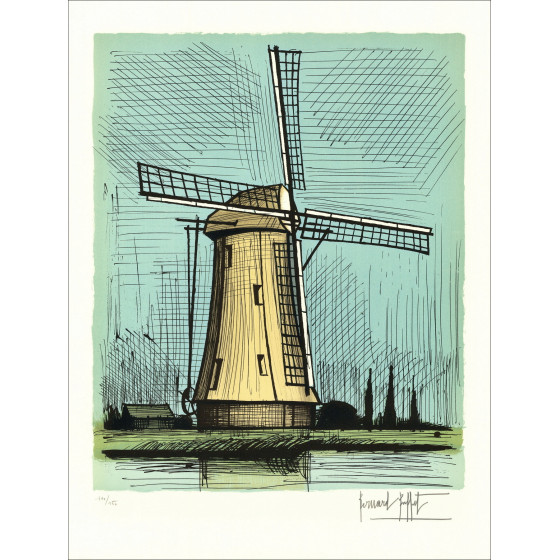
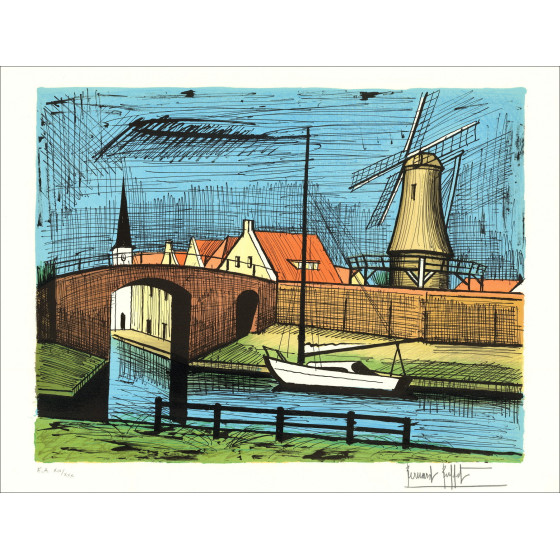
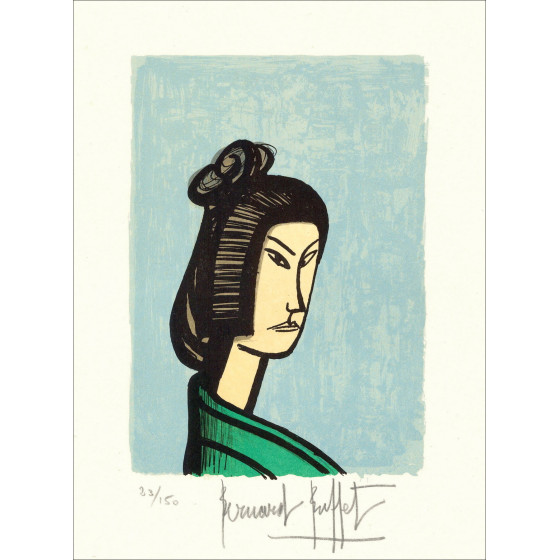
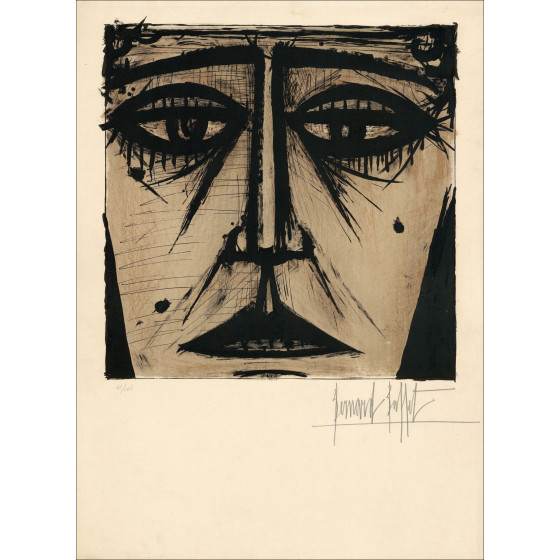
Bernard Buffet (1928-1999), a leading figure of post-war French painting, is famous for his angular black line and austere palette. The gallery offers a wide selection of signed original lithographs, engravings and complete albums with suite: clowns, cityscapes of France and beyond, bouquets, still lifes, with certificate and tracked, insured shipping.

Active filters

Bernard Buffet
The Black Line That Conquered the World

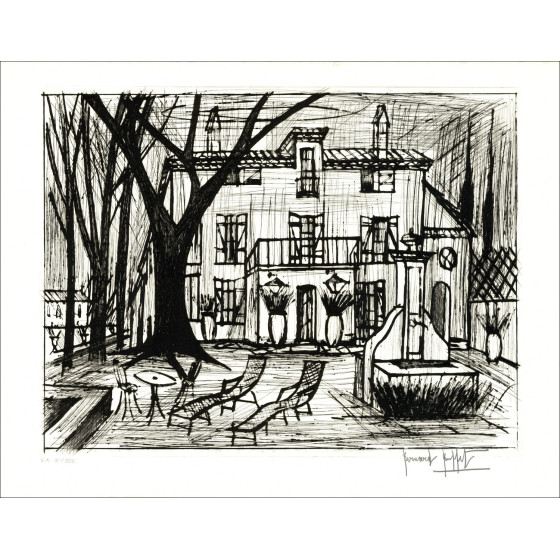
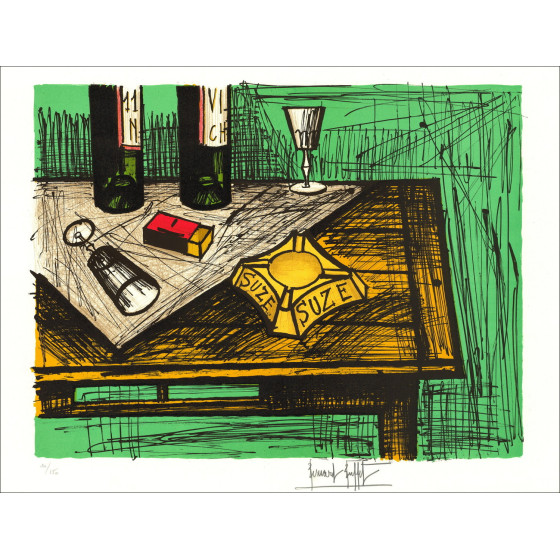
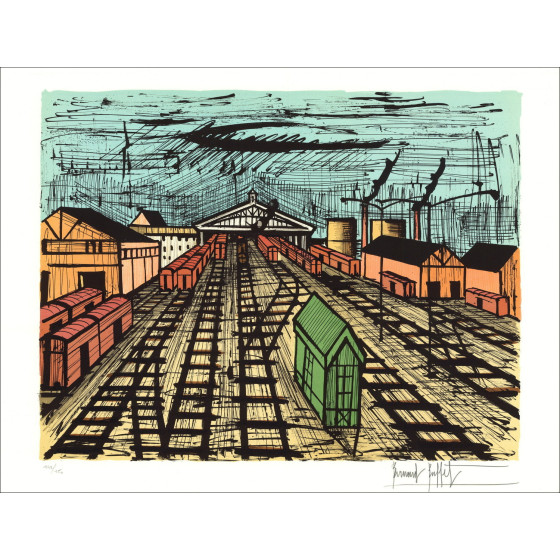
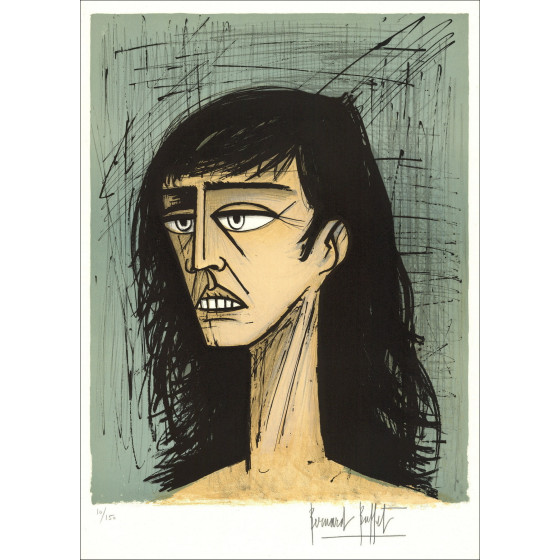
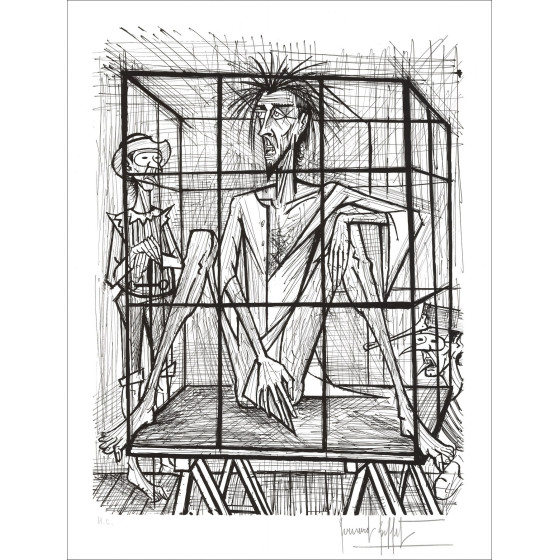
Bernard Buffet (1928-1999) stands out as one of the major artists of post-war French painting. His immediately recognisable expressionist style combines angular black lines, a austere palette and a poignant depiction of solitude. He left behind more than 8,000 works: paintings, drawings, watercolours, engravings and original lithographs. His signed lithographs ensured his international reach and offer an ideal entry point into his universe. Galerie 125 presents his lithographs and engravings, signed and accompanied by a certificate.

Biographical Milestones

1928Born in Paris, in the Batignolles district, on 10 July

1943Enters the École nationale supérieure des Beaux-Arts, in the studio of Eugène Narbonne

1945Death of his mother, Blanche

1946First canvas exhibited, a self-portrait, at the Salon des moins de trente ans

1947First solo exhibition in Paris. The French State purchases one of his canvases

1948Prix de la Critique, shared with Bernard Lorjou. Beginning of his collaboration with the dealers Emmanuel David and Maurice Garnier
1950Meets Pierre Bergé, who will share his life until 1958

1951Stays with Jean Giono in Manosque, then settles in Provence, at Nanse

1952First themed exhibition, La Passion du Christ, at Drouant-David, renewed every year in February. First lithographs

1955Ranked first among the ten best post-war painters by Connaissance des Arts

1956An entire room is devoted to him at the Venice Biennale. Moves to the Château l'Arc estate, near Aix-en-Provence
1958Retrospective at the Galerie Charpentier, which welcomes more than eight thousand visitors. Meets Charles Sorlier, of the Mourlot workshop, who will accompany him throughout his lithographic work. Marries Annabel Schwob on 12 December
1961Major cycle on the life of Christ for the chapel of Château l'Arc, donated ten years later to the Vatican Museums

1962Birth of his daughter Virginie. Sets and costumes for Carmen at the Opéra de Marseille

1963Birth of his daughter Danielle

1964Moves to Brittany, at Saint-Cast

1968His dealer Maurice Garnier takes over the David et Garnier gallery alone, renamed Galerie Maurice Garnier. He exhibits Buffet every year until the painter's death

1971Knight of the Légion d'honneur

1973Opening of the Bernard Buffet Museum at Surugadaira, Japan, founded by Kiichiro Okano

1974Elected to the Académie des beaux-arts

1978Designs the postage stamp L'Institut et le Pont des Arts

1986Moves to the La Baume estate, near Tourtour (Var), his final home

1991Retrospectives at the Pushkin Museum in Moscow and the Hermitage in Saint Petersburg

1993Officer of the Légion d'honneur

1999Dies in Tourtour, on 4 October, at the age of 71

2016Major retrospective at the Musée d'Art moderne de la Ville de Paris

The Journey of Bernard Buffet, from Paris to Japan

A Free and Precocious Artist

Born in Paris, Bernard Buffet caught the attention of critics early on with his graphic mastery. At the age of 20 he was awarded the Prix de la Critique (Critics' Prize), shared with Bernard Lorjou, and embarked on a meteoric career. Indifferent to fashion, he developed a personal style, sometimes criticised, often admired: gaunt figures, deserted landscapes, clowns and still lifes reflect a constant inner tension. His influences include Van Gogh, Courbet, Géricault, but also Rouault and Gruber in the expressionist vein.

International recognition

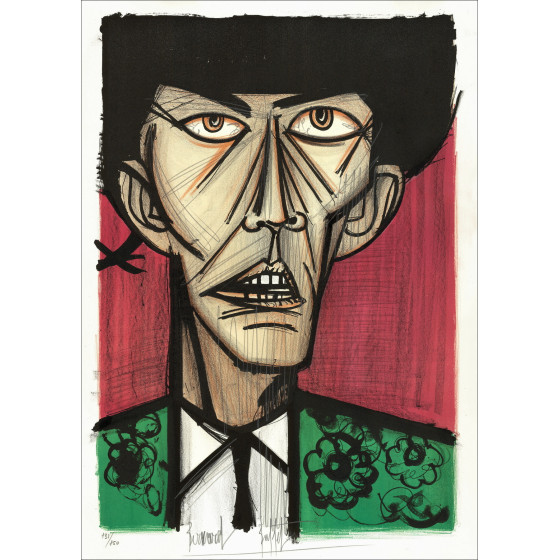
While part of the Parisian art world criticised him, Buffet was acclaimed in Japan as a master: a museum was dedicated to him as early as 1973, in Surugadaira, in Shizuoka Prefecture. He collaborated with the great printmaking workshops, notably Mourlot in Paris, where he printed his lithographs alongside artists such as Pablo Picasso, Marc Chagall or Joan Miró. His emblematic series (Les Clowns, Les Jeux de dames, Saint-Tropez, Venise), as well as the circus, bullfighting, flowers and birds, form the core of the market for his signed original lithographs.

Catalogues raisonnés and references

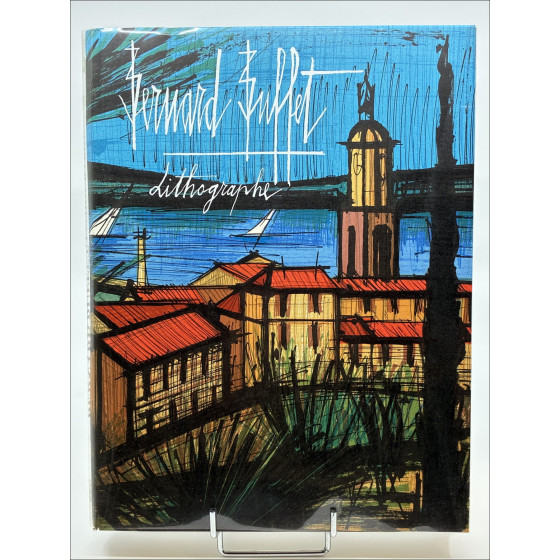
Bernard Buffet's lithographs are listed in the catalogues raisonnés by Charles Sorlier, Bernard Buffet lithographe, volume I covering 1952-1979 and volume II covering 1979-1986, and his engravings in that of Maurice Rheims. Later lithographs, from the late 1980s and the 1990s, do not appear in these volumes and are expected to be included in a third volume, currently in preparation: a recent lithograph without a catalogue number may therefore well be an original work. To help identify an authentic print, consult our guide Bernard Buffet, graveur et lithographe on Le Guide de l'Estampe.

Dante's Inferno: the 1977 drypoints

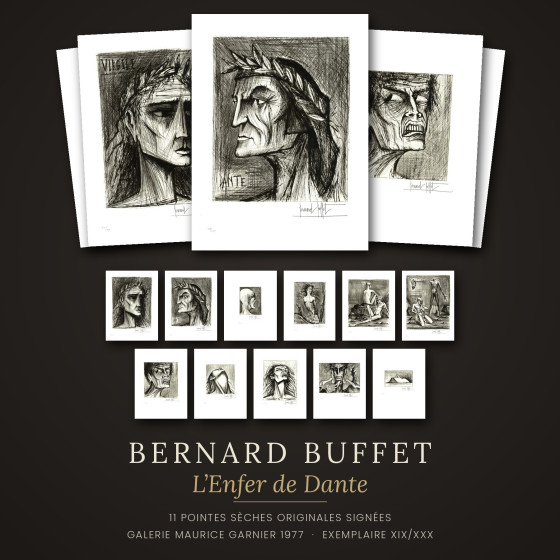
L'Enfer de Dante, the first canticle of The Divine Comedy, was published in 1977 by Maurice Garnier. Buffet engraved eleven original drypoints measuring 76 x 58 cm, printed on Moulin du Gué paper on the hand presses of the Lacourière et Frélaut workshop, in an edition of 120 copies. Only thirty deluxe copies additionally include a suite of the eleven plates, signed in pencil and numbered in Roman numerals. Emaciated faces, tormented bodies, scratched black lines: Buffet's line gives the descent into Hell striking intensity. The work is referenced in the catalogue raisonné of engravings under numbers 357 to 367. The gallery offers a complete deluxe copy of L'Enfer de Dante, with its signed suite and original slipcase.

Albums and portfolios, from Paris to Don Quixote

Buffet designed large albums, portfolios and illustrated books, most often with the printer Fernand Mourlot or his dealer and publisher Maurice Garnier. Complete, in their original slipcase, they are among the most sought-after sets among collectors, and their plates are also found individually:

  • Les Chants de Maldoror by Lautréamont (1952): his first major illustrated book, one hundred and twenty-five drypoints commissioned by the collector Maurice Girardin.
  • Recherche de la pureté by Jean Giono (1953).
  • La Passion du Christ (1954): a suite of drypoints.
  • La Voix humaine by Jean Cocteau (1957): drypoints.
  • Les Voyages fantastiques de Cyrano de Bergerac (1958).
  • Saint-Cast (1962): drypoints on a poem by Baudelaire.
  • Paris (1962): poems by Baudelaire and ten full-page original colour lithographs.
  • New York (1964).
  • Toreros (1966): ten colour lithographs signed in pencil, with two pages of text in calligraphy by Buffet.
  • L'Herbier (1966): with texts by Louise de Vilmorin.
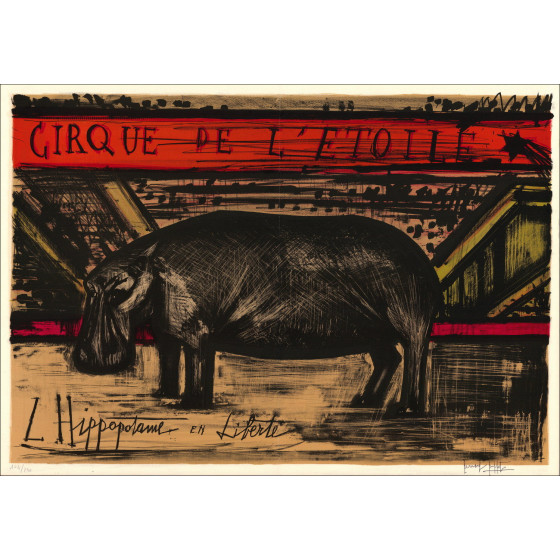
  • Mon cirque (1968): over forty colour lithographs devoted to clowns and circus folk, printed and published by Fernand Mourlot, issued in an edition of 120 copies.
  • Jeux de dames (1970): published by André Sauret in Monte-Carlo.
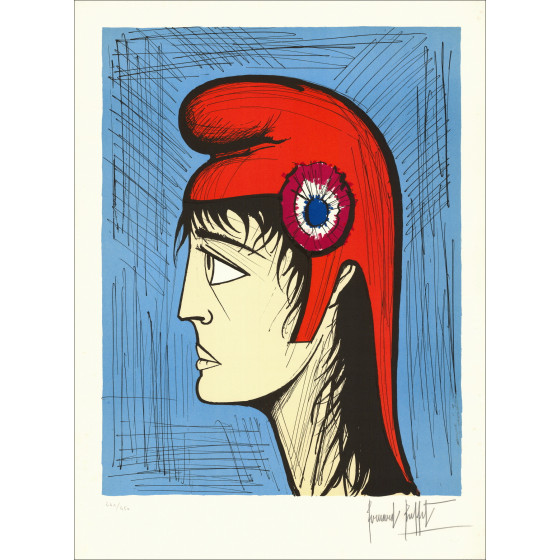
  • La Révolution française (1977): published by Maurice Garnier.
  • L'Enfer de Dante (1977): eleven drypoints, presented above.
  • Saint-Tropez (1979): published by Mazo.
  • Voyage au Japon (1981): on a text by Annabel Buffet, lithographed entirely at Mourlot.
  • Venise (1986): ten colour lithographs on a text by Annabel Buffet, printed at Mourlot and published by Maurice Garnier in an edition of 185 copies.
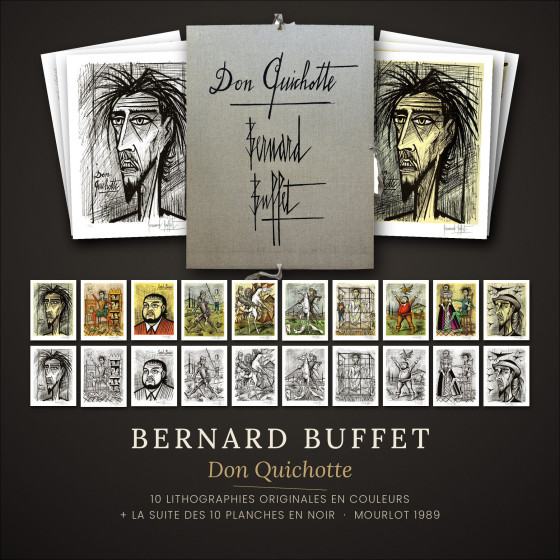
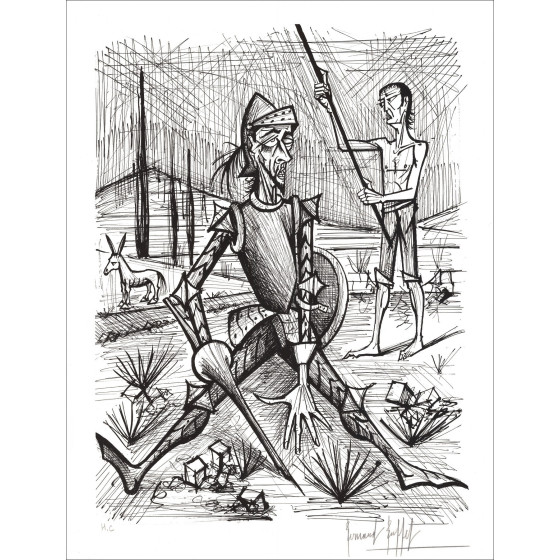
  • Don Quichotte (1989): ten colour lithographs, presented just below.

Don Quichotte: the 1989 album

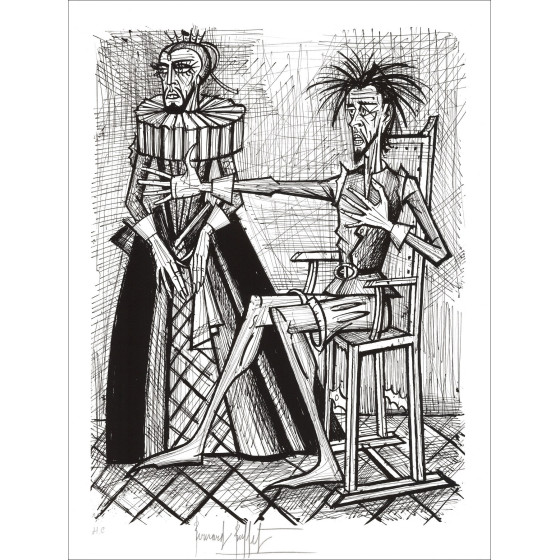
The album Don Quichotte by Cervantes, published in Paris by Maurice Garnier and completed in printing in 1989, comprises ten original colour lithographs on Arches vellum, printed on the presses of the Imprimerie Mourlot, with texts in calligraphy by Buffet himself. The edition is limited to 235 copies, and all the plates are signed. The deluxe copies also include a suite of the black stones alone. Discover the Don Quichotte album by Bernard Buffet, a complete work with its suite.

Bernard Buffet prices and market value: how much is a lithograph worth?

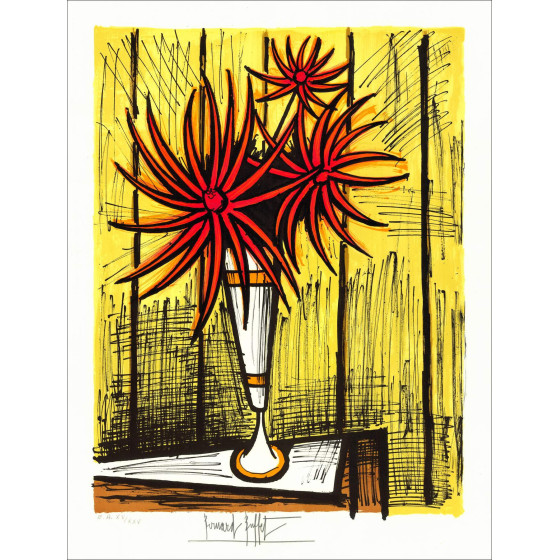
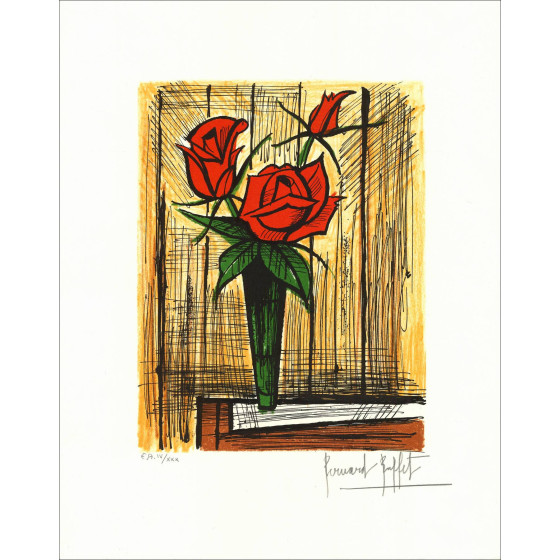
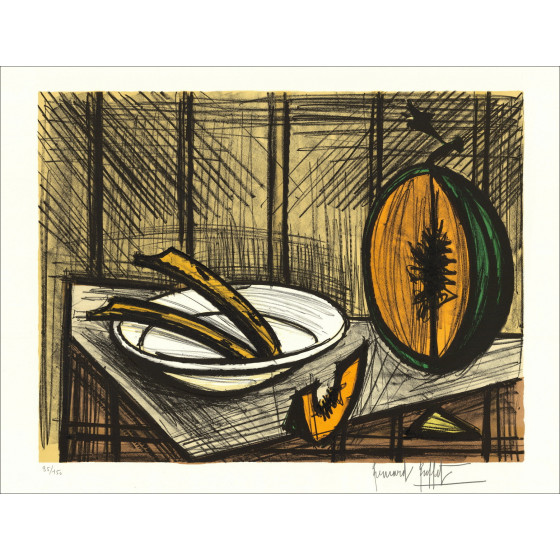
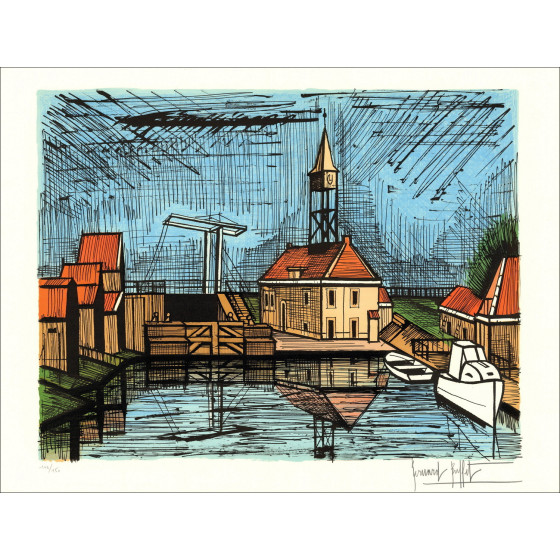
The price of an original lithograph depends on the handwritten signature, the numbering, the subject, the format, the period and the condition. Small-format works signed in the plate are a good way to start a collection. Medium-format lithographs signed in pencil, or large-format ones measuring 58 x 76 cm, form the core of the market: cityscapes, still lifes and bouquets are in high demand. Next come the emblematic subjects, clowns and bullfighters, in particular the plates from Mon cirque, followed by complete albums with their suite, true collector's pieces. Buffet's market value remains stable, with sustained demand for authentic, signed and well-preserved works.

Artist's proofs (E.A.): what to look for

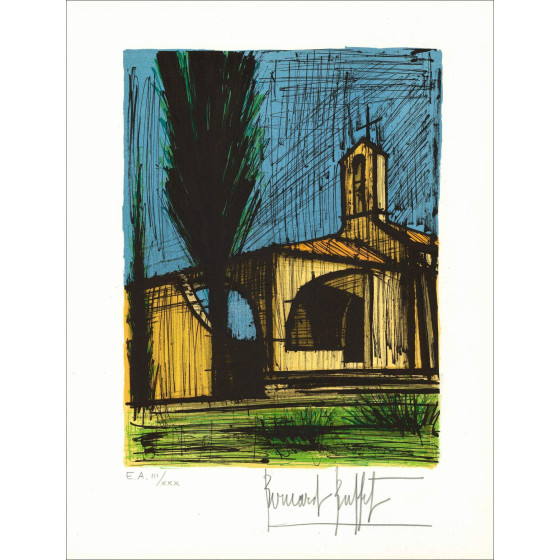
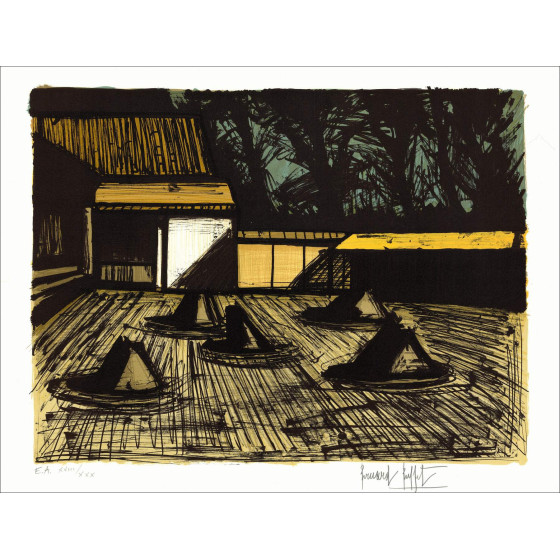
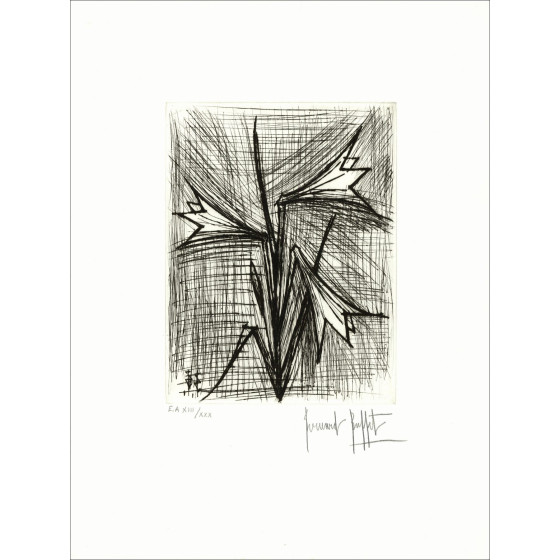
Pulled as a margin copy from the numbered edition, artist's proofs (E.A.) are most often numbered in Roman numerals, for example E.A. XII/XXX, and signed. Highly prized by collectors, they are the copies reserved for the artist. The numbering, the signature and the provenance are specified on each record.

Buy a Bernard Buffet Artwork

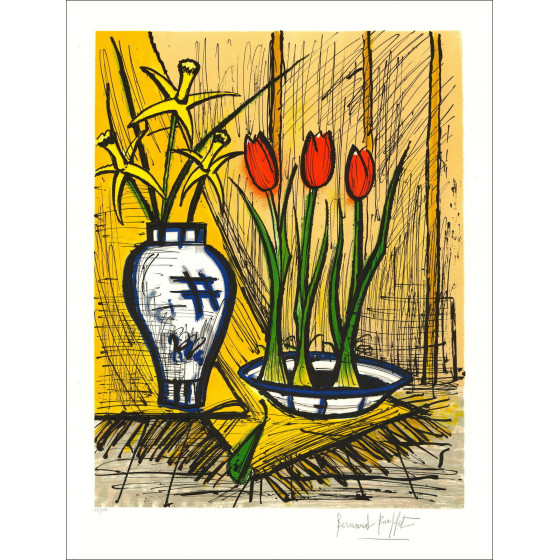
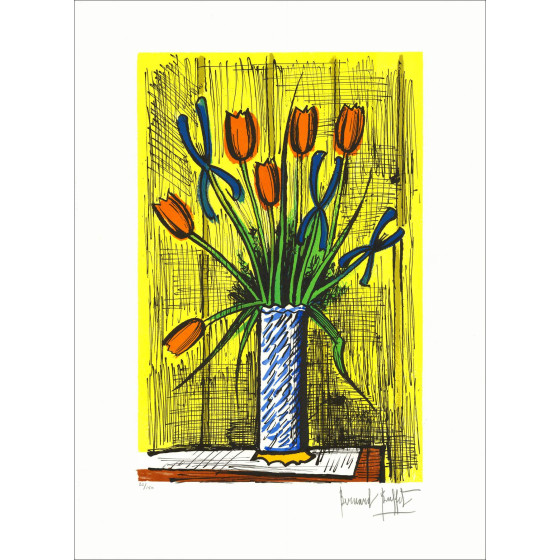
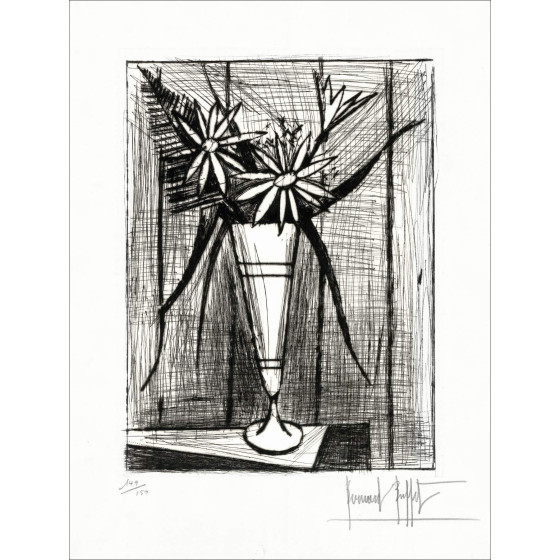
Are you looking for a signed Bernard Buffet lithograph, an original engraving or a complete album? The works presented above are available to buy online, with tracked and insured shipping, or can be viewed at the gallery in Argancy, by appointment. This art gallery near Metz, accessible from Thionville, Nancy and Luxembourg, welcomes art lovers from the region as well as collectors from across France. Among the works presented: Mon cirque, Clown au fond rouge (1968), La Révolution, Marianne (1989), Bouquet de jonquilles et lilas (1985) and the original engraving Bouquet de fleurs (1983). Each work is described in detail, with full transparency about its condition, and sold with an invoice-certificate and a certificate of authenticity that guarantees it and facilitates resale. Shipping is carefully handled and payment is secure.

How much does a Bernard Buffet lithograph cost?

It all depends on the signature, the format and the subject. Original works online range from €75 to €5,950. Market benchmarks:

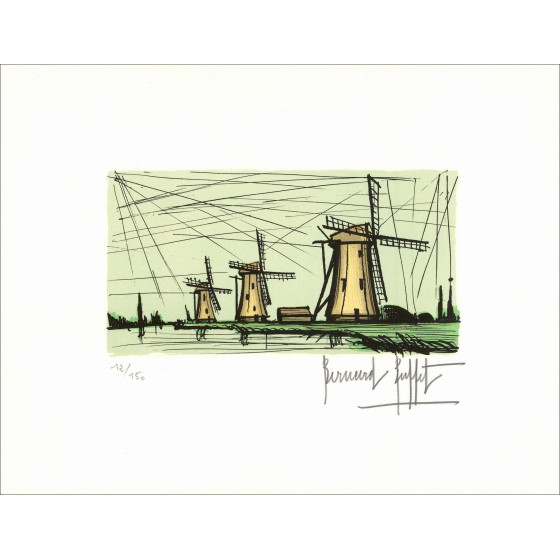
  • small formats signed in the plate (1967 series at 31 x 24 cm, lithographs at 27 x 21 cm): approximately €75 to €300.
  • medium-format lithographs signed in pencil, from 38 x 26 to 65 x 50 cm: approximately €950 to €1,750.
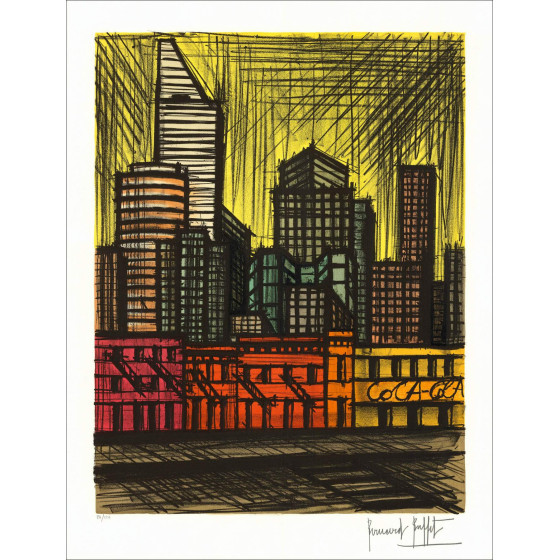
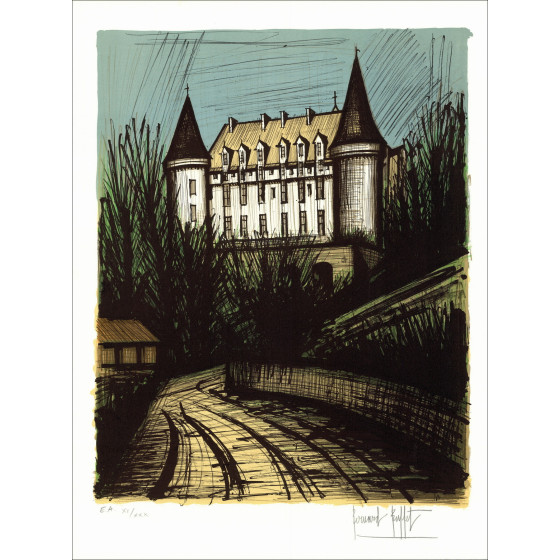
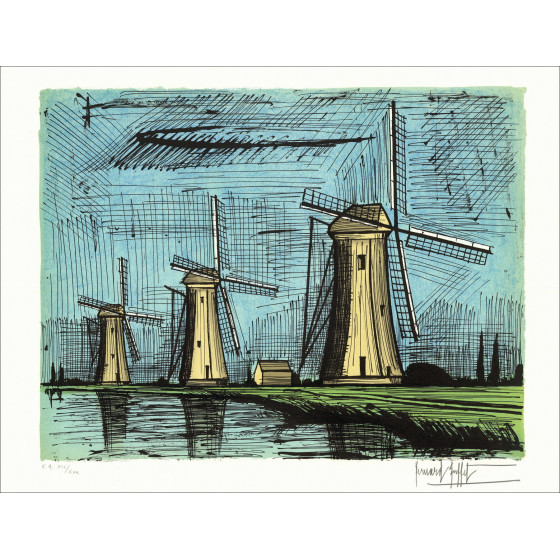
  • large lithographs signed, 58 x 76 cm (cityscapes, still lifes, bouquets): around €2,000, up to €3,000 for the most sought-after subjects such as New York or the Rolls-Royce.
  • clowns and bullfighters, in particular the plates from Mon cirque: approximately €2,000 to €6,000 depending on the plate.
  • complete albums with their suite, such as L'Enfer de Dante or Don Quichotte: approximately €15,000 to €30,000.
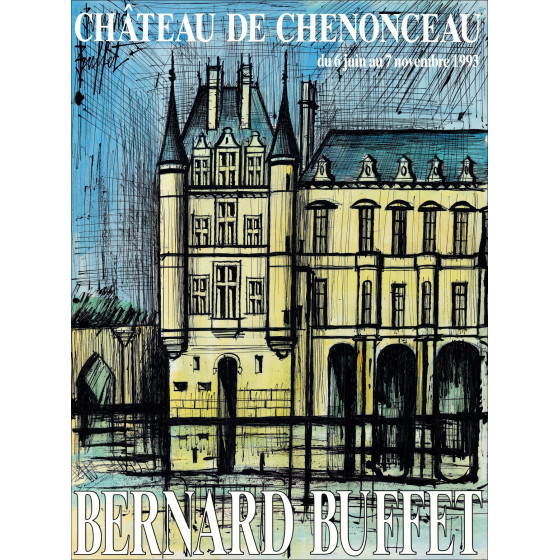
  • exhibition posters: approximately €60 to €300.

How can you recognise an original Bernard Buffet lithograph?

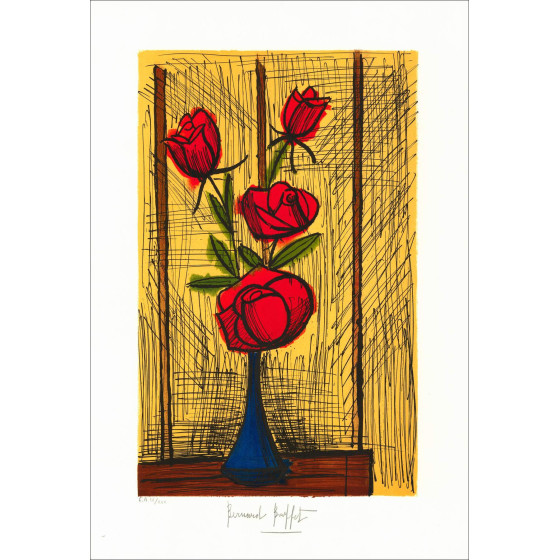
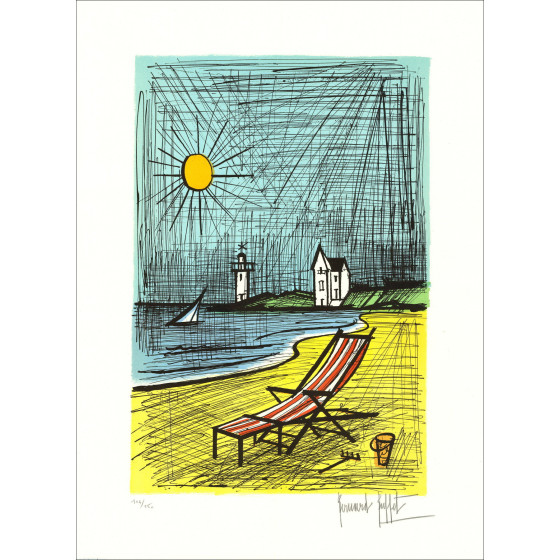
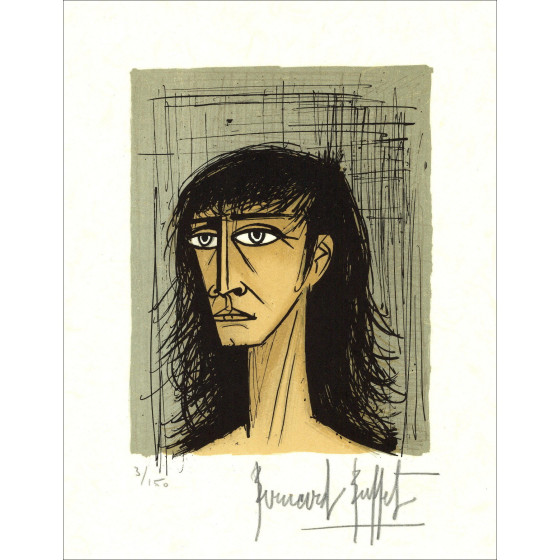
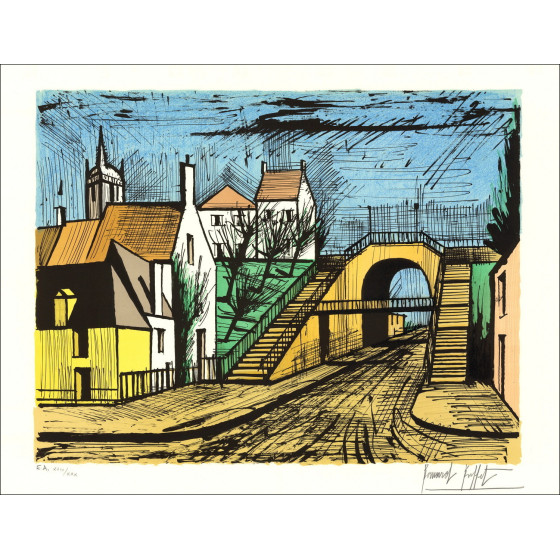
His black, angular and nervous line, which structures his clowns, cityscapes, flowers and still lifes, makes him instantly recognisable. An original lithograph is generally numbered and signed in pencil, and most are referenced in Charles Sorlier's catalogues raisonnés, except for the later ones, dating from after 1986. Decorative reproductions, whose signature and numbering are printed, are not original works.

Are all Bernard Buffet lithographs signed?

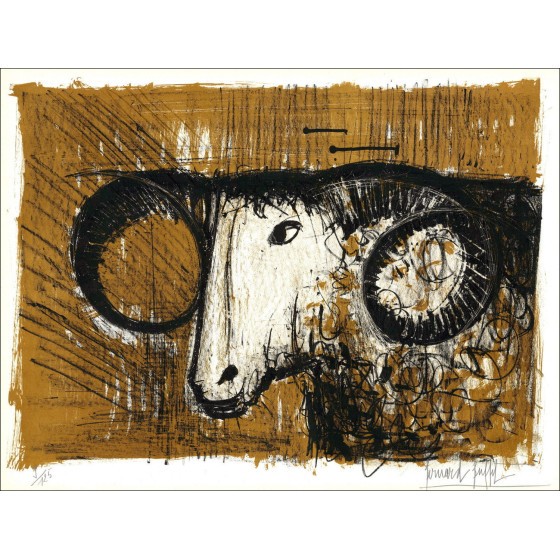
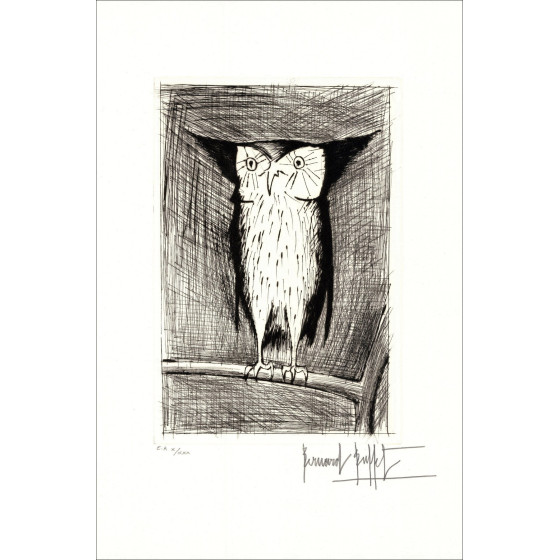
Most are signed in pencil, a few in ink, notably in the circus series. Others are signed in the plate: the signature is then printed together with the image, which does not prevent them from being original lithographs, with genuine collector's value. This is the case of the 1967 series in the 31 x 24 cm format, printed at Mourlot: Le Hibou, Le Clown jaune, Le Clown rouge, Le Village, Nature morte aux fruits, Nature morte à la bouteille, Le Bouquet violet, Les Oiseaux and Le Torero. There are also unsigned edition lithographs, which offer a more accessible entry point.

Where were Bernard Buffet's lithographs printed?

Most were printed in Paris at the Mourlot workshop, one of the most prestigious of the 20th century. Buffet produced numerous original lithographs there, as well as the posters for his exhibitions at his dealer Maurice Garnier's gallery.

What is drypoint, the technique used for L'Enfer de Dante?

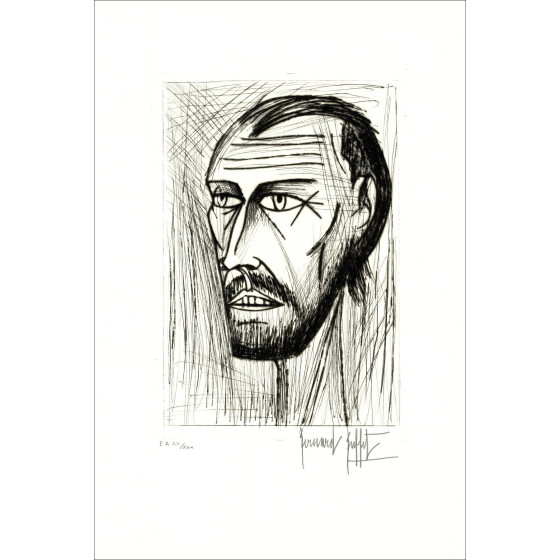
Drypoint is a direct engraving technique: the artist incises the metal plate with a needle, without acid. The line leaves a metal burr that holds the ink and produces a velvety black, perfectly suited to Buffet's scratched line. As each plate wears down quickly, the editions are limited.

Is there a Bernard Buffet museum?

Yes, a museum entirely devoted to Bernard Buffet opened in 1973 in Japan, in Shizuoka Prefecture, a testament to the artist's great popularity in that country.

Appraisal, sale or purchase of a Bernard Buffet work

Do you own an original lithograph, an engraving, a drawing or a painting by Bernard Buffet? Galerie 125 offers a confidential, no-obligation appraisal, based on a thorough knowledge of the market. For a serious appraisal, simply send detailed photographs, the dimensions, the signature and numbering, as well as the general condition of the work. Depending on the quality of the piece, an immediate purchase may be considered. Every request is handled with rigour and discretion.

Do you own an oil on canvas, a watercolour, an original drawing, a lithograph or a signed engraving by Bernard Buffet and wish to sell it? Find out how to proceed on our Sell a work page.