
PICASSO Pablo
Pablo Picasso (1881-1973), Spanish painter, sculptor, ceramicist and printmaker, invented Cubism with Georges Braque and painted Les Demoiselles d'Avignon and Guernica. Discover below his lithographs printed at Mourlot, the suite of La Comédie humaine, his peace doves and his original exhibition posters.
Pablo Picasso
The Genius of a Thousand Faces
Pablo Picasso (1881-1973) is the most famous artist of the 20th century. A painter, sculptor, ceramicist, draughtsman and printmaker, he invented Cubism with Georges Braque, painted Les Demoiselles d'Avignon and Guernica, and never stopped reinventing himself over nearly eighty years of creative work. His printed and lithographed output, one of the richest in the history of art, today allows many collectors to live with a work by the master.
Biographical Milestones
1881Born in Málaga, Spain, on 25 October
1895His family settles in Barcelona
1901–1906Blue and Rose Periods
1904Settles in Paris, at the Bateau-Lavoir, in Montmartre
1907Les Demoiselles d'Avignon
1907–1914Invention of Cubism with Georges Braque
1937Guernica, International Exhibition in Paris
1945–1948Beginning of his long collaboration with the Mourlot lithography workshop
1946–1948Stays in Antibes, then works on ceramics in Vallauris
1949His Dove becomes the poster of the World Congress of Partisans of Peace
1961Settles in Mougins
1973Dies in Mougins, on 8 April
Picasso's Path, from Málaga to Paris
A Prodigy Trained in Spain
The son of a drawing teacher, Pablo Ruiz Picasso showed exceptional talent from childhood. Trained in A Coruña, Barcelona, and then at the Royal Academy of San Fernando in Madrid, he frequented the Els Quatre Gats cabaret in Barcelona, a hub of the Catalan avant-garde. He soon signed his work with his mother's name, Picasso, and set out to conquer Paris.
From the Blue and Rose Periods to Cubism
In Paris, the Blue Period, marked by melancholy and poverty, gave way to the Rose Period, populated by harlequins and acrobats. In 1907, Les Demoiselles d'Avignon upended the representation of the body, drawing on Iberian art and African arts. With Braque, Picasso invented Cubism, which broke objects down into planes and facets, followed by papier collé and assemblage.
From Guernica to the South of France
After the 1914 war, Picasso returned to a monumental classical figuration, collaborated with the Ballets Russes, and then drew closer to Surrealism. In 1937, the bombing of Guernica inspired a vast canvas in black and grey, which became the universal symbol of the horrors of war. After 1945, he settled in the South of France: Antibes, Vallauris, where he revived the art of ceramics, Cannes, and then Mougins. His final years were marked by astonishing creative energy, between variations on the old masters, musketeers, couples and bullfighters.
Picasso, Printmaker and Lithographer
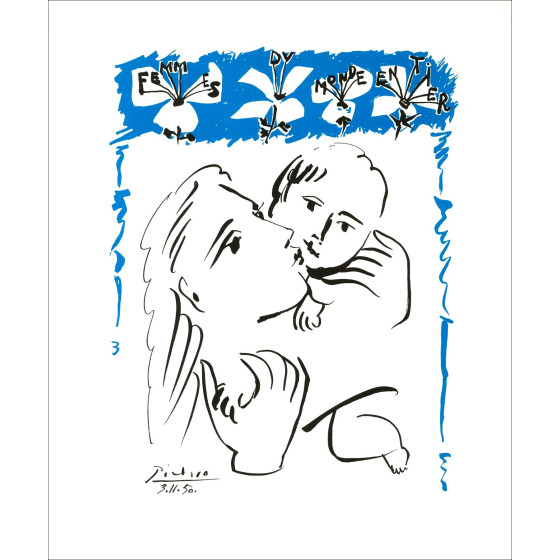
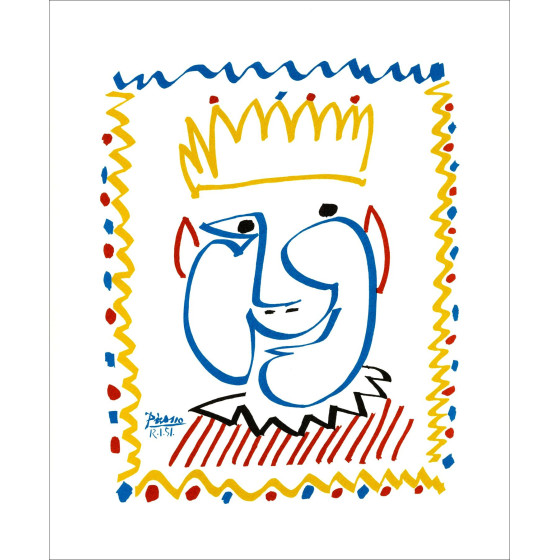
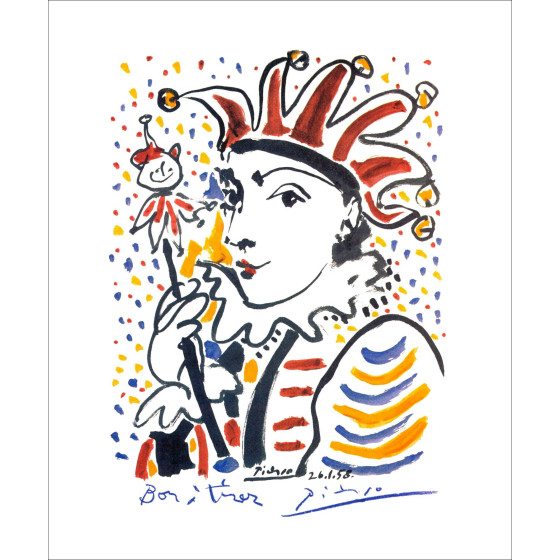
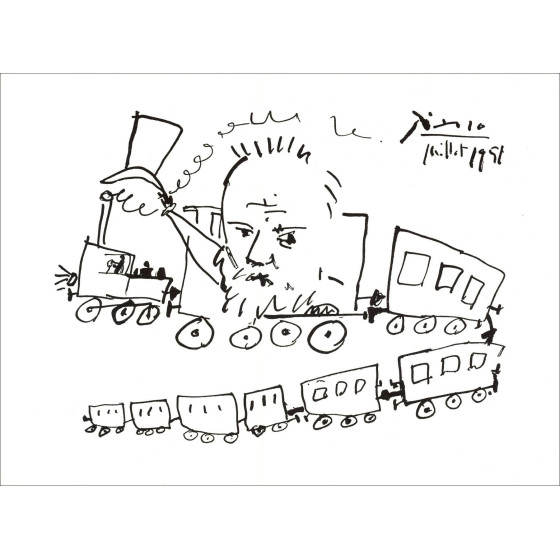
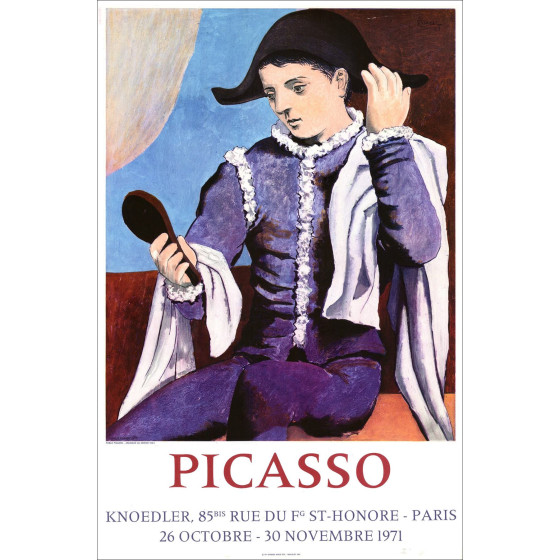
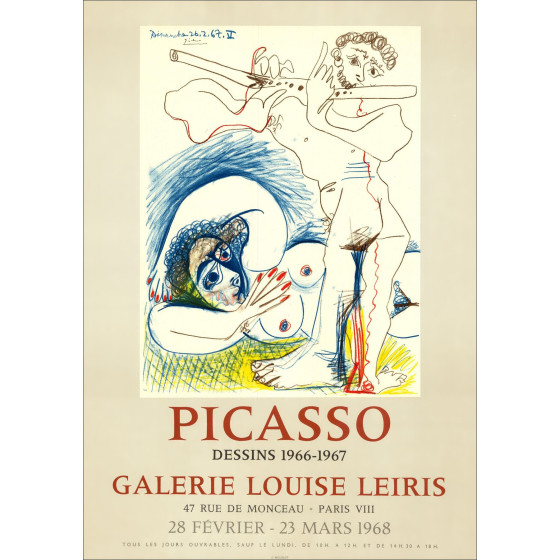
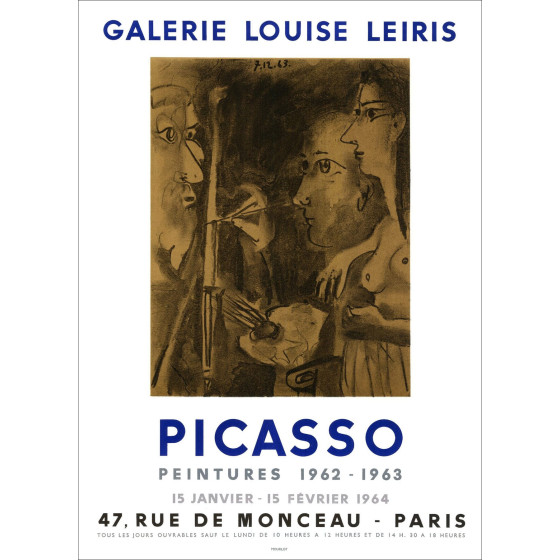
Picasso produced more than two thousand prints. Etchings, drypoints, aquatints, linocuts and lithographs punctuate his entire career, from the Vollard Suite to the 347 engravings of 1968. From 1945 onwards, he worked intensively at Fernand Mourlot's workshop in Paris, where he revolutionised lithography. His doves, portraits, bouquets and scenes from the Comédie humaine, published in the magazine Verve in 1954, are among the most famous images of modern art. His exhibitions at the Louise Leiris gallery, his dealer, and in museums also gave rise to lithographed posters that have become true collectors' items.
Picasso prices and market value: how much is a work worth?
Pablo Picasso is the most widely traded artist on the art market, with prices ranging from less than €100 for an exhibition lithograph to more than one hundred million dollars for a painting. The price depends on the nature of the work, the signature, the numbering, the period, the subject and the condition. As a guide, here are the ranges generally observed on the market, in galleries as well as at auctions:
- Colour lithographs from editions and exhibition posters: approximately €85 to €650, more for the rarest Mourlot posters.
- Ceramics produced with the Madoura workshop: from a few thousand to several tens of thousands of euros.
- Signed and numbered lithographs, linocuts and etchings: from a few thousand to several hundred thousand euros for the most celebrated plates.
- Drawings: from a few tens of thousands of euros to several million.
- Paintings: from several hundred thousand euros to more than one hundred million dollars.
Portraits of women (Marie-Thérèse Walter, Dora Maar, Jacqueline), bullfighting scenes, doves and faun faces are among the most sought-after subjects. For prints, the pencil signature, the numbering of the edition and the reference to the catalogues raisonnés weigh heavily on the price. The lithographs of the La Comédie humaine suite, printed by Mourlot in 1954, are among the most sought-after for the virtuosity of their drawing.
Buy a Picasso work at Galerie 125
Are you looking for a signed Picasso lithograph or an original poster? The gallery presents a wide selection above:
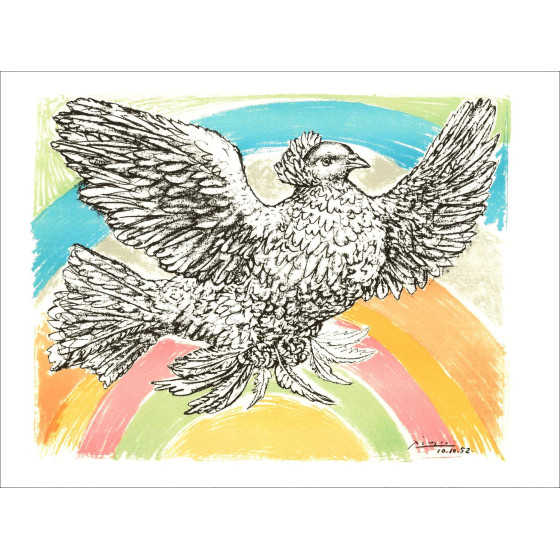
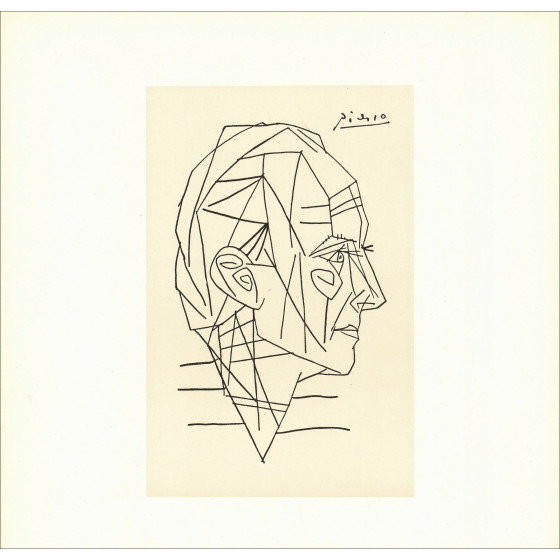
- The 1954 suite, with several lithographs from La Comédie humaine, as well as the Colombe à l'arc-en-ciel of 1952 and the Portrait de Paul Éluard of 1956.
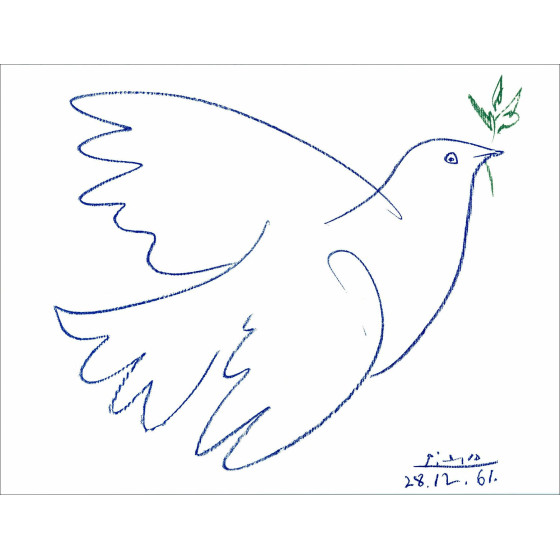
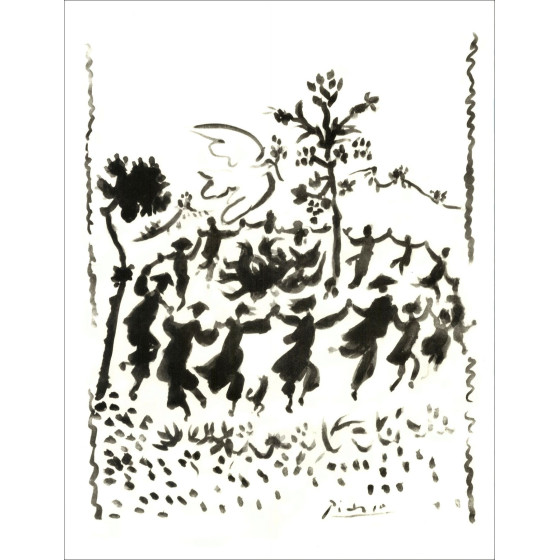
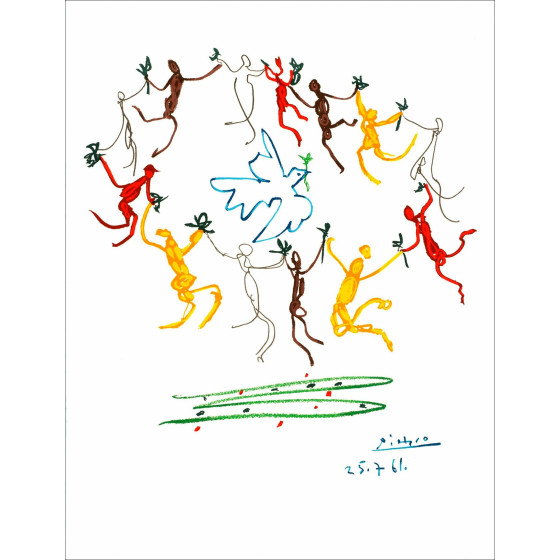
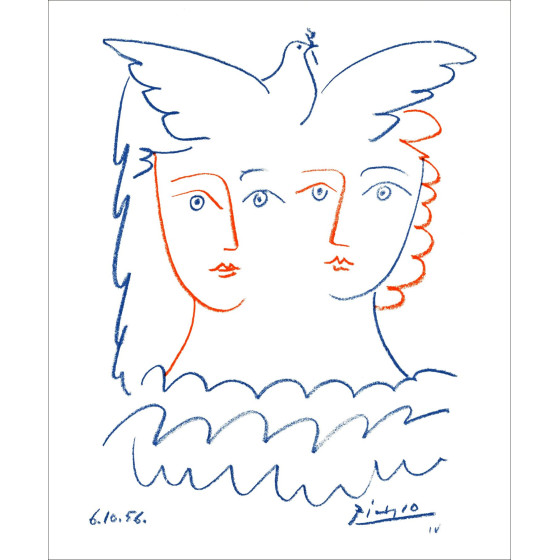
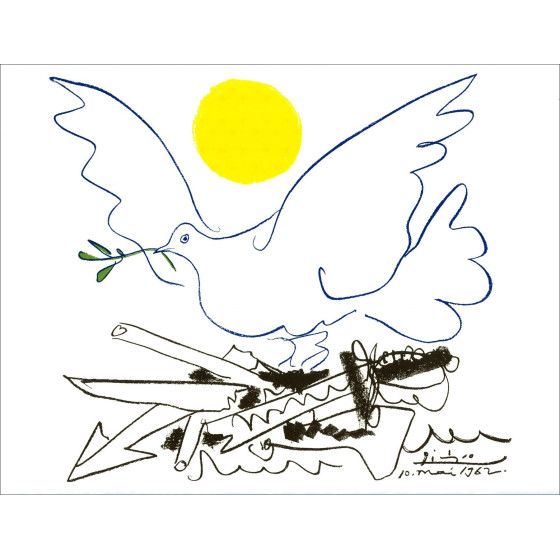
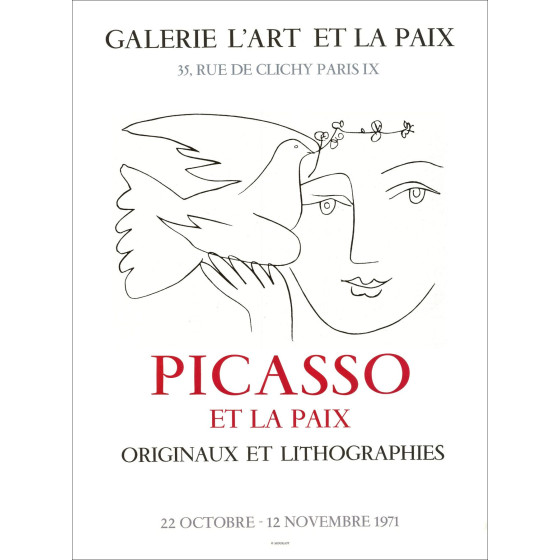
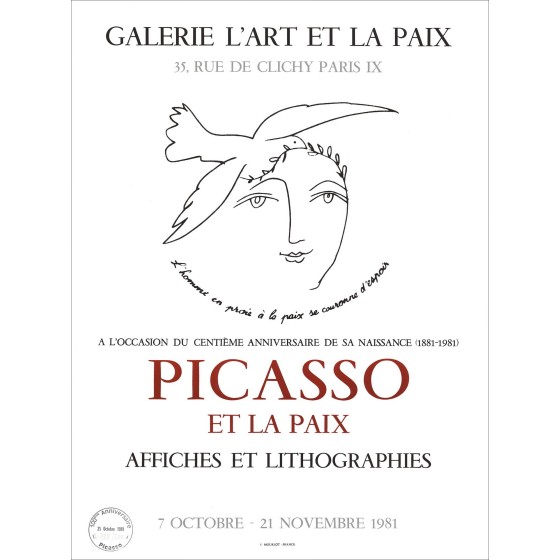
- The theme of peace: Vive la paix, Ronde de la jeunesse, Colombe de l'avenir, Colombe bleue and Deux femmes et la colombe.
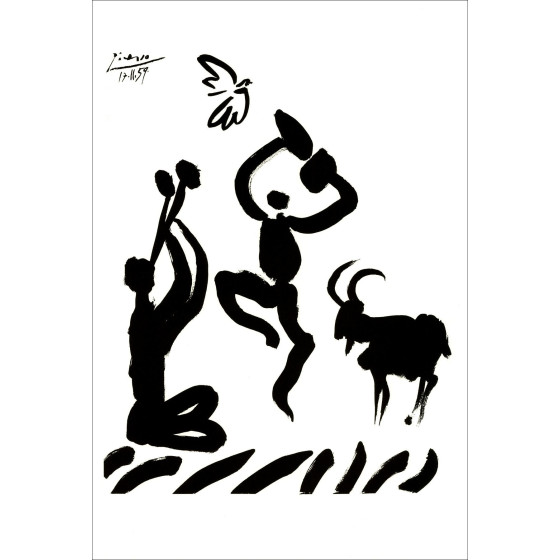
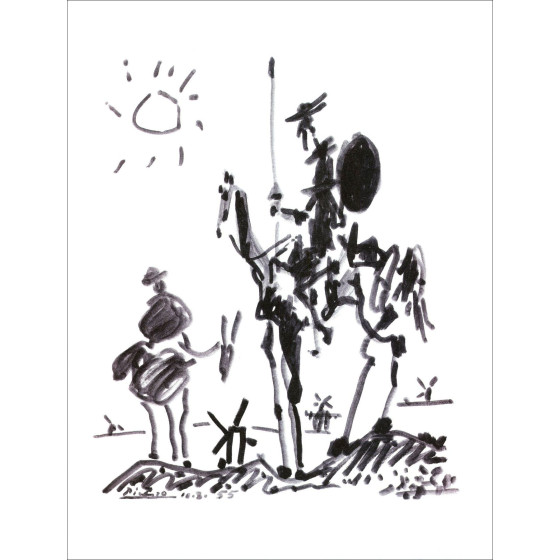
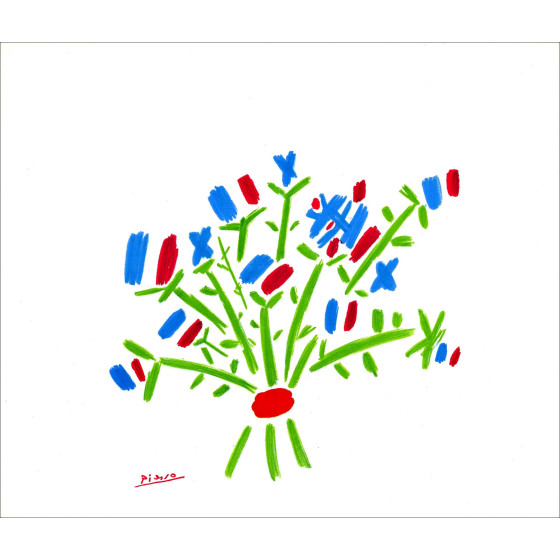
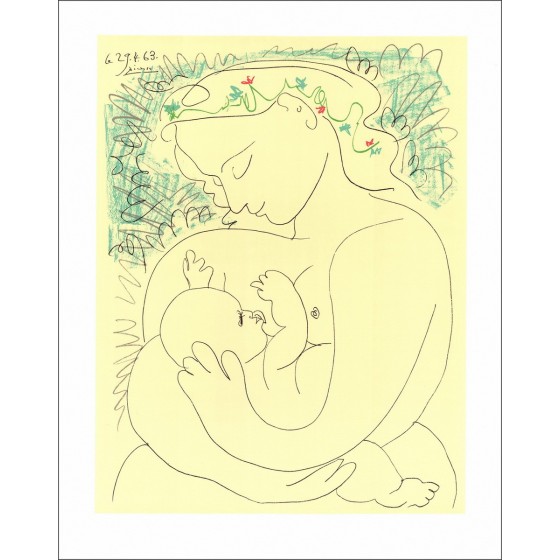
- More intimate subjects: Maternité, Don Quichotte, Joueur de flûte and Bouquet.
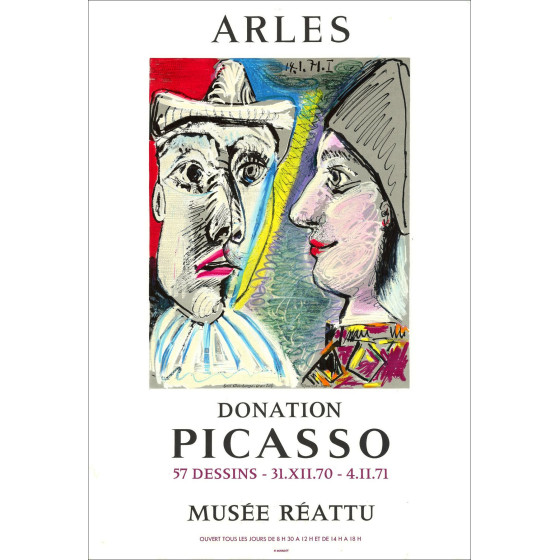
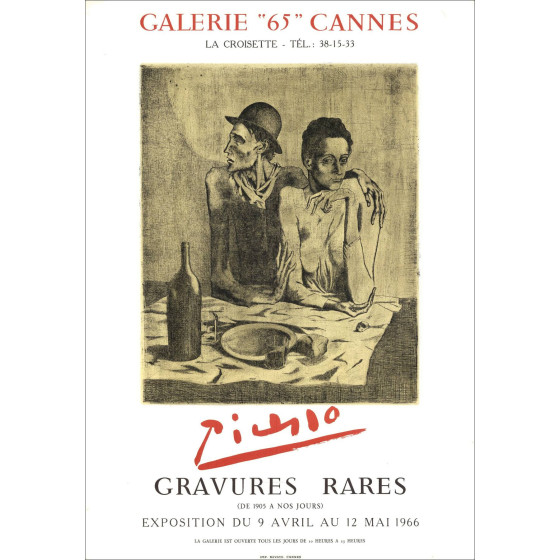
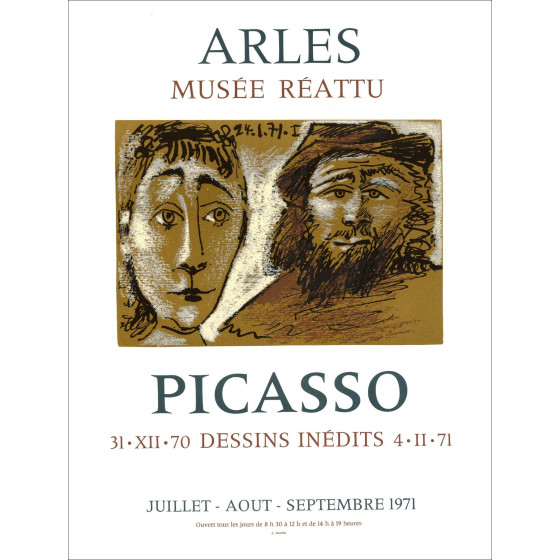
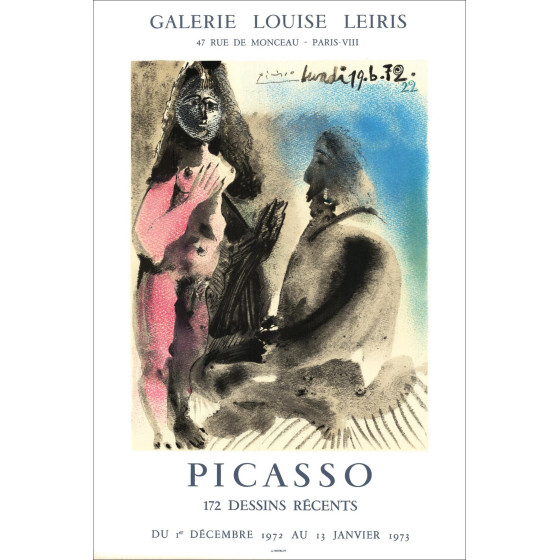
- Exhibition posters: from the Louise Leiris gallery to the Dessins récents exhibition of 1973, Gravures rares of 1966 or the Musée Réattu in Arles in 1970.
Each work offered by the gallery is described in detail and sold with a certificate invoice. It is shipped to you promptly, carefully protected, by tracked and insured delivery. It can also be viewed by appointment at our art gallery near Metz. You may also like: Henri Matisse, Marc Chagall and Joan Miró.
How much does a Picasso lithograph or poster cost?
Expect roughly €85 to €650 for a lithograph or exhibition poster, depending on rarity and condition. A signed and numbered lithograph sells for anywhere from a few thousand to several hundred thousand euros, and a drawing from a few tens of thousands of euros.
What is the difference between an original lithograph and a lithograph after Picasso?
An original lithograph was created by Picasso himself, who drew directly on the stone or plate, notably at the Mourlot workshop in Paris from 1945 onwards. A lithograph "after" Picasso reproduces one of his works, often after his death, under the supervision of a publisher or the rights holders. Both allow you to live with his imagery, at very different prices.
What is a Madoura ceramic?
From 1947, Picasso worked in Vallauris at the Madoura workshop of Suzanne and Georges Ramié. There he created hundreds of models of dishes, vases and pitchers, some of which were issued in numbered series. These ceramics are now highly sought after by collectors.
Where can you see Picasso's works in France?
The Musée national Picasso-Paris, housed in the Hôtel Salé, holds the largest public collection of his works. The Musée Picasso in Antibes, at the Château Grimaldi, and the Musée national Picasso in Vallauris, with La Guerre et la Paix, are two other essential stops.
What is Picasso's most expensive painting?
Les Femmes d'Alger (Version O), painted in 1955, was sold for $179.4 million at Christie's in New York in May 2015, one of the highest prices ever achieved by a painting at auction. In May 2021, Femme assise près d'une fenêtre (Marie-Thérèse), from 1932, again exceeded $103 million, also at Christie's in New York.
Who was Pablo Picasso?
Pablo Picasso (1881-1973) was a Spanish painter, sculptor, ceramicist and printmaker, who settled in France from 1904. The inventor of Cubism with Georges Braque, and the creator of Les Demoiselles d'Avignon (1907) and Guernica (1937), he is regarded as the most influential artist of the 20th century.
Appraisal, sale or purchase of a Picasso work
Do you own an oil on canvas, a drawing, a watercolour, an original lithograph or a signed engraving by Pablo Picasso? Galerie 125 offers a confidential, no-obligation appraisal based on a thorough knowledge of the market. For a serious appraisal, simply send detailed photographs, the dimensions, the signature and numbering for a print, as well as the overall condition of the work. Depending on the quality of the piece, an immediate purchase may be considered. Every request is handled with rigour and discretion.
Do you own an oil on canvas, a drawing, a lithograph or a signed engraving by Pablo Picasso and wish to sell it? Find out how to proceed on our Sell a work page.