
BRAQUE Georges
Georges Braque (1882-1963), co-founder of Cubism with Pablo Picasso and inventor of papier collé, is also the author of the Birds of the Louvre. Galerie 125 offers numerous lithographs by Braque, printed at Mourlot: portraits, Carnets intimes, the mythological suite Métamorphoses, as well as exhibition posters. Discover the selection below.




- Out of stock


- Out of stock
Georges Braque
The Painter Who Brought Birds into the Louvre
In 1953, visitors to the Louvre look up at the ceiling of the Salle Henri II and discover large black birds flying across a deep blue sky. Commissioned the previous year by Georges Salles, director of the Musées de France, this decorative scheme is the work of Georges Braque. In 1961, the exhibition L'Atelier de Braque made him the first painter to be shown at the Louvre during his lifetime. To understand how the former apprentice decorator-painter reached this point, we need to trace a career that profoundly transformed modern painting.
Biographical Milestones
1882Born in Argenteuil on 13 May, into a family of decorative painters
1890The family settles in Le Havre, where he attends the municipal art school
1902–1904Académie Humbert in Paris, then the École des Beaux-Arts
1906–1907Fauvist period, in Antwerp and then in the South of France, with the Petite baie de La Ciotat
1907–1908Stays in L'Estaque, first Cubist landscapes
1908Discovers the Demoiselles d'Avignon at Picasso's studio, the beginning of the "cordée" (the climbing partnership)
1912Invents papiers collés (papier collé)
1915Seriously wounded at Neuville-Saint-Vaast, trepanned, he resumes work in 1917
1928House and studio at Varengeville-sur-Mer, in Normandy
1932Etchings for Hesiod's Theogony, commissioned by Ambroise Vollard
1947–1948Aimé Maeght becomes his dealer
1953Ceiling of the Birds at the Louvre
1961Exhibition L'Atelier de Braque at the Louvre
1962L'Ordre des oiseaux, with Saint-John Perse
1963Dies in Paris; funeral eulogy by André Malraux
The Career of Georges Braque
From Le Havre to L'Estaque: The Formative Years
Trained in his father's trade, Braque attended the Académie Humbert in Paris from 1902. His first major canvases are Fauvist: in Antwerp in 1906, then in the South of France, he adopts free, dazzling colour. It is at L'Estaque, in 1907 and 1908, that everything shifts. His houses, reduced to simple volumes, prompt critics to speak of "little cubes". The word Cubism was born, although its exact origin remains debated.
The Climbing Partnership with Picasso
In 1908, Braque discovers Les Demoiselles d'Avignon in Picasso's studio. A collaboration of rare intensity begins: together, the two men deconstruct the object, multiply viewpoints and introduce stencilled letters into the painting. In 1912, Braque invents papiers collés, fragments of wallpaper or newspaper integrated into the composition, which paved the way for modern collage.
The First World War interrupts this dialogue. Decorated with the Croix de guerre, Braque returns to a calmer manner, marked by still lifes, studios and pedestal tables, in which matter and muted tones play an essential role.
Varengeville and maturity
Between Paris and Varengeville-sur-Mer, Braque pursues an increasingly spare body of work. Birds, a motif of freedom and flight, become dominant in his final decades. He is buried in Varengeville, in the cemetery of the Saint-Valery church, for which he designed stained-glass windows.
Braque as printmaker and lithographer
Printmaking accompanies Braque throughout his career. Most of his lithographs and illustrated books from the 1940s and 1950s were printed at the Mourlot workshop in Paris, where the artist found skilled printers capable of translating the density of his blacks and the subtlety of his greys.
A restrained and luminous universe
Braque sought less to represent than to construct: space tightens, objects fragment, and matter matters as much as the motif. Still lifes, studios, birds and antique figures recur constantly, in harmonies of black, grey, ochre and deep blue. This restraint gives his prints an immediate graphic presence.
Georges Braque prices and market value: how much is a work worth?
The price depends on the nature of the work, its signature, the edition, the period, the subject and the condition. As an indication, here is the value generally observed on the market, in galleries as well as at auctions:
- Original colour lithographs printed at Mourlot for the Maeght and Tériade publishers (birds, still lifes, Carnets intimes): approximately €75 to €500.
- Lithographed exhibition posters, notably for the Galerie Maeght: approximately €150 to €300, more when signed.
- Signed and numbered lithographs and etchings: from a few thousand to several tens of thousands of euros.
- Gouaches, drawings and papiers collés: from several tens of thousands of euros to several million for Cubist papiers collés.
- Paintings: from several hundred thousand euros to over ten million.
Birds, still lifes and the large colourful compositions of the 1950s are the most sought-after subjects in printmaking. The pencil signature, the edition and the freshness of the colours make the difference.
Buy a Georges Braque lithograph at Galerie 125
Looking for a signed Braque lithograph or a period print? The works presented above let you explore several facets of his universe:
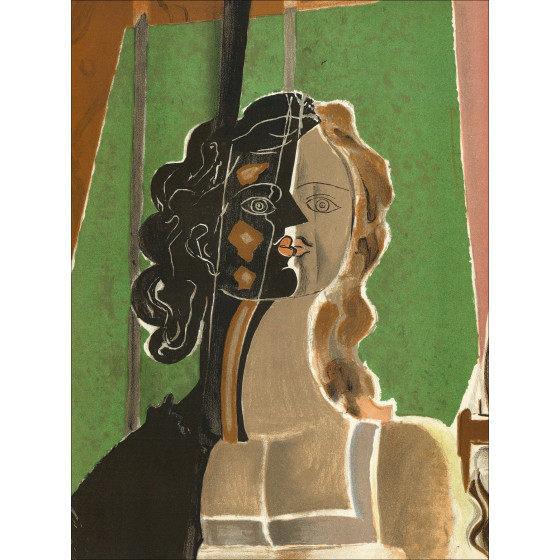
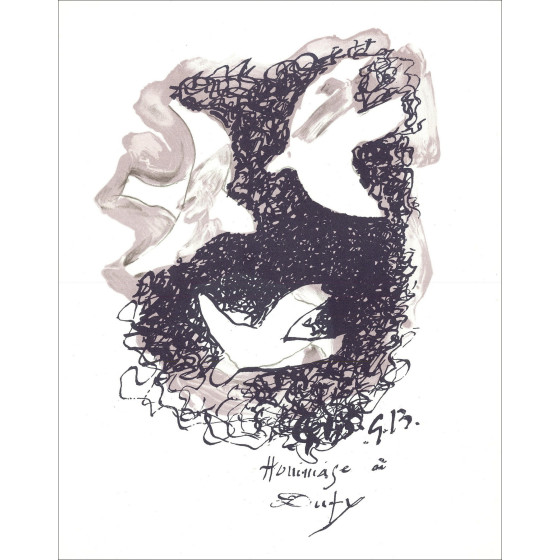
- Lithographs printed by Mourlot, such as Portrait de femme (1939) or Hommage à Raoul Dufy (1965).
- A plate from the Carnets intimes, published in 1955 in the special issue that Tériade's review Verve devoted to the artist.
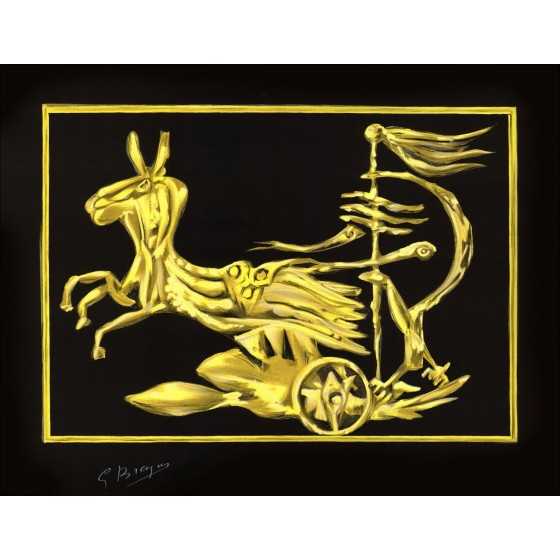
- The colour lithographs of the Métamorphoses de Braque, published in 1988 after his gouaches with mythological figures and printed on Arches vélin: Hécate, Séléné, Héra, Hébé, Phaéton, Le char de Médée.
- Exhibition posters, including Oiseaux rouge et noir (1970) and the poster for the musée d'Art moderne de Céret (1983).
Each listing specifies the exact nature of the work, its format and its year, so you can choose with full knowledge between a period print, a lithograph after a gouache or a poster. Posters are a great first approach to the artist. The works, available for purchase online, are sold with an invoice-certificate and shipped with care, by tracked and insured delivery. They can also be viewed at the gallery in Argancy, near Metz, by appointment.
Also worth discovering: Fernand Léger and Juan Gris, other key figures of Cubism.
How much does a lithograph or painting by Georges Braque cost?
An original colour lithograph by Braque, printed at Mourlot, can be found from €75, and an exhibition poster from around €150 to €300. Signed and numbered, a lithograph is worth from a few thousand to several tens of thousands of euros. Gouaches and papiers collés reach considerably higher sums, and paintings exceed several hundred thousand euros.
What role did Braque play in the invention of Cubism?
In 1908, Braque painted landscapes of simplified volumes at L'Estaque: a critic then spoke of "little cubes". For six years he worked side by side with Picasso, to the point that their canvases came to resemble one another. In 1912 he invented papiers collés, which paved the way for collage in modern art.
Why are Braque's birds so famous?
The ceiling of the Salle Henri II, crossed by large black birds on a blue background, makes this motif a symbol of freedom and flight. It recurs in his canvases, lithographs and jewellery, and remains the image most closely associated with his name.
Who published Braque's lithographs?
His lithographs were printed mainly at Mourlot, in Paris, and published by his dealer Aimé Maeght. Many appeared in the review Derrière le miroir or in illustrated books, and they are highly sought after by print collectors.
What are Braque's most expensive works?
These are his Fauvist and Cubist canvases. A Fauvist landscape from 1907, Paysage à La Ciotat, has thus exceeded £10 million at auction. His lithographs of birds, issued in quantity, remain far more accessible.
What are Braque's Métamorphoses?
This is a suite of colour lithographs published in 1988, after Braque's gouaches with mythological figures: Héra, Hébé, Séléné, Hécate, Phaéton, Phénix, Médée and even Perséphone. Printed on Arches vélin, these plates draw on the classical inspiration the artist has cultivated since Hesiod's Theogony.
Appraisal, sale or purchase of a work by Georges Braque
Do you own a gouache, a drawing, a painting or an original lithograph by Braque? Galerie 125 offers a confidential, no-obligation appraisal, based on in-depth knowledge of the market. For a serious appraisal, simply send detailed photographs, the dimensions, the signature and numbering for a print, as well as the overall condition of the work. Depending on the quality of the piece, an immediate purchase may be considered. Every request is handled with rigour and discretion.
Do you own an oil on canvas, a gouache, an original drawing or a signed lithograph by Georges Braque and wish to sell it? Find out how to proceed on our Sell a work page.