
COCTEAU Jean
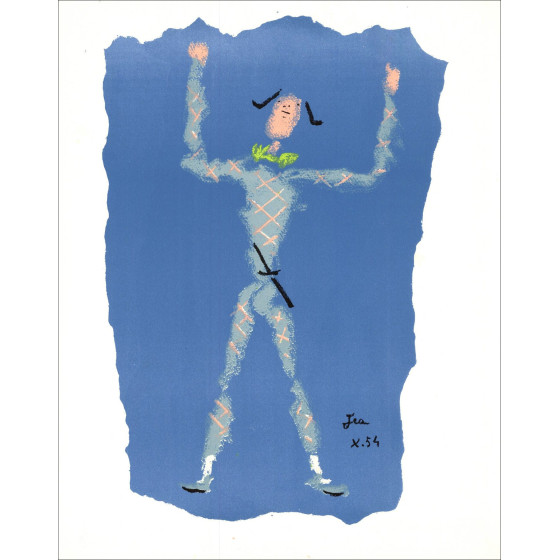
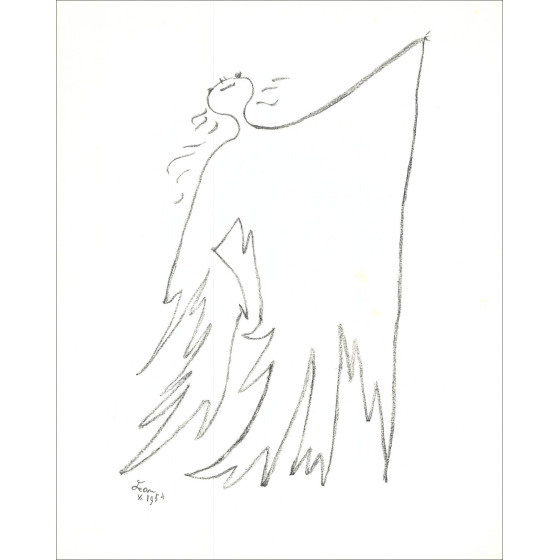
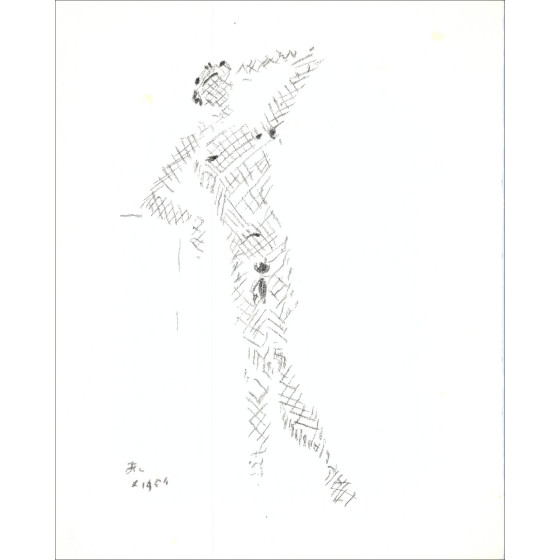
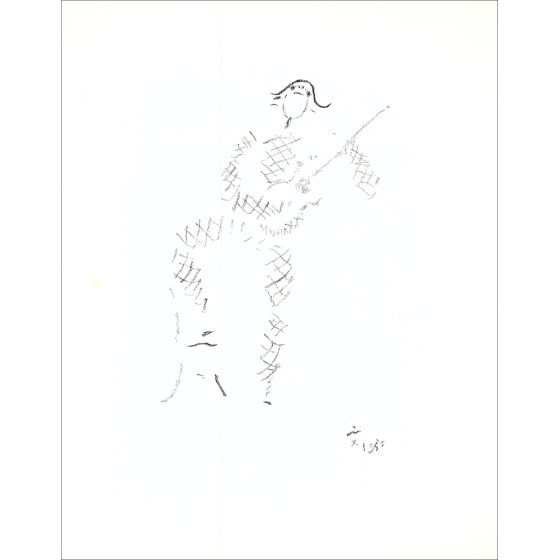
Jean Cocteau (1889-1963), poet, filmmaker and draughtsman, left a continuous line of inimitable elegance. Galerie 125 offers his original lithographs, including plates from the suite Sous le manteau de feu (1954), as well as drawings: discover them below.


Jean Cocteau
The Poet Who Drew
Poet, novelist, playwright, filmmaker, draughtsman, painter and set designer, Jean Cocteau (1889-1963) was one of the most brilliant and versatile minds of the 20th century. His supple line, Greek profiles, Orpheus figures, angels and almond-shaped eyes have made his graphic work one of the most recognisable of his time. A lithograph or drawing by Cocteau is the most direct form of this poetry: a few lines are enough to bring a face or a myth to life.
Biographical Milestones
1889Born on 5 July in Maisons-Laffitte, into a wealthy Parisian bourgeois family
1917The ballet Parade with Picasso, Erik Satie and Diaghilev's Ballets Russes
1929Publication of Les Enfants terribles
1946Directs the film La Belle et la Bête with Jean Marais
1950Decorates the Villa Santo Sospir in Saint-Jean-Cap-Ferrat
1955Elected to the Académie française
1963Dies on 11 October in Milly-la-Forêt
The Career of Jean Cocteau
The Frivolous Prince of the Belle Époque
Jean Cocteau published his first poems at a very young age and became a figure of Parisian society salons. His meeting with Serge de Diaghilev and his famous injunction, "Étonne-moi!" ("Astonish me!"), changed his life. In 1917, he conceived with Pablo Picasso, Erik Satie and the Ballets Russes the ballet Parade, which caused a scandal. He became a friend of Stravinsky, Radiguet, Max Jacob and Modigliani, and the inspiration behind Les Six.
The Writer and the Filmmaker
Poetry, novels such as Thomas l'imposteur, plays such as Orphée, La Machine infernale or Les Parents terribles: Cocteau approached every form with equal talent. In cinema, he signed poetic masterpieces: Le Sang d'un poète, La Belle et la Bête, Orphée and Le Testament d'Orphée. He presided over the jury of the Cannes Film Festival and entered the Académie française in 1955.
The Draughtsman and the Decorator
For Cocteau, drawing was another form of poetic writing. His continuous line depicts profiles of young men, Orpheus figures, Antigones, fauns, angels, cats and hands. From 1950 onwards, he covered the Villa Santo Sospir in Saint-Jean-Cap-Ferrat with frescoes, then decorated the Chapelle Saint-Pierre in Villefranche-sur-Mer, the wedding hall of the Menton town hall, the Chapelle Saint-Blaise-des-Simples in Milly-la-Forêt and the Notre-Dame-de-France church in London. He also created ceramics, tapestries and jewellery. The Musée Jean Cocteau in Menton is devoted to him.
Lithographs and Posters
Cocteau produced numerous lithographs, often printed by the Mourlot workshop, as well as posters for exhibitions, festivals and towns on the Côte d'Azur. His line lends itself wonderfully to lithography: it remains lively, light and instantly recognisable.
A Style Unlike Any Other
A single line, often without retracing, encloses the face, the hand or the profile. Almond-shaped eyes, curls, barely sketched lines and reinvented Greek myths (Orpheus, Antigone, the fauns) make up a poetic world in which drawing and writing become one. This graphic style, achieved with remarkable economy of means, suits classic and contemporary interiors alike.
Jean Cocteau Prices and Market Value: How Much Is a Work Worth?
The price of a Cocteau work depends on the technique, format, subject, condition and numbering. On the market, the following ranges can be used as a guide:
- Original lithographs: from around €250, up to €500 for profile portraits and woodcuts.
- Original drawings, depending on subject and period: from around €2,000.
- Exceptional pieces (large drawings, ceramics, works of remarkable provenance): significantly higher market values.
An original lithograph is conceived by the artist, printed in a limited number and most often signed or numbered. It differs from a simple offset reproduction of a drawing, printed in large runs.
Buy a Jean Cocteau Work
Are you looking for a signed Cocteau lithograph or an original work to give as a gift? Galerie 125 currently offers several plates from the suite Sous le manteau de feu (1954), in the format 41 x 33 cm. Among them, Manteau de feu V, Manteau de feu III, Manteau de feu II and Manteau de feu XII are available. As acquisitions are made, other pieces join the selection: profile portraits, woodcuts such as Jean de la Fontaine (1961), or original drawings. Check the page regularly so you don't miss a new arrival. Order online: your work reaches you quickly, carefully protected, with tracking and insurance. Each work offered by the gallery is described in detail and sold with a certificate invoice. The gallery, located in Argancy near Metz, also welcomes art lovers by appointment.
You may also like: Marie Laurencin and Bernard Buffet.
How Much Does a Jean Cocteau Lithograph or Drawing Cost?
Original Cocteau lithographs are available from €250. Original drawings start at around €2,000, depending on subject, format and period.
What Is the Suite "Sous le manteau de feu"?
Produced in 1954, this suite of original lithographs in the format 41 x 33 cm consists of plates numbered in Roman numerals (II, III, V, VII, XII…), each of which can be chosen separately. It displays Cocteau's continuous and poetic line.
How Can You Recognise an Original Cocteau Lithograph?
An original lithograph is printed from a stone or zinc plate drawn by the artist, on quality paper, with the margins and numbering typical of a print. An offset reproduction, by contrast, shows a dot screen visible under a magnifying glass.
Which Workshop Printed Cocteau's Lithographs?
The Mourlot workshop, a leading name in 20th-century lithography, printed many lithographs and posters by Cocteau, as it did for other major artists of his time.
Where Can You See Jean Cocteau's Decorations?
On the Côte d'Azur: Villa Santo Sospir in Saint-Jean-Cap-Ferrat, the Chapelle Saint-Pierre in Villefranche-sur-Mer, and the town hall and Musée Jean Cocteau in Menton. Also in Milly-la-Forêt, at the Chapelle Saint-Blaise-des-Simples, where he is buried, and in London, at the church of Notre-Dame-de-France.
Should a Cocteau Work Be Framed in a Special Way?
The delicacy of his line calls for a restrained framing, with a light marie-louise mount, to let the line breathe and preserve the balance of the composition.
Do you own an oil on canvas, a watercolour or an original drawing by Jean Cocteau and wish to sell it? Find out how to proceed on our Sell a work page.