
ROUAULT Georges
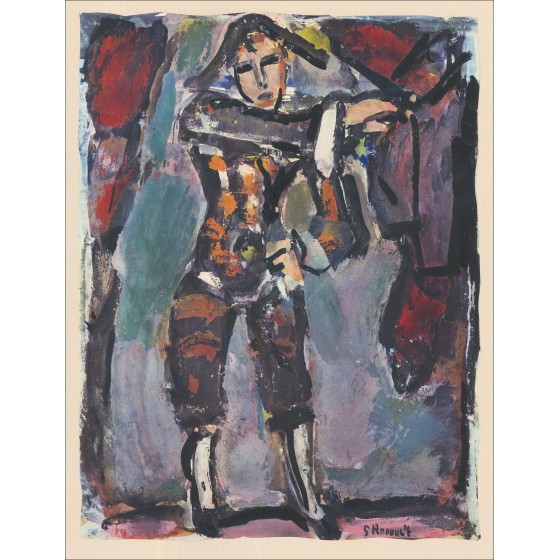
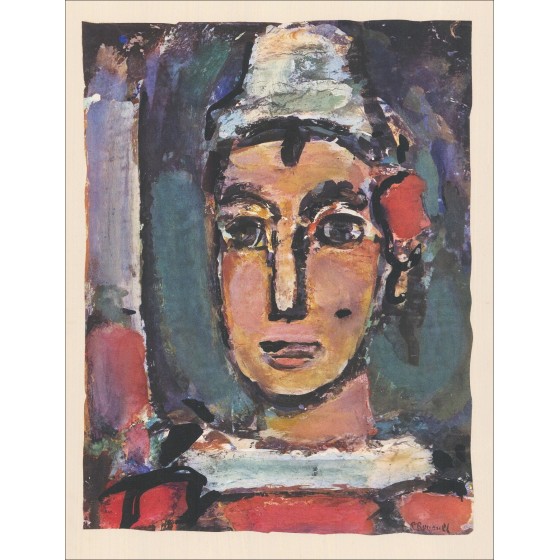
Georges Rouault (1871-1958), a former glass apprentice and pupil of Gustave Moreau, is the painter of clowns, judges and Christ, as well as the author of the Miserere. Discover below the photogravures of Divertissement (1943), along with lithographs and exhibition posters.

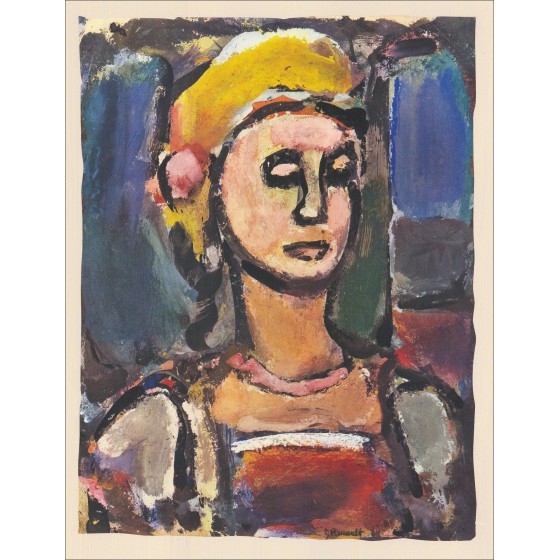
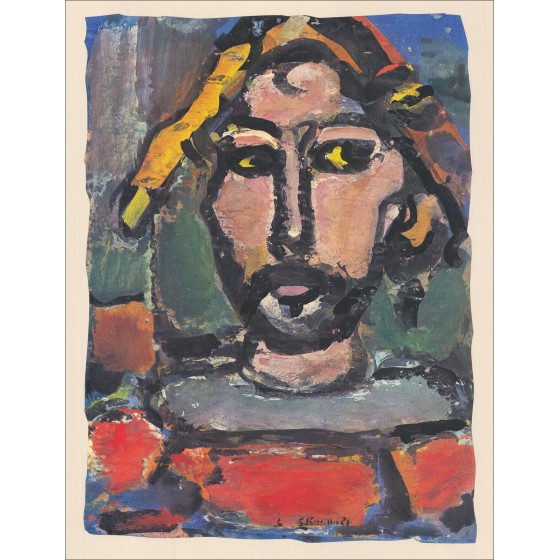


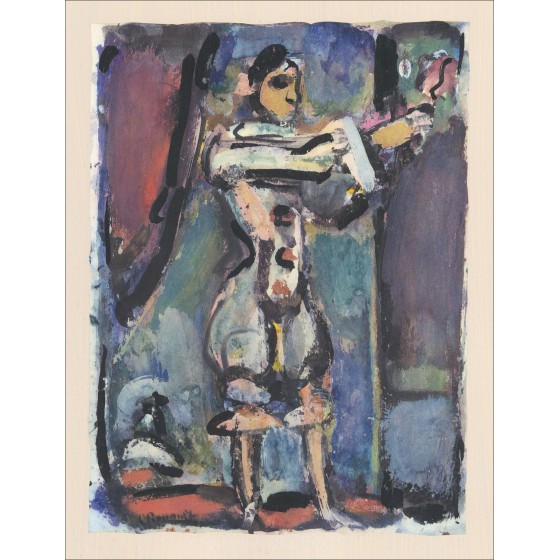
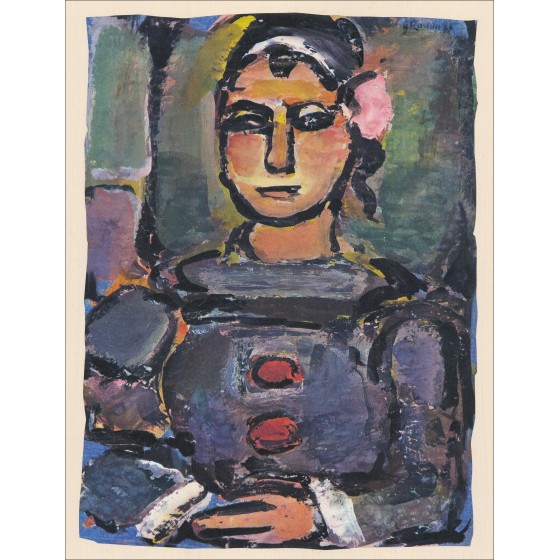




Georges Rouault
A Stained-Glass Artist's View of the Human Condition
Georges Rouault (1871-1958) is one of the most distinctive painters and printmakers of the 20th century. A former stained-glass apprentice and pupil of Gustave Moreau, he created a powerful and spiritual art: clowns, judges, women, Christ and biblical landscapes, outlined in black like stained glass and painted in dense, luminous material. His Miserere ranks among the masterpieces of modern printmaking.
Biographical Milestones
1871Born in Paris on 27 May, in the Belleville district
1885Apprenticed to a stained-glass painter, where he restores old stained-glass windows
1891Joins the studio of Gustave Moreau, alongside Matisse and Marquet
1903First curator of the Gustave-Moreau Museum
1905Exhibits at the Salon d'Automne, in the room next to the Fauves
1917Contract with the dealer Ambroise Vollard
1943Publication of Divertissement in the magazine Verve, published by Tériade
1948Publication of the Miserere
1958Dies in Paris on 13 February. State funeral
The Career of Georges Rouault
From Stained Glass to Painting
Born in Paris, Georges Rouault learned the craft of stained-glass painting at a very young age. This experience of stained glass, with its black leading and incandescent colours, would mark his entire oeuvre. A pupil of Gustave Moreau at the École des Beaux-Arts, he rubbed shoulders there with Henri Matisse and Albert Marquet. On the death of his master, he became the first curator of the museum dedicated to him.
A View of the Human Condition
At the beginning of the 20th century, Rouault painted sorrowful clowns, women, judges and wretched figures, with striking expressive force. A fervent Catholic and friend of the writer Léon Bloy, he sought to express human suffering and dignity. His figures of Christ, his Holy Faces and his biblical landscapes achieve a unique spiritual intensity. He also designed sets for the Ballets Russes and stained-glass windows for the church at Assy.
The Miserere and the Printed Work
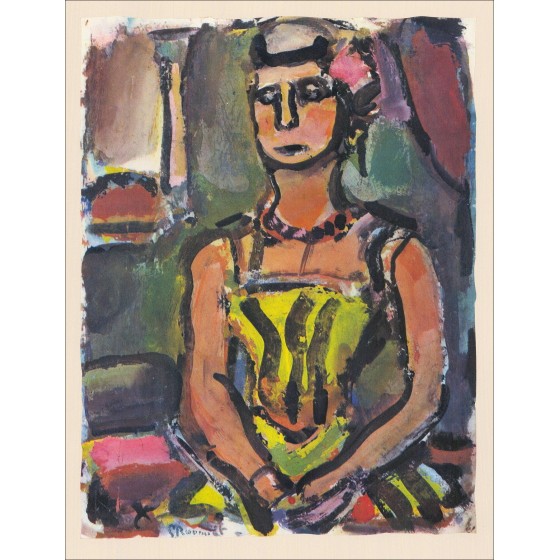
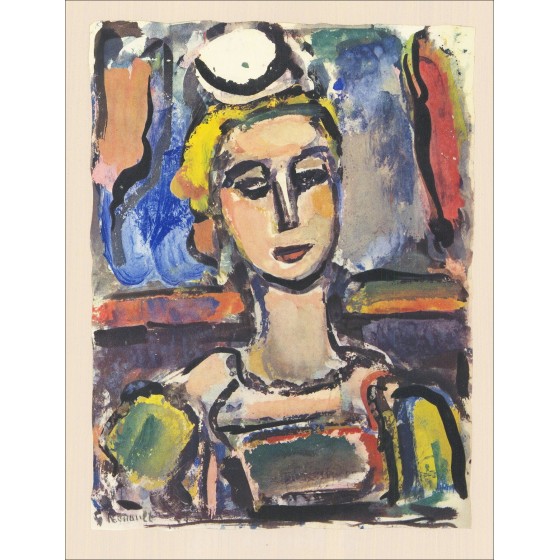
Under contract with Ambroise Vollard from 1917, Rouault devoted many years to printmaking. The Miserere, a suite of fifty-eight plates engraved in black, published in 1948, meditates on war, death and redemption. He also produced the Fleurs du mal, the Cirque de l'étoile filante and numerous lithographs. In 1943, the magazine Verve published Divertissement, a collection of fifteen colour plates devoted to the figures of the circus and entertainment, accompanied by his own texts.
An Instantly Recognisable Oeuvre
Thick black outlines, inherited from the leading of stained glass, frame deep colours, reds, blues and yellows of great intensity. His painterly material, built up in successive layers, gives the faces an almost sculptural presence. Clowns, judges, Pierrots, Christ and biblical landscapes make up a world without equivalent, at the crossroads of Expressionism and religious tradition.
Georges Rouault Prices and Market Value: What Is a Work Worth?
Rouault collectors buy across a wide range of budgets, from published photogravure to canvas. Price depends on the technique, the signature, the numbering, the format, the subject and the condition. Here are the ranges generally seen on the market, in galleries as well as at auctions:
- Photogravures from Divertissement, published lithographs and exhibition posters: approximately €100 to €350.
- Original engravings from the Miserere and the large illustrated suites: from a few hundred to a few thousand euros.
- Gouaches, drawings and works on paper: from several thousand to several tens of thousands of euros.
- Paintings: from several tens of thousands of euros to more than one million dollars for the most important.
Clowns, judges, figures of Christ and biblical landscapes are the most sought-after subjects. For an engraving, it is important to distinguish a print from the original suite from a published print.
Buy a Georges Rouault work
Looking for a Rouault lithograph or a colour plate from Divertissement? The gallery currently offers numerous works above, including the photogravures of 1943:
- Circus figures: Madame Yxe, Danseuses, La Roussalka, Margot.
- Characters and masks: Quiquengrogne, Petit sage rouge et or, Mange-tout, Les Jeux têtus, Pierrot blanc and Pierrot noir.
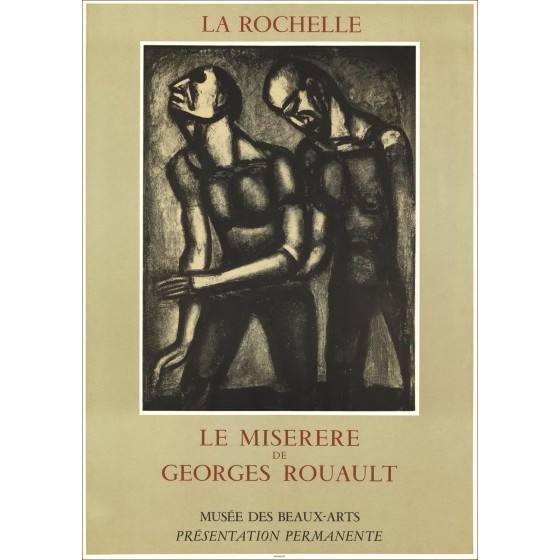
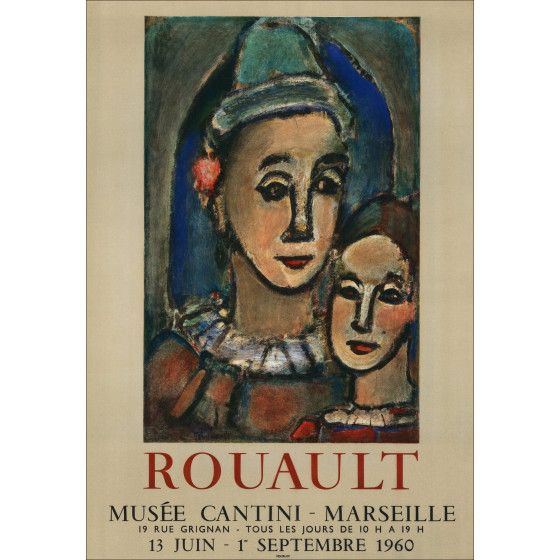
- Lithographs: Portrait (circa 1939) and the posters Passion (Galerie Charpentier), Le Miserere (Musée des Beaux-Arts de La Rochelle) and the Musée Cantini exhibition.
Several plates from Divertissement have already found new owners: check this page regularly as new works are acquired. Every work offered by the gallery is described in detail and sold with a certificate invoice, then shipped promptly, carefully protected, tracked and insured. You may also like: Marcel Gromaire, Bernard Buffet and Paul Rebeyrolle.
How much does a Georges Rouault lithograph or photogravure cost?
At the gallery, available works range from approximately €100 to €345, with an entry price from €99.50 for photogravures from Divertissement. Original engravings from the Miserere reach from several hundred to several thousand euros.
What is Rouault's Miserere?
The Miserere is a suite of 58 engravings commissioned by Ambroise Vollard, on which Rouault worked from the First World War to the late 1920s. Published in 1948, it is regarded as one of the great masterpieces of twentieth-century printmaking.
What is Divertissement?
Published in 1943 by the magazine Verve, edited by Tériade, Divertissement brings together fifteen colour plates on the circus and the performance, accompanied by texts by Rouault himself. The photogravures offered by the gallery measure 42 x 33 cm.
Why do Rouault's works evoke stained glass?
Rouault was apprenticed to a stained-glass painter at the age of fourteen and restored old stained-glass windows. From this training come his thick black outlines, comparable to the leading in stained glass, and his luminous colours, which give his canvases and prints their very distinctive brilliance.
What links did Rouault have with the theatre and religious art?
Rouault designed sets for the Ballets Russes and stained-glass windows for the church of Assy. His Catholic faith, nourished by his friendship with Léon Bloy, runs through his figures of Christ and his biblical landscapes.
How do you tell an exhibition poster from an original lithograph?
An exhibition poster, such as those for Passion, the Miserere or the Musée Cantini, is a lithograph printed to announce an event, and it carries text. An original lithograph is pulled as an artwork in its own right, sometimes signed and numbered. Each gallery listing specifies the exact nature of the work.
Do you own an oil on canvas, a gouache or an original drawing by Georges Rouault and would like to sell it? Find out how to proceed on our Sell a work page.