
BRAYER Yves
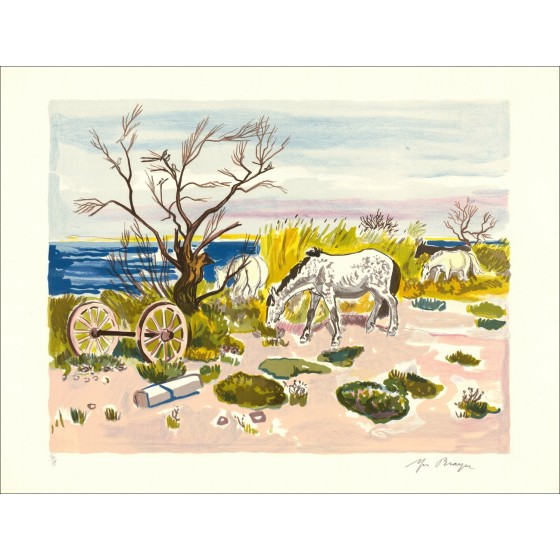
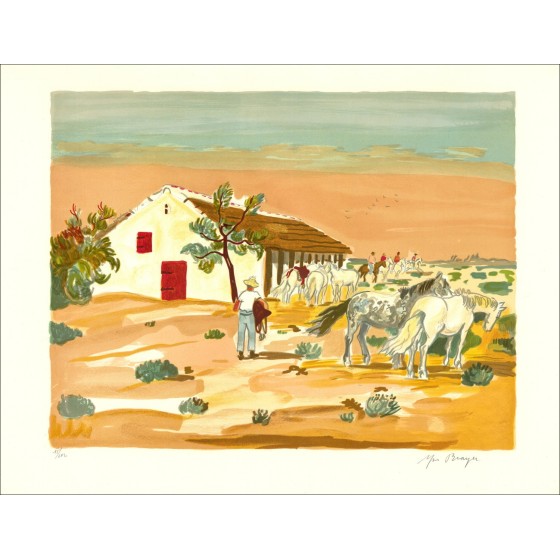
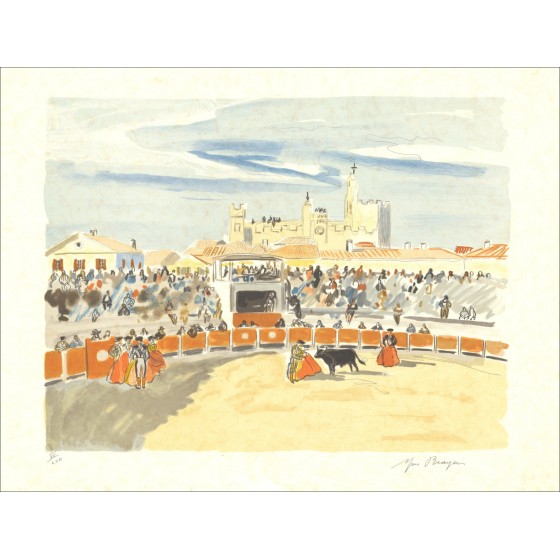
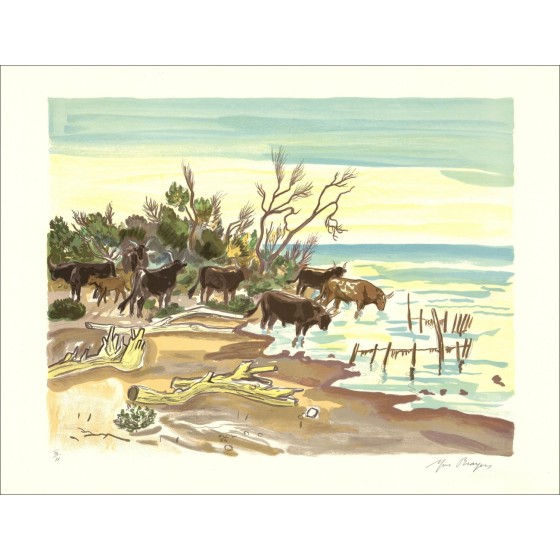
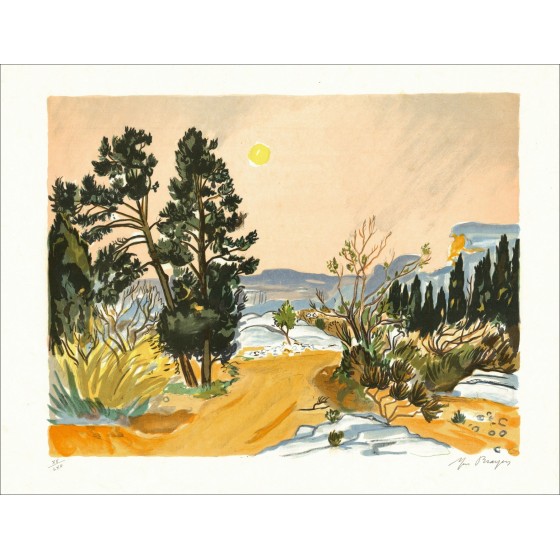
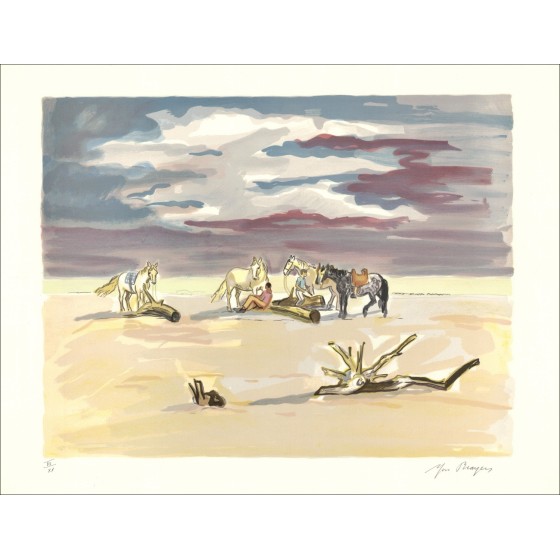
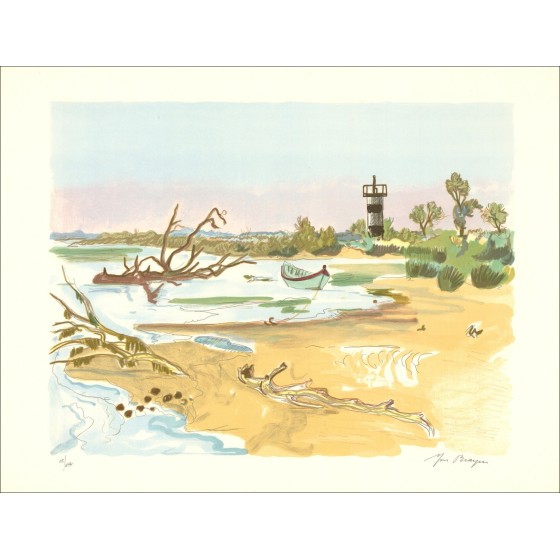
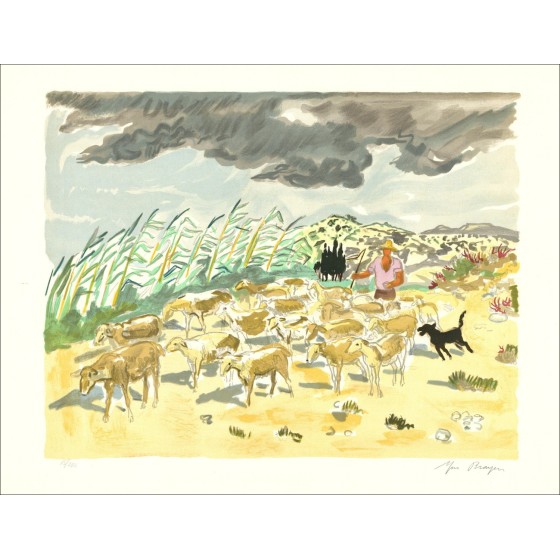
Yves Brayer (1907-1990), painter of Mediterranean light, Grand Prix de Rome winner in 1930 and member of the Académie des beaux-arts, made Camargue, the Alpilles and Spain the major subjects of his work. Galerie 125 offers numerous original lithographs, including the suite Lumières de Provence, as well as engravings, illustrated books and drawings. Browse the works of Yves Brayer below.
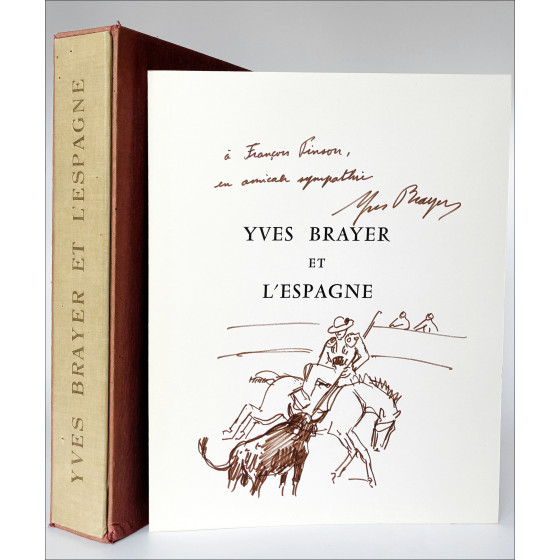


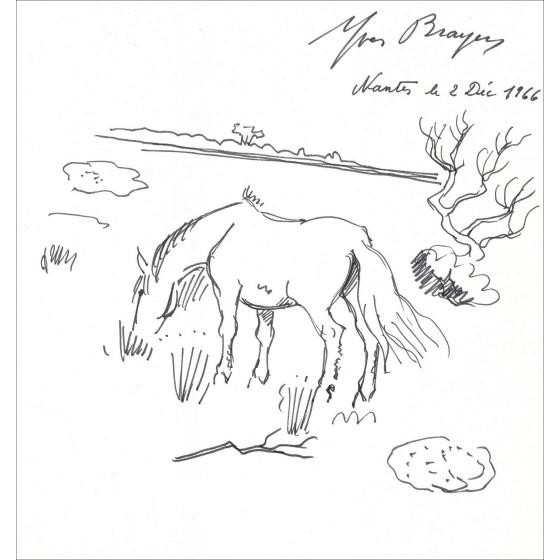


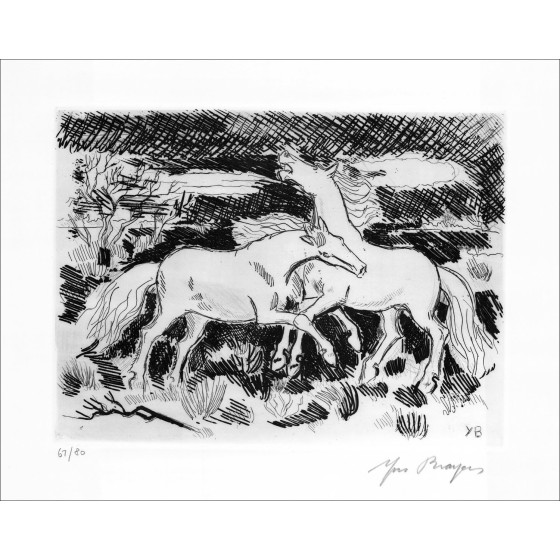
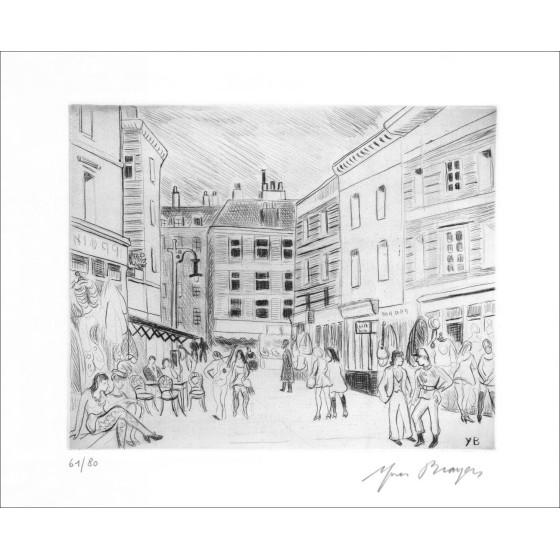


- -€450.00
- Out of stock


- On sale!
- Out of stock






Yves Brayer
The Light of the South, from the Camargue to the Alpilles
In Les Baux-de-Provence, the Hôtel des Porcelet has housed a museum entirely devoted to Yves Brayer since 1991. The painter rests in the village cemetery, at the foot of the Alpilles, which he painted so often. This intimate bond with Provence sums up an entire body of work turned towards the South: its horses, its gnarled olive trees and its white architecture bathed in sunlight.
Biographical Landmarks
1907Born in Versailles, on 18 November
YouthBourges, then the academies of Montparnasse
1927Travel scholarship to Spain, then Morocco
1930First Grand Prix de Rome for painting, stay at the Villa Medici
1939–1945Lives in Cordes, in the Tarn
Mid-1940sAnnual stays in Provence
1957Elected to the Académie des Beaux-Arts
1959First retrospective at the Musée des Ponchettes, in Nice
1960Cordes dedicates a first museum to him
1977Curator of the Musée Marmottan, in Paris, for about ten years
1990Death of the artist; Musée Yves Brayer in Les Baux opens in 1991
The Career of Yves Brayer
From Versailles to the Prado
The 1927 stay in Spain is decisive: Brayer draws from the masters of the Prado the gravity of their blacks, the strength of their drawing and a taste for popular scenes. The Grand Prix de Rome of 1930 opens the doors of the Villa Medici to him. Italy, after Spain, completes the training of a painter who would remain faithful to figurative art and to the Mediterranean.
Provence, the Camargue and Cordes
During the Second World War, he lives in Cordes, a medieval town that dedicates a museum to him as early as 1960. Then Provence takes hold of him: the Alpilles, the bull breeding ranches (manades), the gardians and the wild horses of the Camargue become his favourite subjects. His colour, lively and nervous, always serves the light. The novelist Henri Bosco spoke of an "demanding luminosity". A tireless traveller, he also brings back images of Mexico, Egypt, Greece, Japan and the United States, without losing the Mediterranean outlook that unifies his work.
An Artist Recognised by His Peers
A member of the Académie, a teacher at the Grande Chaumière, curator of the Musée Marmottan, Brayer also designed sets and costumes for the Paris Opera, the Comédie-Française and numerous opera houses in France and abroad.
Yves Brayer Lithographs and Engravings
An copper engraver and lithographer, he worked extensively for fine press publishing and illustrated Baudelaire, Claudel, Montherlant, Giono, Mistral, Pagnol and Blaise Cendrars. On stone as on copper, he rediscovers the freedom of his drawing and the brilliance of his palette: his prints are a privileged way into his universe.
A Palette of Light, Horses and Landscapes
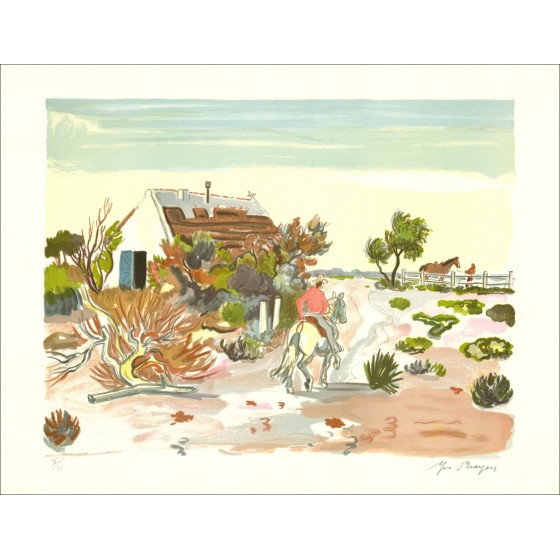
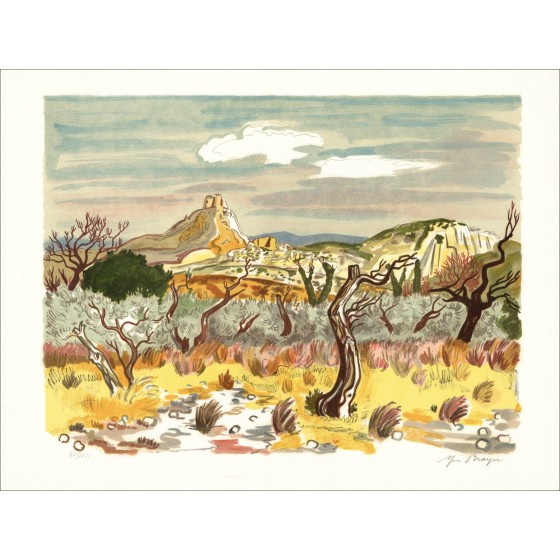
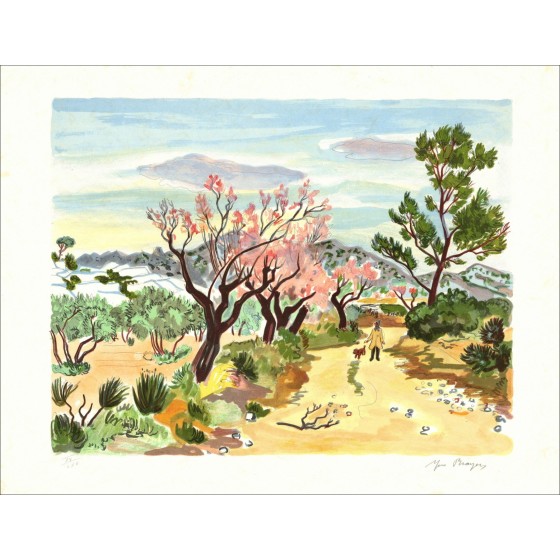
Brayer's style combines a firm drawing, inherited from the Spanish masters, with clear, luminous colour. Camargue horses, gardians, the olive groves of Saint-Rémy, the villages of the Alpilles, but also Venice, Paris or Spain: his landscapes are always inhabited and bathed in sunlight.
Yves Brayer prices and market value: how much is a work worth?
Yves Brayer remains a safe investment in twentieth-century French figurative painting. The price depends on the technique, the signature, the numbering, the size, the subject and the condition. Ranges generally seen on the market, both in galleries and at auctions:
- Signed and numbered lithographs: approximately €40 to €400.
- Original engravings: from approximately €95.
- Ink or pencil drawings: approximately €300 to €1,000.
- Watercolours and gouaches: from a few hundred to a few thousand euros.
- Oil paintings: several thousand euros, more for large formats.
An original lithograph is printed from the stone, then signed and numbered by the artist. It is distinct from a simple reproduction or a poster, which are printed mechanically. The Camargue, its horses and gardians, Provence, Spain and Italy are the most sought-after subjects.
Buying a work by Yves Brayer
Looking for a signed Brayer lithograph? Galerie 125 offers numerous works, presented above:
- The suite Lumières de Provence (1973): Chevaux au bord de l'étang, Corrida aux Saintes-Maries-de-la-Mer, Coucher de soleil aux Baux, Manade de taureaux le soir, Le Champ d'Oliviers.
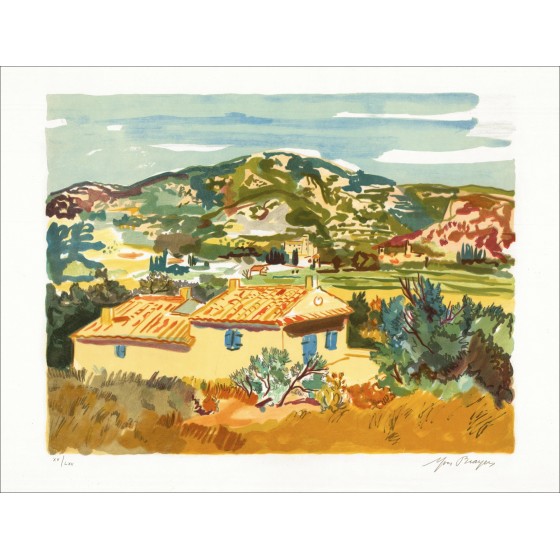
- Views of Provence and the Camargue: Gardian en Camargue, Hameau en Provence, Gardians en Camargue, as well as Le jardin Japonais.
- Original engravings: Athènes, Rue à Soho, Londres, Chevaux se battant, and the woodcut Le cheval et l'âne.
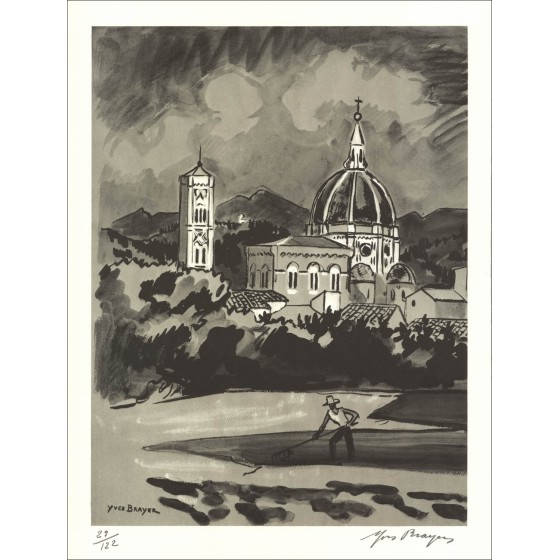
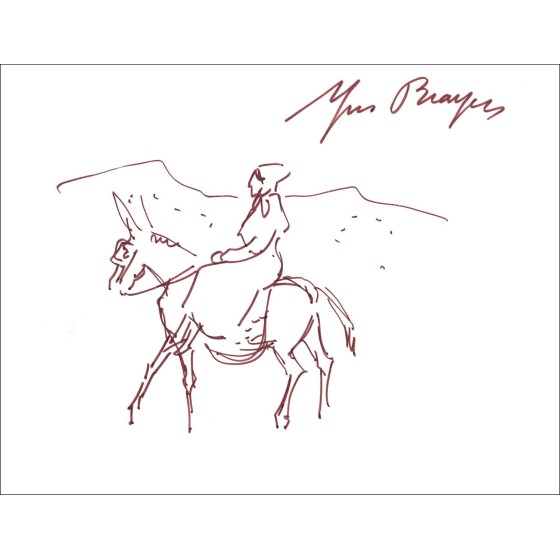
- Original drawings: Chevaux en Camargue, Cheval en Camargue, Florence.
- Books illustrated with original lithographs: En Provence, Les Bestiaires, De Venise à Rome.
Some pieces have already found a buyer: check the page regularly for new acquisitions. Add the work of your choice to your basket: it is sold with a certificate invoice from the gallery and shipped carefully, by tracked and insured delivery. The gallery, in Argancy near Metz, also welcomes collectors by appointment.
Also worth discovering: Pierre Ambrogiani and Roger Mühl, other painters of Southern light.
How much does a lithograph or painting by Yves Brayer cost?
The gallery's lithographs and engravings range from approximately €40 to €400, and drawings from €300 to €700. Watercolours are priced in the hundreds or thousands of euros, and oils on canvas in the thousands of euros.
Which writers were illustrated by Yves Brayer?
Brayer illustrated Baudelaire, Claudel, Montherlant, Giono, Mistral, Pagnol and Blaise Cendrars. He was also honoured by Pierre Mac Orlan in a work devoted to his processions.
What is the suite Lumières de Provence?
Published in 1973, this suite of large colour lithographs (50x65 cm) celebrates the Camargue and the Alpilles. Each plate can be purchased separately, and gathering several sheets allows you to compose a coherent ensemble.
Where can you see works by Yves Brayer in museums?
The Musée Yves Brayer, housed in the Hôtel des Porcelet in Les Baux-de-Provence, presents a large body of paintings, watercolours and drawings. Cordes, in the Tarn, dedicated a first museum to him as early as 1960. Brayer was also curator of the Musée Marmottan in Paris.
Why did Yves Brayer choose Provence?
Captivated by the light of the Alpilles, he stayed there for several months each year from the mid-1940s, at Saint-Rémy and Les Baux. He found his subjects there: manades, gardians, wild horses, olive trees and white farmhouses.
Did Yves Brayer design any theatre sets?
Yes: he created sets and costumes for the Paris Opera, the Comédie-Française and numerous opera stages in France and abroad.
Do you own an oil on canvas, a watercolour or an original drawing by Yves Brayer and wish to sell it? Find out how to proceed on our Sell a work page.