

Obey Giant : How did Shepard Fairey mark the history of street art?
In the vibrant and multidimensional world of'urban art, Shepard Fairey, better known as "Obey", occupies a unique place. As part of an approach that goes beyond pure creation, Fairey used his art as a means of propaganda, taking a critical look at society and provoking dialogue on matters dear to him.
Born in Charleston, South Carolina, Fairey immersed himself in urban art in the 1980s, influenced by the culture of skateboarding and punk rock. He made himself known to the general public through the "André the Giant Has a Posse" campaign that he launched during his studies at the Rhode Island Institute of Arts. This initiative, originally conceived as a joke among friends, took on a global viral dimension, establishing Fairey as an emblematic figure of urban art.
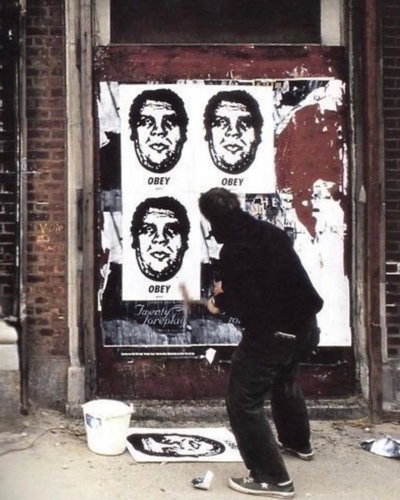
1995 Poster obeygian
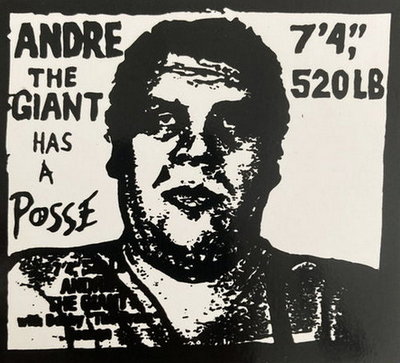
Sticker André The Giant
Shepard Fairey began her artistic journey using display and stencil techniques. The repetition of patterns, the collage of posters and the use of stickers have become essential elements of his style. These stickers, which he considers as "propaganda" tools, allowed his art to spread quickly and created a visual dialogue in public spaces.
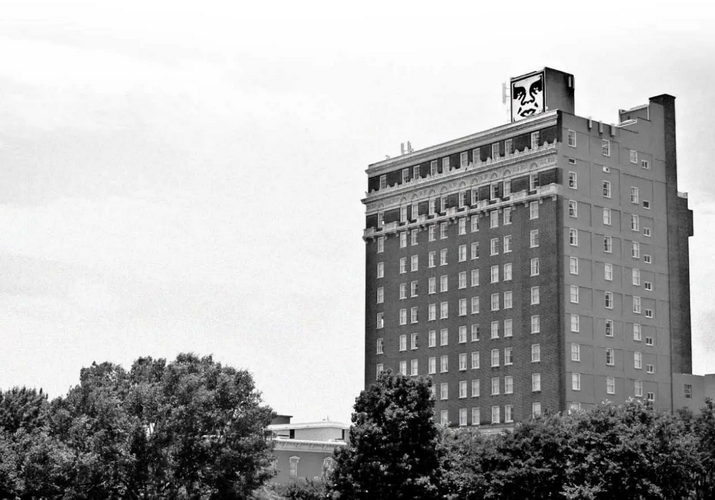
André The Giant
One of Fairey's most notable projects is probably his "Hope" poster made during Barack Obama's 2008 presidential campaign. This symbolic work, with its stylized image of Obama and the word "HOPE", captured the imagination of millions of people and became a must-see symbol of this campaign.
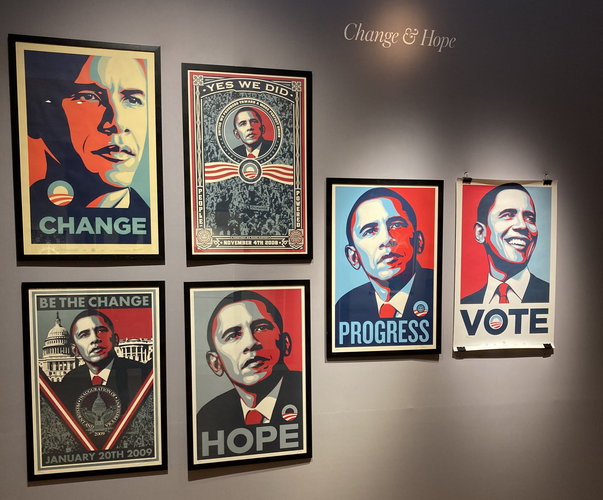
Obama screenprints
In addition to his posters and stickers, Shepard Fairey is also known for its monumental murals. These large-format works of art, which can be seen in cities around the world, speak of his convictions for peace, environmental protection and human rights. Fairey has also developed an interesting practice: he often creates multiples from his frescoes, and vice versa, his multiples can give birth to new frescoes. This allows her works to reach a greater audience and have an even stronger impact. This method of work illustrates Obey's philosophy: making art accessible to all and using its visibility to spread meaningful messages and encourage action.
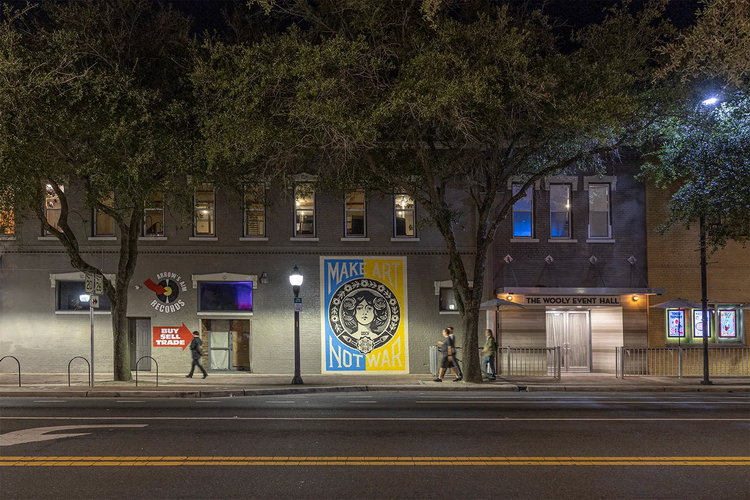
Make Art Not War obeygian
One of Shepard Fairey's most iconic murals is probably "Freedom, Equality, Fraternity"This monumental work, located in Paris, is inspired by the national motto of France. By deploying his talent and mastery of graphic design, Fairey transforms these three fundamental ideals into a powerful and vibrant illustration. The face of a young woman wrapped in the tricolor French flag emerges forcefully, symbolizing both the beauty and resilience of the French people. His eyes, facing the horizon, evoke a future filled with hope. Through this fresco, Shepard Fairey not only celebrates French culture and values, but also engages the viewer in a dialogue on the importance of freedom, equality and fraternity in our contemporary world. It is a poignant declaration of solidarity and humanity, demonstrating once again the ability of Fairey to use urban art to stimulate reflection and debate on subjects of social and political importance.
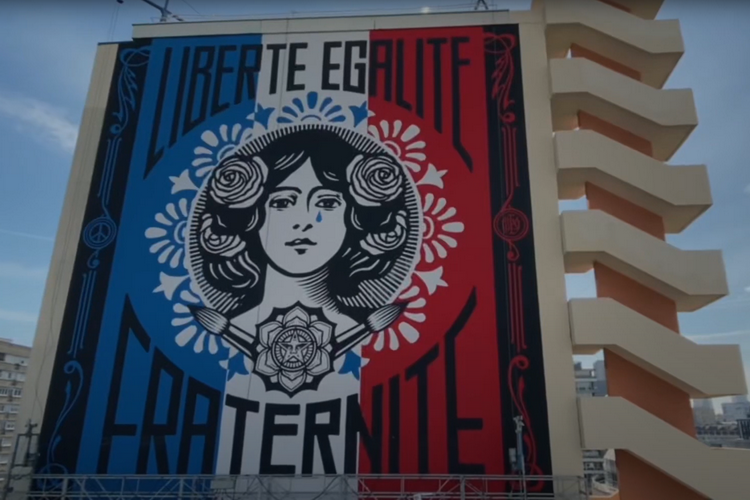
Fresque Freedom Equality Fraternity Paris XIIIth arrondissement
The belief that art can be a powerful tool for social change is at the heart of the'work of Shepard Fairey. His political commitment is explicitly reflected in his works, which frequently address issues of social justice, human rights and climate change. Using visually striking images and messages, Fairey encourages viewers to become aware of global issues and take action. One of his most notable frescoes on this subject is "Earth Crisis", a large-scale work suspended from the Eiffel Tower that draws attention to global warming and its disastrous consequences. Through her art, Fairey aims to educate, inspire and mobilize the public in the face of these urgent challenges. Moreover, he is not only spreading these messages through his art: he is also committed financially. Some of the benefits generated by his works are regularly donated to associations that fight for the causes he supports, showing that his commitment goes beyond mere declarations and is part of a concrete approach of support and action.
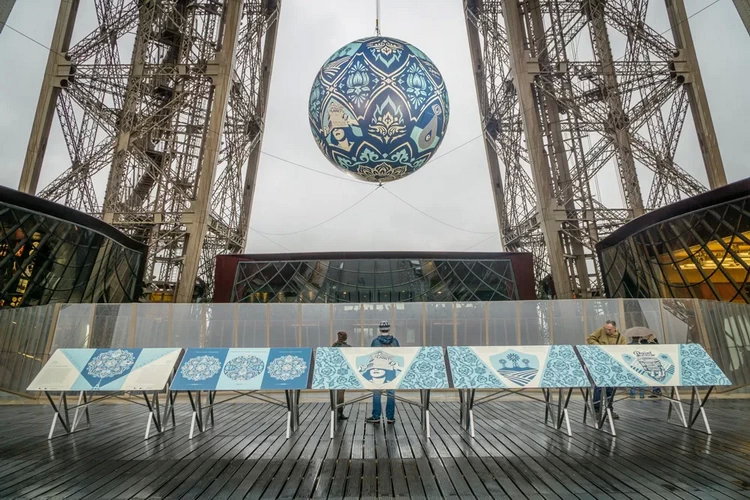
COP21: Shepard Reveals Earth Crisis Globe
Shepard Fairey's work was presented not only in the streets, but also on a large screen. His documentary, "Obey Giant", explores his artistic background, his philosophy and the social impact of his work. Obey was also featured in the documentary "Exit Through the Gift Shop" by anonymous street artist Banksy, where he shares anecdotes about his career and offers insights into the world of urban art.
The film "Obey Giant", centered on artist Shepard Fairey, is a profound and fascinating exploration of the evolution of an icon of street art. Fairey, world renowned for his "Hope" campaign for Barack Obama in 2008, began his artistic journey with stickers and posters by wrestler André the Giant, gradually transforming this image into a global movement of artistic rebellion. The documentary, while tracing Shepard Fairey's tumultuous journey, highlights the intersection between art, politics and the cultural revolution. It provides viewers with an overview of how a simple drawing can turn into a powerful statement, catalyzing change and questioning the established order. For urban art enthusiasts and those interested in social movements, "Obey Giant" is a must, captivating from the first to the last minute.
Fairey continues to influence and inspire generations of urban artists with its unique approach to art and social commitment. By constantly pushing the boundaries of urban art and using its art as a form of "propaganda", Fairey has proved that urban art can not only be a form of personal expression, but also a powerful tool for social change.
Discover the artist's page and all of his works by following this link: SHEPARD FAIREY (OBEY)