
MANOUKIAN Claude


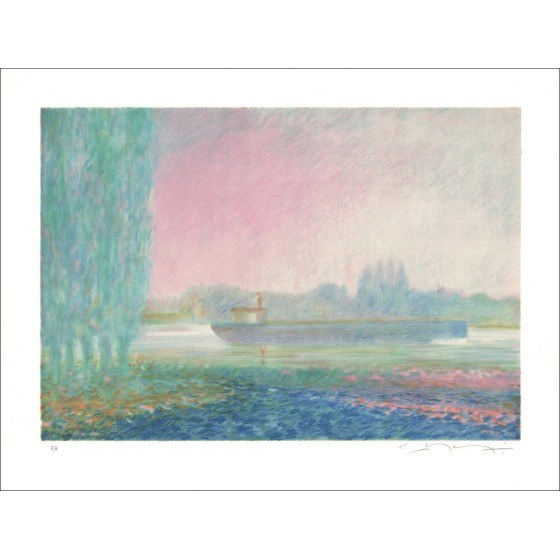


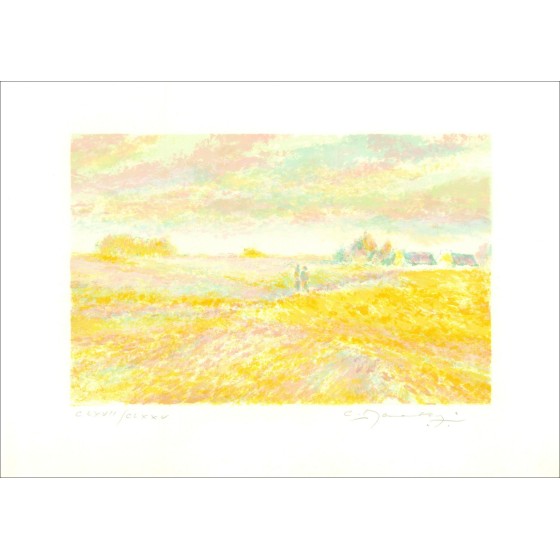


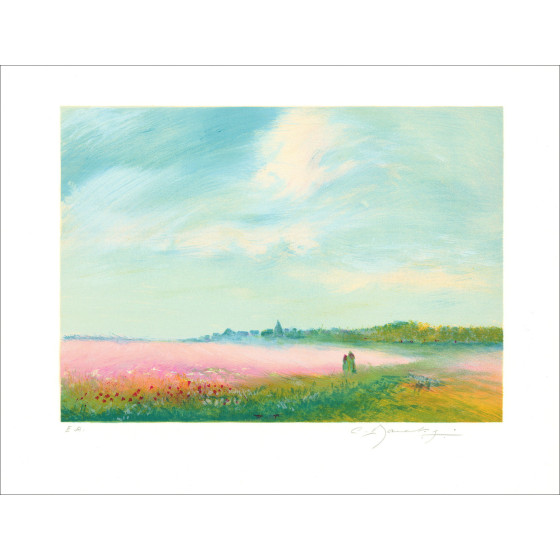


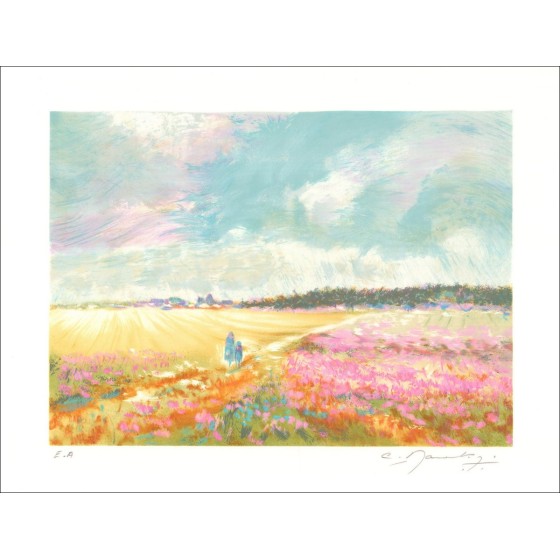

Claude MANOUKIAN is a painter born in 1936. " There are turning points in a painter's life that can hardly be explained, if only a good painting becomes an exceptional painting. This happens as a lightning stroke, or as the Holy Spirit on Pentecost Day. It can also be said, more modestly, that this happens as the transformation of VanGogh who, from a modest cartoonist, became an art genius. Claude MANOUKIAN has just crossed this no exception that leads him from a good painter he was, to an artist whose work finds marks that are his own. Admittedly, his paintings already bore his mark, by the use of colours which signed his author. As Odilon Redon Claude MANOUKIAN knows very well how to marry tones which, handled in an unshakeable manner would become dissonant, while by it they only magnify their brightness. But now leaving the rigorous figurative, Claude MANOUKIAN breaks down and recomposes the forms, and integrates in his work an additional dimension. It is boldly, but with the certainty of the technician, that he interprets the contours, encases them in one another. It is by sometimes starting from a path explored too superficially by Picasso that Claude MANOUKIAN will introduce another type of form, become new poem under his brush. As different as Racine, Corneille or Victor Hugo may be from Verlaine or Rimbaud, although all write in verse, Claude MANOUKIAN will flirt with other modes of painting, and will extract new expressions from it. Exaltation of colours, overtaking the reality which he integrates into the memory of the painting, but without being a slave to it, hecomposes for art and art using reality only as a support, as a primitive state that he makes evolve. The look of what he sees is only the reflection of the future. He uses his memory as a guiding thread, but composes in him his child from the senses of his sight, and his mood and then puts him on his canvas. As a newborn is never entirely similar to one of his parents, this painting he paints will find its source at the bottom of one of his elements, which may sometimes dominate, certainly, but which will always remain for one part under the influence of the other. Each canvas will be the journey towards the accomplishment of a whole and the expression of an aesthetic that differentiates each work while maintaining a common sense that is called style." Christian GERMAK