CARZOU Jean

Jean Carzou (1907-2000), painter, engraver and lithographer with a fine, nervous draughtsmanship, is one of the Peintres témoins de leur temps (Witness Painters of Their Time). Galerie 125 presents below a fine selection of original lithographs, engravings and posters printed at Mourlot: Venice, Notre-Dame de Paris, fantastical landscapes and imaginary cities.

Active filters

Jean Carzou
The painter and lithographer of imaginary cities

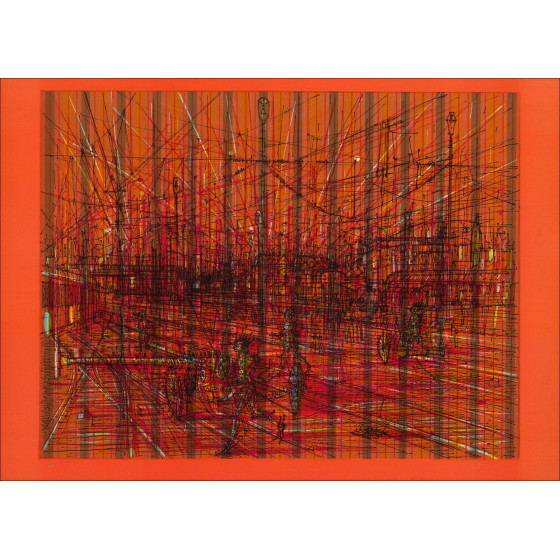
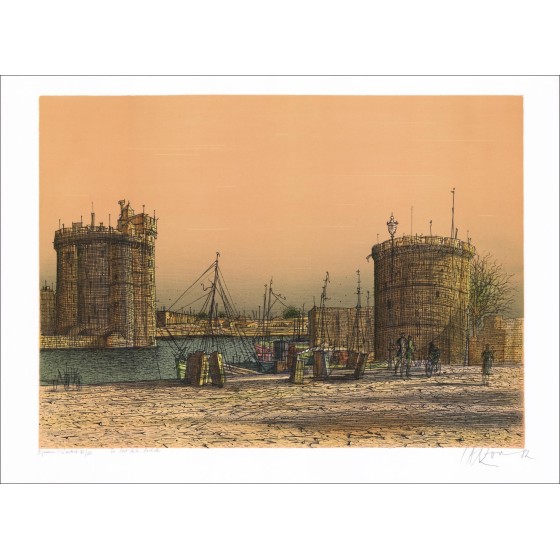
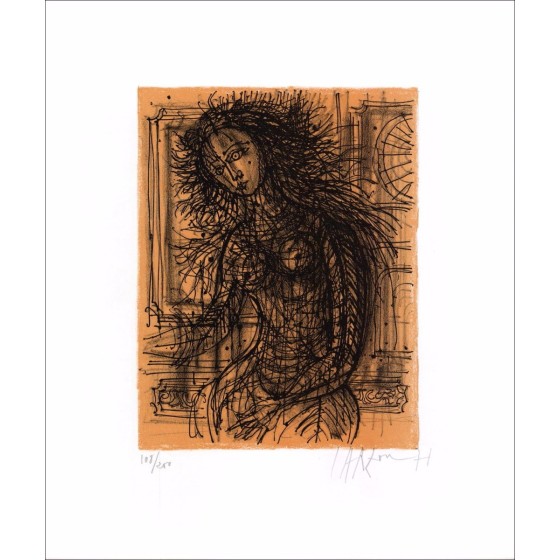
Born Karnik Zouloumian, Jean Carzou (1907-2000) was a French painter, printmaker, lithographer and set designer of Armenian origin. His nervous graphic style, built on hatching, metallic lacework and dizzying perspectives, gave rise to an instantly recognisable fantastical universe peopled with imaginary cities, flower-women and apocalyptic visions. This Carzou lithograph, signed or printed by Mourlot, appeals today as much to print enthusiasts as to poster collectors.

Biographical landmarks

1907Born on 1 January in Aleppo, Syria

1924Arrives in Paris thanks to a scholarship from the Armenian community

1928Graduates from the École spéciale d'architecture

1949Wins the Hallmark Prize, his first major recognition

1952Sets and costumes for Les Indes galantes at the Paris Opera

1977Elected to the Académie des beaux-arts

2000Dies on 12 August in Marsac-sur-l'Isle, Dordogne


The career of Jean Carzou

From Aleppo to Paris

Born into an Armenian family in Aleppo, a pupil of the Marist Brothers and then of the French lycée in Cairo, Carzou won a scholarship to study in Paris. Qualified as an architect in 1928, he turned to drawing and painting, initially earning his living as a set designer and drawing teacher. This training marked his entire work: rigour of perspective and a taste for structures and wrought ironwork.

Post-war recognition

After the war, Carzou quickly established himself. In 1949 he received the Hallmark Prize and joined the Peintres témoins de leur temps, alongside Bernard Buffet, Bernard Lorjou and Jean Jansem. His major series, L'Apocalypse, Venise, Paris and Le Monde moderne, denounce the dehumanisation of industrial civilisation while celebrating the beauty of cities and women.

The stage and opera designer

Carzou created memorable sets and costumes, notably for Rameau's Les Indes galantes at the Paris Opera in 1952, for Giselle and for numerous ballets. He also illustrated dozens of livres de bibliophilie, from Rimbaud to Baudelaire, and painted the frescoes of the Chapelle de la Providence in Manosque, today the Fondation Carzou. He entered the Académie des beaux-arts in 1977.

The lithographic work and Mourlot posters

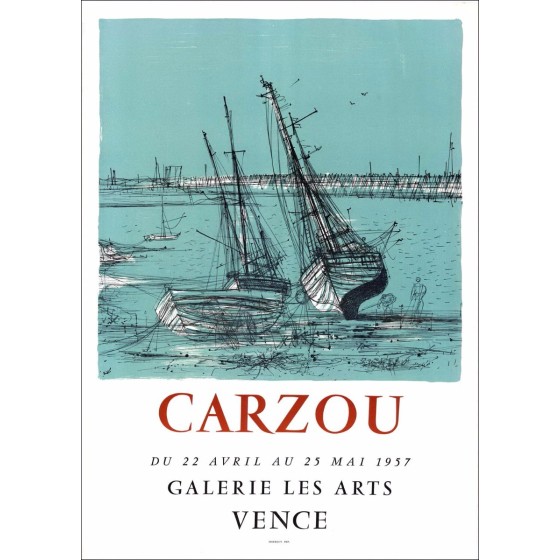
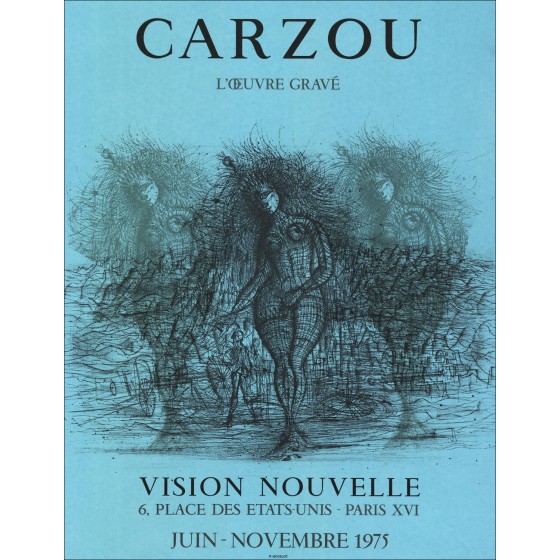
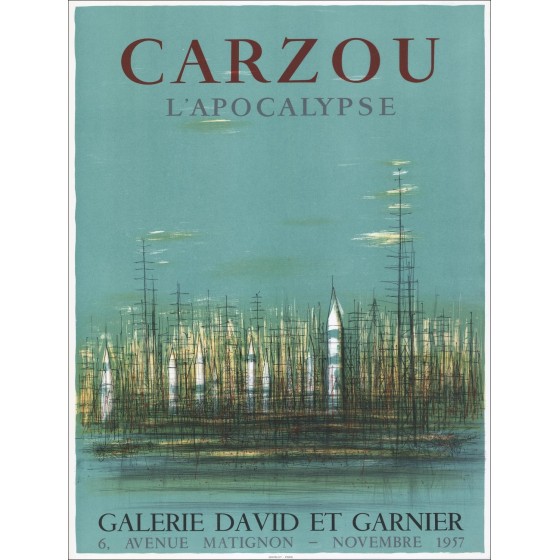
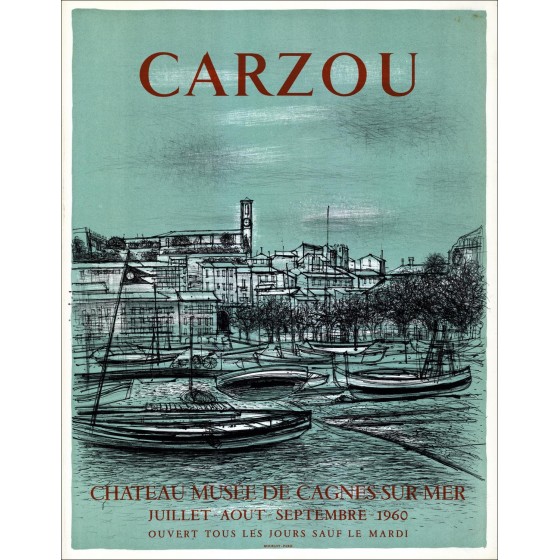
Carzou was one of the great lithographers of his time. He produced hundreds of original prints and a very fine series of posters, most of them printed by the Mourlot workshop: exhibitions at the galerie Vision Nouvelle, the galerie Les Arts de Vence, the galerie La Gravure, the Château-Musée in Cagnes-sur-Mer, in Trouville, or at Nichido in Japan. Their refined graphics and bold colours make them highly decorative pieces, ideal for starting a collection.

A style recognisable among all

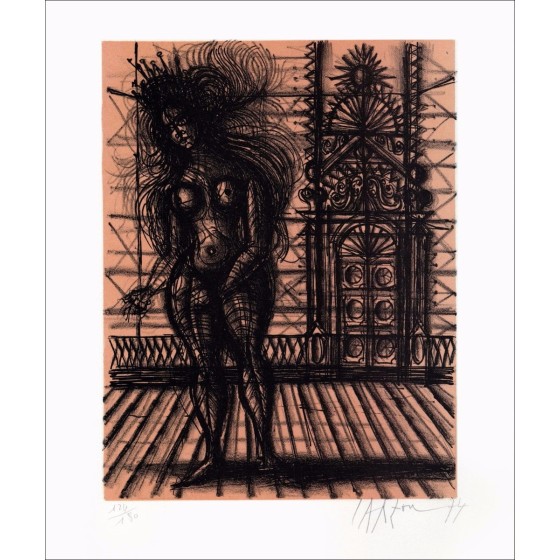
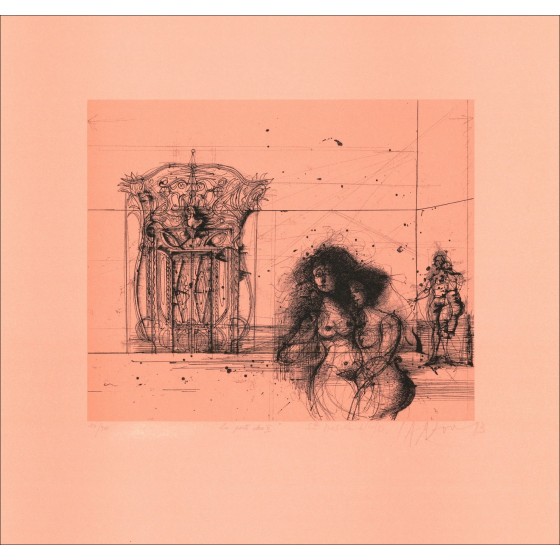
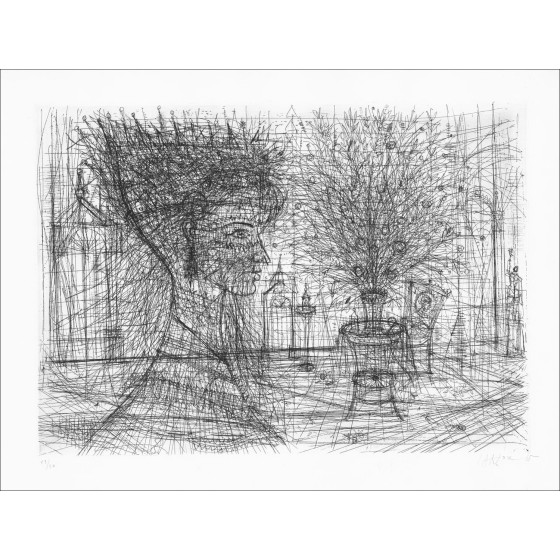
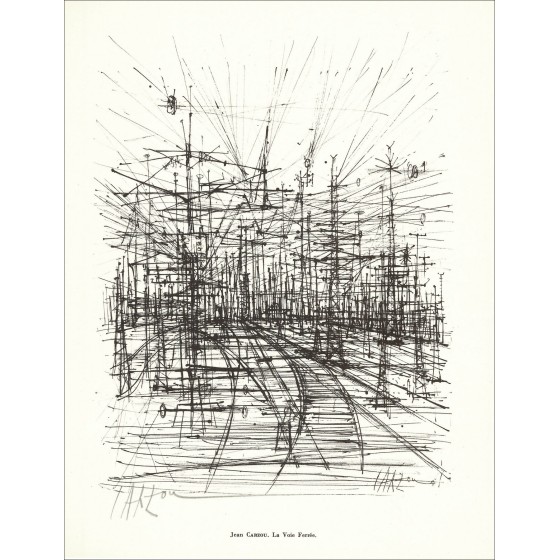
Carzou's line is fine, sharp, almost engraved. His compositions unfold in networks of lines, grids and scrolls, where palaces, cathedrals, ships, horses and slender female figures emerge. The colours, often limited to a few tones—greens, blues, reds and golds—heighten the atmosphere of dream and strangeness.

Jean Carzou Prices and Market Value: How Much Is a Work Worth?

The price of a Carzou work depends on its technique, whether it is signed in pencil, its numbering, its format and its subject. Here are the ranges generally seen on the market, both in galleries and at auctions:

  • Exhibition posters printed as lithographs, often by Mourlot: from €49.50.
  • Original lithographs in small and medium formats: approximately €125 to €200.
  • Original lithographs in large formats and sought-after subjects (Notre-Dame, Venice, Versailles): approximately €250 to €300.
  • Original engravings: from €85 for small plates to €450 and more for large ones.
  • Drawings, gouaches and oils on canvas, unique pieces that are much rarer: from several thousand euros.

An original lithograph is distinguished from a simple reproduction by its hand-pulled printing, its numbering and its pencil signature, whereas the exhibition poster remains a more accessible decorative piece.

Buy a Work by Jean Carzou

Looking for a signed Carzou lithograph or a Mourlot poster? The gallery brings together above a fine selection of the artist's works, among the finest online selections:

Put together your selection online: shipping is careful, fast, tracked and insured. Each work offered by the gallery is described precisely and sold with a certificate invoice. Also discover: Leonor Fini, Félix Labisse and Salvador Dalí.

How much does a Jean Carzou lithograph or engraving cost?

Original works available at the gallery range from €49.50 to €450. An original signed and numbered lithograph is most often between €125 and €300, and an engraving between €85 and €450, depending on format, subject and condition. A simple, unsigned exhibition poster is offered from €49.50.

What does Peintres témoins de leur temps mean?

After the war, this group brought together figurative artists committed to representing the reality of their time, including Buffet, Lorjou, Jansem and Carzou. The latter brought to it a vision of the modern world that was both poetic and anxious.

Who is Carzou, whose real name is Karnik Zouloumian?

Jean Carzou is a pseudonym formed from the artist's original name, Karnik Zouloumian. He adopted it in Paris, where he became one of the leading representatives of French graphic fantasy.

Why are Carzou's Mourlot posters so sought after?

Printed at the Parisian Mourlot workshop, renowned for the quality of its lithographs, these posters reproduce the artist's graphic style in flat, clean areas of colour. Their colour variations, such as those of Vision Nouvelle in 1978, make it possible to assemble harmonious sets.

Did Carzou work for opera and bibliophile publishing?

Yes. He designed the sets and costumes for Les Indes galantes at the Paris Opera and illustrated numerous bibliophile books, from Rimbaud to Baudelaire. The engravings of the Les Illuminations series bear witness to this.

How can you recognise an original Carzou lithograph?

It usually bears a pencil signature and a numbering, and both its paper and its printing correspond to the technique of the original lithograph. Each listing in the gallery specifies the exact nature of the work: original lithograph, engraving or exhibition poster.

Do you own an oil on canvas, a gouache or an original drawing by Jean Carzou and wish to sell it? Discover how to proceed on our Sell a work page.