
JANSEM Jean
Jean Jansem (1920-2013), a figurative painter of Armenian origin, is recognised for his figures imbued with emotion and humanity. Discover below his original lithographs, from the Venice of the 1960s to the bullrings and female figures of the 1970s, as well as his exhibition posters.




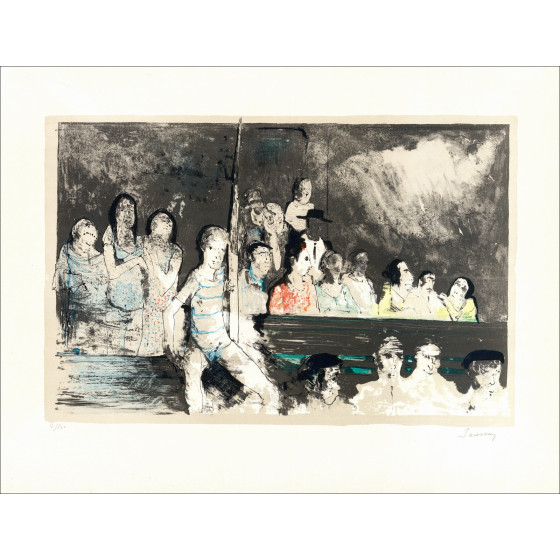
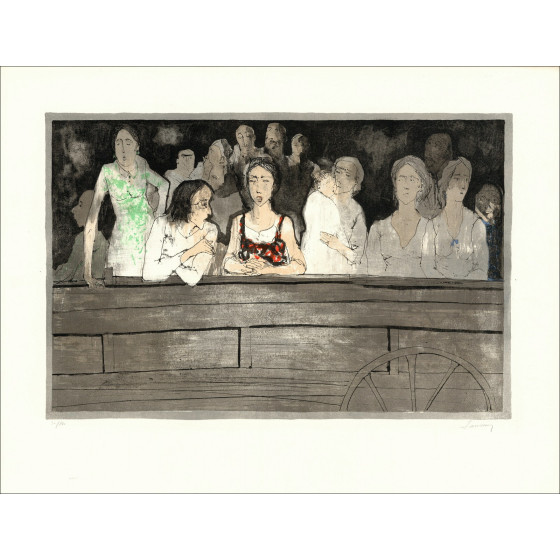
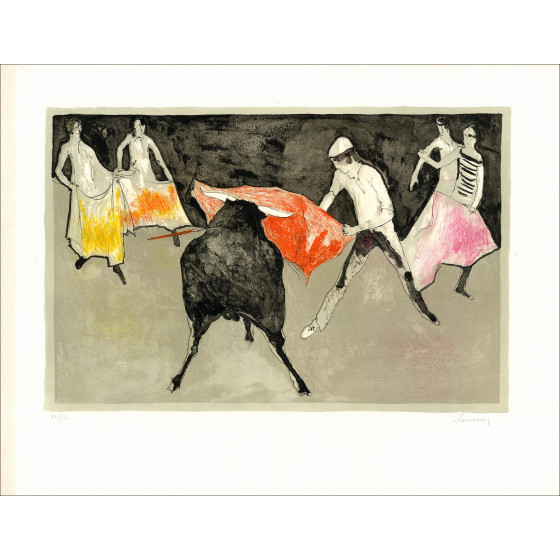
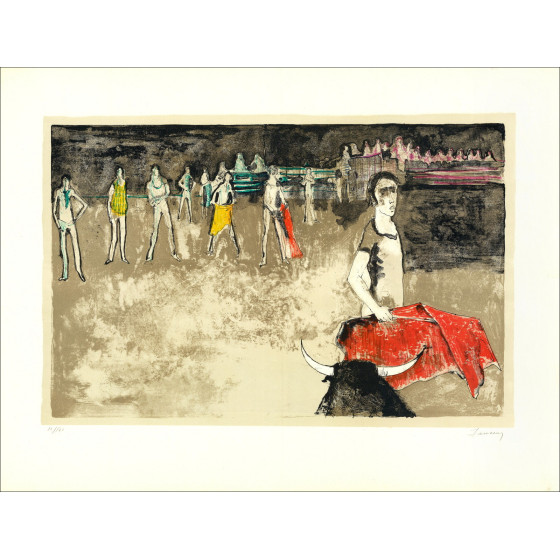
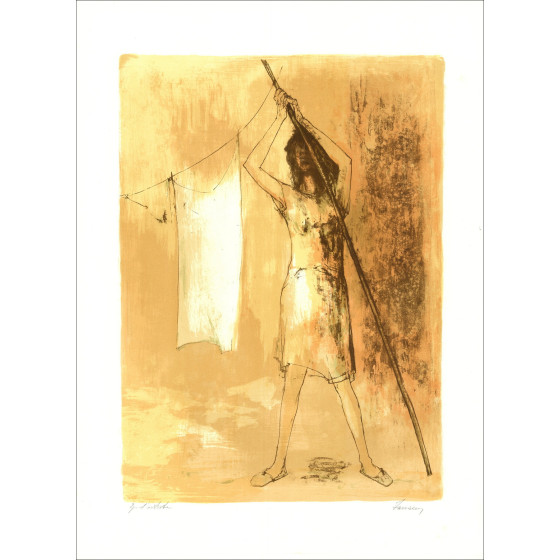
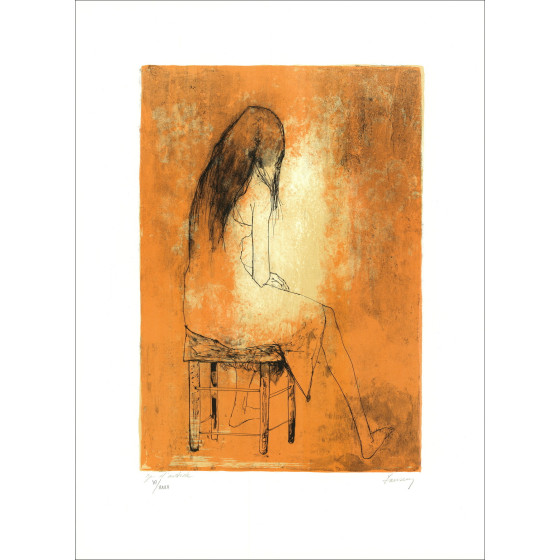
Jean Jansem
The painter of the humble, from Armenian exile to lithography
Jean Jansem, whose real name was Jean-Hovanes Semerdjian, is one of the major figures of twentieth-century figurative painting. Born in Turkey in 1920 into an Armenian family, he settled in France in the 1930s after an exile marked by persecution. This personal history nourishes his entire body of work. His fragile figures, portraits, scenes of everyday life and figures from the theatre or the bullring speak of loneliness, hope and human dignity. His lithographs, accessible to collectors, extend this universe with the same intensity.
Biographical milestones
1920Born in Turkey, into an Armenian family
1930sArrives in France after exile
TrainingDecorative Arts, then the Beaux-Arts de Paris
1960Portfolio Les soliloques du pauvre
1962Lithograph suite Rois et légende, printed by Mourlot
1965Exhibition at the David et Garnier gallery, Paris
1973Exhibition at the Maurice Garnier gallery, Paris
1980Galeries Matignon, Paris, and Christiane Vallé
2013Death of the artist
The career of Jean Jansem
A Parisian training and an instantly recognisable language
Trained first at the Arts décoratifs and then at the Beaux-Arts de Paris, Jean Jansem developed a painterly language that is recognised at first glance: precise drawing, delicate compositions and a subtle palette. Often nicknamed "the painter of the dispossessed", he never sought to provoke compassion. His humanist gaze reveals above all the beauty and inner strength of his subjects.
A generation of painters of the human figure
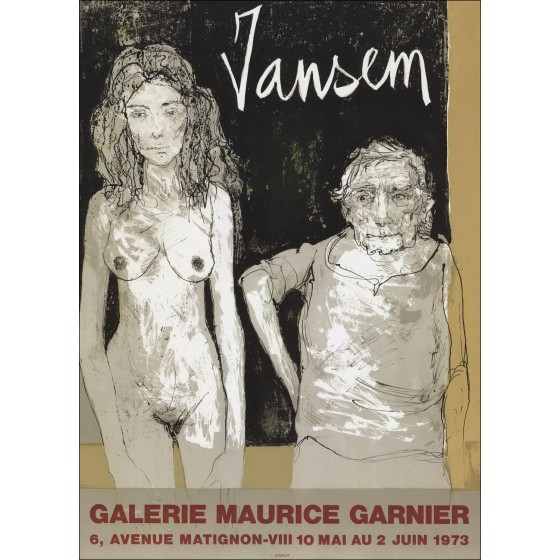
Like Bernard Buffet, André Minaux or Paul Rebeyrolle, he belongs to that generation of post-war figurative painters who placed man and his condition at the heart of the canvas. He was shown in Paris by the David et Garnier gallery and then by the Maurice Garnier gallery, as the exhibition posters presented above attest.
Lithographer and illustrator
Alongside his painting, Jean Jansem produced remarkable work in lithography, engraving and illustration. He lent his talent to major authors such as Miguel de Cervantes, Charles Baudelaire, Albert Camus or Federico García Lorca. Even today, his prints rank among the most sought-after works by enthusiasts of modern figurative art.
A world of figures, lagoons and bullrings
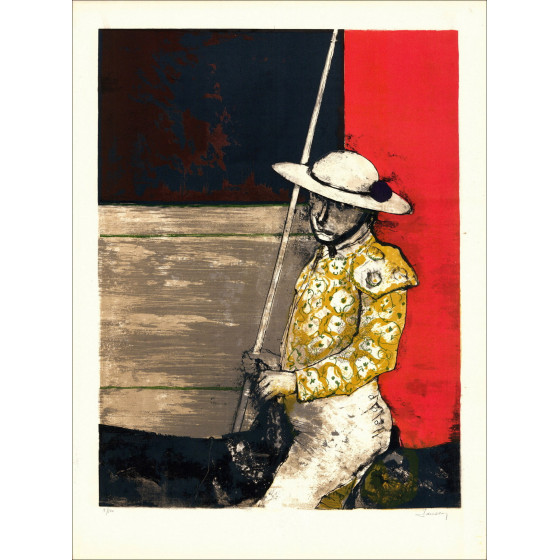
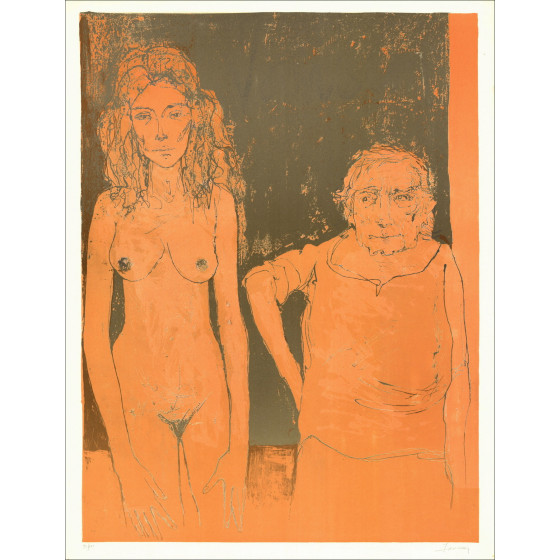
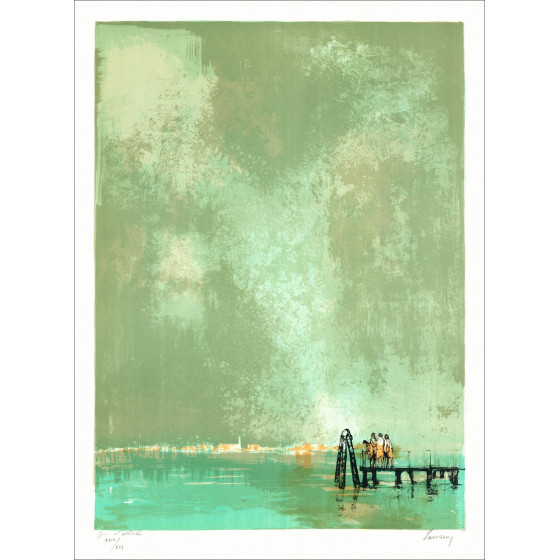
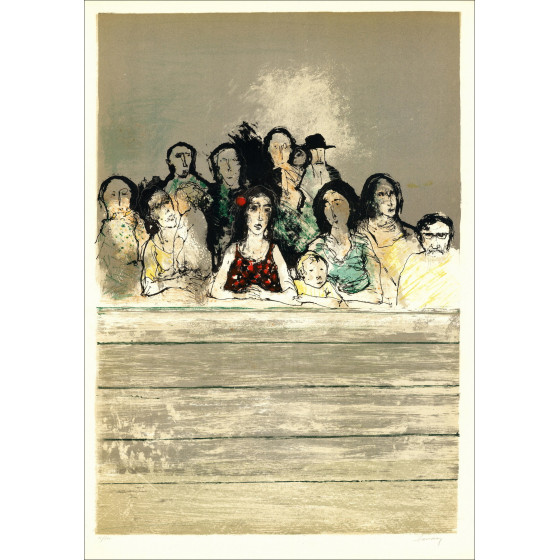
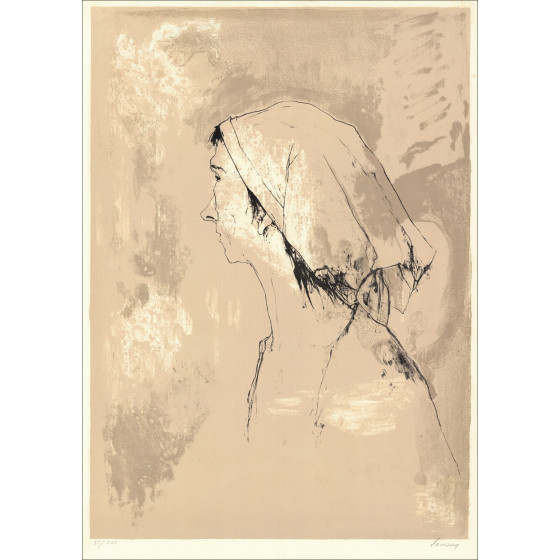
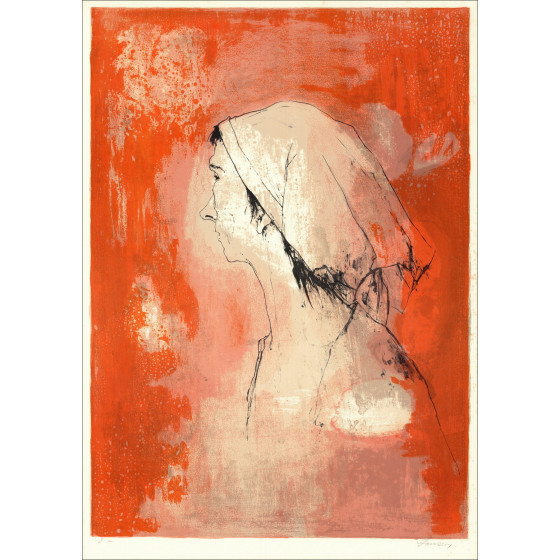
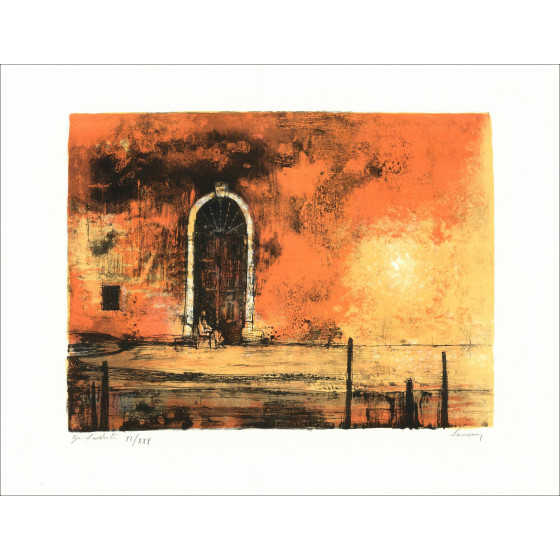
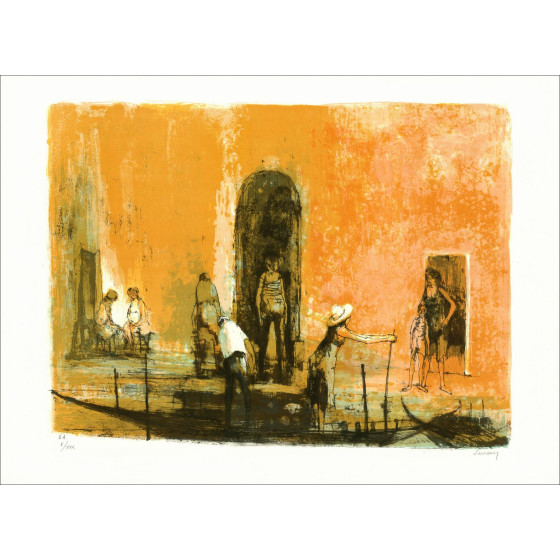
Jansem's figures, women in profile or from behind, clowns, actors, mothers and children, occupy restrained spaces where colour serves emotion. His series devoted to Venice, its quays and its red walls, as well as those of the bullring, from the stands to the capes, reveal an artist attentive to light and movement. His line is nervous but never harsh: tenderness always prevails.
Prices and market value of Jean Jansem: how much is a work worth?
The price of a work by Jean Jansem depends on its technique, signature, numbering, format, subject and condition. As a rough guide, here are the ranges generally seen on the market, both in galleries and at auctions:
- Exhibition posters: approximately €60 to €100.
- Lithographs: approximately €40 to €400, with signed and numbered prints at the upper end of the range.
- Drawings and watercolours: from a few hundred to a few thousand euros.
- Paintings: from several thousand to several tens of thousands of euros.
His figures, nudes and emotionally charged interior scenes are the most sought after. A pencil signature and well-preserved paper make a real difference. An original lithograph is printed from a stone or plate drawn by the artist himself, which sets it apart from a simple reproduction.
Buying a work by Jean Jansem
Looking for a signed Jansem lithograph? The gallery currently offers a fine selection of original lithographs:
- Venice: Venise, le mur rouge (1967) and Venise, les quais (1966).
- The arena: L'arène, la tribune II and L'arène, les capes.
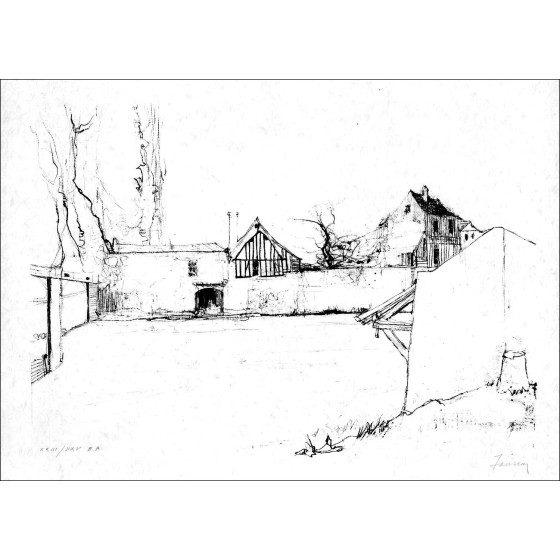
- Women and figures: Deux femmes, Femme de profil (1975), La Femme au linge (1966), Femme de dos, Personnages and Le corps de ferme on Japan paper.
- Books and suites: the plates of Rois et légende (1962), from €39.50, and the portfolio Les soliloques du pauvre (1960).
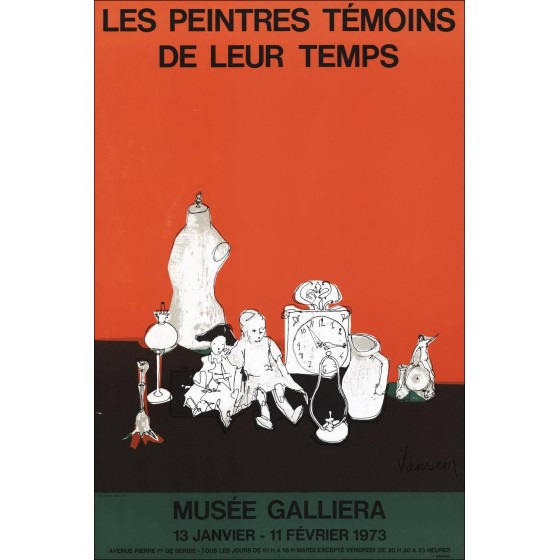
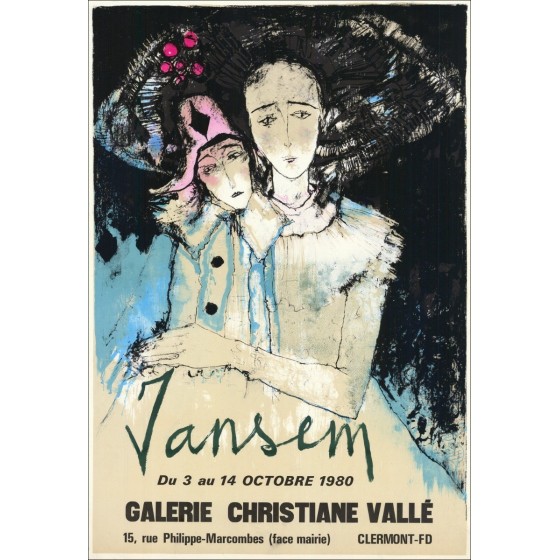
- Exhibition posters: galerie David et Garnier (1965), Les peintres témoins (1973), galerie Maurice Garnier (1973 and 1975), galeries Matignon and Christiane Vallé (1980).
Other works, such as La lagune, Corrida, le picador or an ink portrait of a woman, have already found new homes: check the page regularly as new acquisitions are added. Every work offered by the gallery is described in detail and sold with a certificate of authenticity, then shipped carefully by tracked and insured delivery. Admirers of figurative art from the same generation will also appreciate André Brasilier and Paul Guiramand.
How much does a Jean Jansem lithograph cost?
Original lithographs by Jean Jansem offered online range from approximately €40 to €395, depending on format, subject and signature. Large signed and numbered prints are the most sought after.
Why is Jean Jansem called "the painter of the dispossessed"?
His models are ordinary, fragile or marginalised people: clowns, mothers, old men, performers. His family's exile from Armenia explains this empathy. He paints them without pathos, with a dignity that gives his gaze its power.
What is the suite Rois et légende?
This is a suite of original lithographs measuring 27 x 20 cm, printed by Mourlot in 1962. Each plate is a self-contained image, so they can also be collected individually.
What are Jean Jansem's exhibition posters?
Published for his exhibitions in Paris and in the regions, notably at David et Garnier or Maurice Garnier, these posters reproduce a composition by the artist. They offer an affordable entry point into his world.
Are Jean Jansem's lithographs signed?
Many carry a pencil signature, sometimes accompanied by the numbering or the artist's proof (E.A.) mention. The posters, on the other hand, are generally printed without a handwritten signature. The description of each work specifies these details.
How should a Jean Jansem lithograph be stored?
Framing under glass with acid-free mount board, away from direct light and humidity, preserves the freshness of the paper and colours. Japan paper, being thinner, requires particular care.
Do you own an oil on canvas, a watercolour or an original drawing by Jean Jansem and wish to sell it? Find out how to proceed on our Sell a work page.